
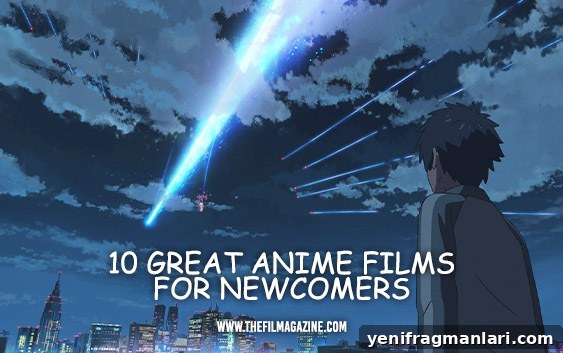
Where should you begin with anime? It’s a question many of us have asked. Despite being one of Japan’s most prominent cultural exports, the sheer range of anime can feel overwhelming. How do you separate family-friendly titles from gritty, hyper-violent fare?
Studio Ghibli is often the first stop for newcomers. Frequently compared to Western studios like Disney, Ghibli’s extraordinary catalogue has been celebrated for decades. Yet one studio alone cannot represent an entire art form, and while Ghibli’s work shares a broadly accessible sensibility, its style remains unmistakably original.
Anime covers an enormous variety of genres and approaches — from tender, slice-of-life dramas to bold, experimental animation — making it a rich source of cinematic discovery. In this movie list we present 10 great anime films for newcomers. This is not a ranked top ten; instead, it offers ten distinct entry points so you can find films that suit your tastes and build your own journey into the wider world of anime.
Follow the publication on social media for updates and further recommendations.
1. Akira (1988)

Akira is a landmark film that helped introduce global audiences to the possibilities of Japanese animation. Built with one of the largest budgets and production teams of its time, the film is a dazzling technical achievement. Set in a dystopian Neo-Tokyo, Akira follows a group of motorbike-riding youths who become entangled in events far beyond their comprehension. The film blends cyberpunk action, political unrest and adolescent turmoil, and it remains a vivid example of anime’s ability to fuse diverse genres into a thrilling whole.
2. The Girl Who Leapt Through Time (2006)
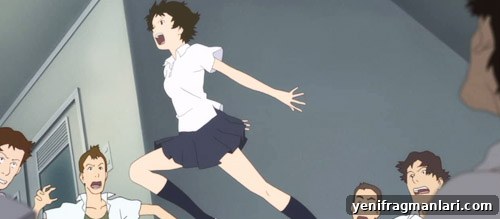
The Girl Who Leapt Through Time tells a deceptively simple story about Makoto, a high-school girl who discovers she can jump back in time by minutes. Rather than changing the world, she uses the gift to undo awkward social moments and small mistakes — at first. Directed by Mamoru Hosoda, the film captures the energy of ordinary teenage life while gradually unfolding a more complex emotional and narrative core. It’s charming, witty and surprisingly moving, with moments that shift the story from lighthearted romance into something richer and more thoughtful.
3. Ghost in the Shell (1995)
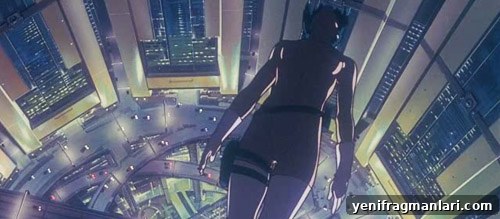
Known for its kinetic sci‑fi action, Ghost in the Shell also probes deeper philosophical questions about identity, consciousness and what it means to be human. The story centers on Major Motoko Kusanagi, a cyborg specialist whose investigations into cybercrime raise unsettling questions about the boundary between mind and machine. Visually striking and intellectually provocative, the film combines thrilling set pieces with meditations on the soul, leaving viewers with ideas to ponder long after the credits roll.
4. Perfect Blue (1997)

Perfect Blue is a harrowing psychological thriller from Satoshi Kon that explores fame, identity and the collapse of privacy. The film follows Mima, a pop idol who leaves her singing career to pursue acting — a decision that provokes obsession, stalking and violent consequences. Kon blurs dreams and reality with a disorienting precision, creating a tense, unforgettable portrait of psychological unraveling. Many contemporary filmmakers have acknowledged Kon’s influence, and Perfect Blue remains a masterclass in suspenseful, mind-bending storytelling.
5. In This Corner of the World (2016)

In This Corner of the World shows how animation can heighten realism and capture the poetry of everyday life. The film follows Suzu, a young woman who grows up in pre‑war Hiroshima, and observes the quiet rhythms of domestic life even as wartime tragedy approaches. The animation often feels like watercolor sketches come to life, with delicate attention to small gestures — cooking, gardening, drawing — that together form an evocative portrait of a vanished world. It’s a gentle, humane film that find beauty and resilience amid hardship.
6. Pom Poko (1994)
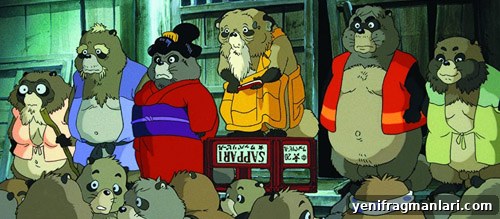
Directed by Isao Takahata, Pom Poko is a playful yet poignant story about shape‑shifting tanuki (raccoon dogs) who resist urban development that threatens their forest home. The film juxtaposes fantastical, childlike sequences with frank conversations about extinction, survival and sacrifice. Rather than simplifying themes for younger viewers, Pom Poko trusts audiences of all ages to engage with both wonder and difficult realities. It’s a vivid example of how anime can address environmental and social issues while remaining imaginative and entertaining.
7. A Silent Voice (2016)

A Silent Voice is a deeply affecting drama about bullying, guilt and the search for redemption. The story begins in elementary school, when Ishida torments a deaf classmate, Shoko. Years later, ostracized and remorseful, Ishida attempts to make amends and reconnect with her. The film uses color, sound design and sensitive performances to convey the inner turmoil of its characters, delivering a powerful emotional arc that culminates in catharsis. It’s an excellent introduction to anime’s capacity for honest, mature storytelling.
8. Night is Short, Walk on Girl (2017)
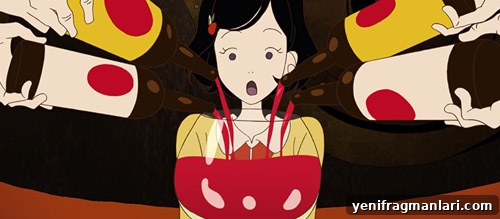
Masaaki Yuasa’s Night is Short, Walk on Girl immediately stands out for its exuberant, freewheeling visual style. Lines warp and characters stretch as the film follows a single, surreal night in Kyoto, tracing the near-misses of two hopeful lovers. With a jazzy soundtrack, psychedelia and rapid-fire episodes — from supernatural drinking games to whimsical conversations about art — the film is a joyous, offbeat ode to youth, romance and serendipity.
9. Redline (2009)

Redline is an all-out adrenaline rush: an 80-minute thrill ride of high-speed, otherworldly racing. The film follows JP, a daredevil racer who dreams of qualifying for the Redline, the galaxy’s most dangerous and extravagant race. Tracks wind through bizarre landscapes while competitors use outrageous vehicles and unorthodox tactics. The animation is wildly energetic and was produced at great cost — a proud, chaotic triumph that delivers relentless spectacle and raw excitement.
10. Your Name (2016)

Your Name became a global phenomenon, praised for its emotional clarity and visual beauty. The film follows two teenagers, Taki and Mitsuha, who inexplicably begin switching bodies. What might sound like a simple gimmick becomes a moving tale about connection, memory and fate. Director Makoto Shinkai frames rural and urban Japan with luminous detail, finding beauty in everyday moments — sunlit streets, crowded trains and quiet gestures — while a catchy contemporary soundtrack helps the film feel both intimate and epic. It’s a modern, feel-good blockbuster that resonates across audiences.
Which anime film would you recommend as the best starting point? Share your suggestions and join the conversation on social media.
Written by Jack Cameron
Support the author on social platforms:
Twitter – @JackCam86118967
Contently – Jack Cameron