
Wrath of Man (2021)
Director: Guy Ritchie
Screenwriter: Guy Ritchie
Starring: Jason Statham, Holt McCallany, Josh Hartnett, Scott Eastwood, Jeffrey Donovan, Laz Alonso, Post Malone, Eddie Marsan, Andy Garcia
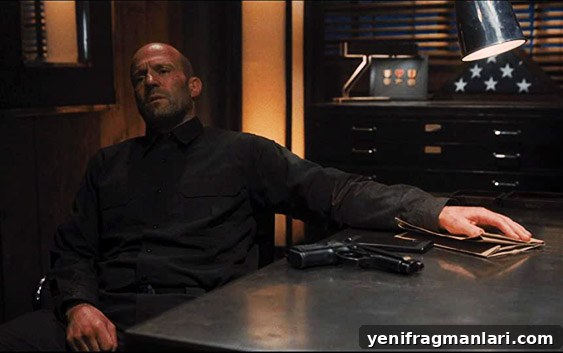
Guy Ritchie remains a filmmaker defined by the voice and rhythms of his own scripts. When his screenplays are crisp, playful, and energized, Ritchie produces some of the most entertaining genre work in contemporary cinema. When his writing is thin or overly focused on a narrowly masculine point of view, the results can be competent yet forgettable. Wrath of Man belongs to the latter camp: a competent crime thriller that leans on a few well-executed set pieces, a jagged narrative structure, and Jason Statham’s brooding presence, but rarely achieves the stylistic spark or character depth that distinguishes Ritchie’s best films.
Following a misstep with a flashy big‑budget remake, Ritchie returned to his crime roots with The Gentlemen, a film that revived his taste for witty monologues, rich supporting roles, and an energetic ensemble dynamic. In contrast, Wrath of Man offers far less in the way of colorful character work. The cast is populated with solid, recognizable faces, but many of those performers receive little to do beyond deliver functional lines and occupy archetypal roles. Holt McCallany, who impressed in more subtle hands, is underused here; Josh Hartnett’s boisterous character collapses into comic relief without real stakes; and several other actors — from Scott Eastwood to Jeffrey Donovan and Laz Alonso — are often reduced to thin sketches rather than developed characters. Eddie Marsan and Andy Garcia provide welcome support, while Statham anchors the film with his familiar physical intensity and stone‑faced resolve.
Structurally, the movie is its most interesting feature. Ritchie divides the story into episodes that unfold non‑linearly, toggling between a heist thriller and a revenge drama. That approach keeps the audience curious and allows the film to reveal motivations and connections piece by piece. At the same time, the emotional and narrative rewards are limited because the screenplay does not devote enough time to the pasts it gestures toward. The backstory that should explain the protagonist’s obsession remains compressed, so Statham’s character often reads as an enigma rather than a fully realized man with palpable inner conflict. This is partly an acting limitation — Statham tends to convey through movement and presence rather than deep tonal shifts — but it is also a scripting choice: the film prioritizes momentum and procedural detail over emotional excavation.
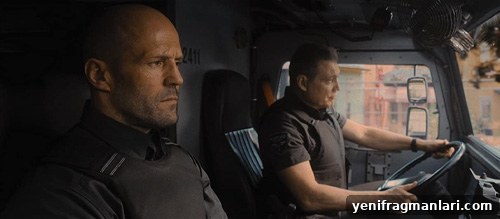
Where Wrath of Man succeeds best is in set pieces and physicality. Ritchie stages several armored‑truck sequences with taut choreography and inventive camera work that emphasize tension and precision. Statham’s physicality sells the film’s violence: his combat takes on the forceful, economical quality the role requires, and gunplay is filmed with a clinical, almost workmanlike efficiency. These sequences provide adrenaline and cinematic satisfaction even when the characters around him feel underwritten.
What ultimately limits the film is its tendency to rely on familiar genre tropes without interrogating them. The narrative populates itself with standard archetypes — the deceptive partner, the loud but unreliable subordinate, the ruthless mastermind — yet rarely elevates these figures beyond type. Moral choices are presented but not deeply examined; sudden shifts toward more extreme violence lack convincing motivation, so the escalation feels mechanical rather than organic. The result is a revenge tale that sometimes resembles a checklist of genre beats rather than a fully earned moral drama.
Stylistically, the movie still bears Ritchie’s fingerprints: quick cuts, a cinephile’s feel for staging heists, and an appetite for grim humor. Those elements make Wrath of Man intermittently entertaining and, at times, gripping. But taken as a whole, the film is a step down from the director’s more inspired work. It is efficient and watchable, with a few standout sequences and a solid central performance from Statham, yet it struggles to leave a lasting impression due to underdeveloped characters and a reluctance to probe the emotional stakes at the story’s core.
15/24
Written by Tony Ruggio