
The Road Dance (2021)
Director: Richie Adams
Screenwriter: Richie Adams
Starring: Hermione Corfield, Will Fletcher, Mark Gatiss
Richie Adams’ The Road Dance arrives as a quietly ambitious addition to contemporary Scottish cinema, adapting John MacKay’s novel into a visually rich period drama. Set on a remote island in the Outer Hebrides during the First World War, the film blends romance, community drama and the harsh realities of wartime loss. While it may not fully realize every emotional beat it sets up, The Road Dance offers striking cinematography, authentic production design and palpable chemistry between its leads.
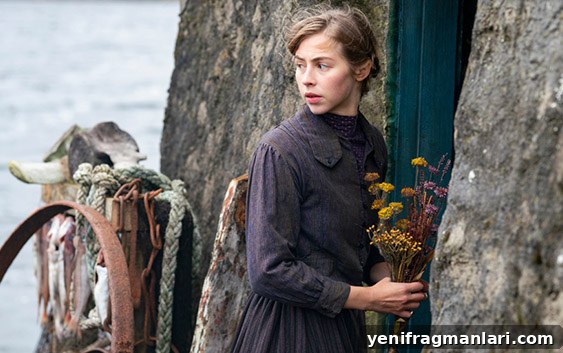
From the first frames, cinematographer Petra Korner showcases the Hebrides’ raw beauty: sweeping coastal vistas, wind-swept moors and salt-dark skies. The film’s visual palette is deliberate and restrained, often framed to contrast the island’s austere landscape with intimate domestic interiors. Period-accurate costumes and handcrafted sets strengthen the sense of place, transporting the viewer into a small, tightly knit community where tradition and expectation are difficult to escape.
The story centers on Kirsty, portrayed by Hermione Corfield, a young woman who loves books and dreams of a life beyond the island’s limited options. Kirsty’s ambitions — particularly her longing to travel to America — establish her as a sympathetic protagonist with modern impulses trapped in an earlier era. Early sequences efficiently sketch her relationships and hopes, most notably a tender courtship with Murdo (Will Fletcher). Their budding romance is a clear emotional anchor for the film; Corfield and Fletcher share a warmth and earnestness that make their scenes together the most affecting parts of the picture.
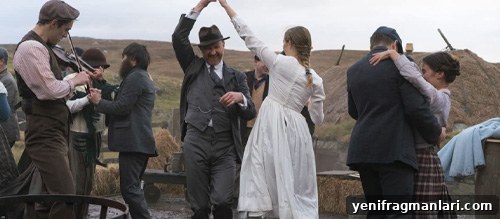
The community prepares for a customary send-off when the island’s young men depart to fight in the war: a road dance, an event that blends celebration and ritual. The film uses this tradition as a turning point, where the island’s collective optimism fractures and private tragedies begin to surface. Adams shows skill in depicting communal life — the markets, gatherings and small social codes that shape daily existence — giving the film a lived-in texture and memorable supporting characters whose smaller arcs enrich the central narrative.
However, The Road Dance struggles in fully developing Kirsty’s psychological journey after the film’s inciting incidents. Major plot events occur rapidly, and the screenplay sometimes moves past crucial emotional moments without giving them the space needed to resonate. As a result, the trauma and isolation Kirsty endures can feel underexplored; the audience is shown the consequences but not always given the interior logic that explains her changing behavior. This gap limits the potency of several contemplative, slower scenes that demand deeper engagement.
Hermione Corfield gives a committed performance, but the material does not consistently permit the deeper emotional shifts the role requires. At times the direction and script leave the actor with less guidance than the story needs, so scenes that should build tension or sorrow instead register as distant. Yet when the film leans into quieter interpersonal moments — small gestures, shared looks, routine domestic acts — it finds its strength, revealing character through texture rather than exposition.
Adams’ handling of wartime sequences strikes a more confident note. The film’s depiction of the islanders’ involvement with the war, and the later battle-related material, are staged with clarity and respect. These passages benefit from economical editing and a restrained approach that avoids melodrama. The contrast between life on the island and the wider violence of the war is effective, reminding viewers how remote communities were affected by global events in very personal ways.
One of the film’s most notable achievements is its sense of atmosphere. Cinematography, production design and costume work come together to create a cohesive period world. The supporting cast offers memorable contributions, giving the community a believable complexity that helps offset some of the script’s structural shortcomings. Moments of genuine warmth and the authenticity of everyday island life elevate the film above a purely sentimental melodrama.
Ultimately, The Road Dance is a mixed but admirable picture. It excels visually and in small, truthful performances, and it contains an emotionally resonant core in the central romance. Yet uneven character development and occasional narrative shortcuts prevent it from reaching the full heights its concept promises. For viewers interested in Scottish period drama, heartfelt romances set against wartime backdrops, or scenic, well-crafted filmmaking, The Road Dance is worth watching — even if it does not fully join the ranks of the country’s most unforgettable recent films.
Rating: 10/24