
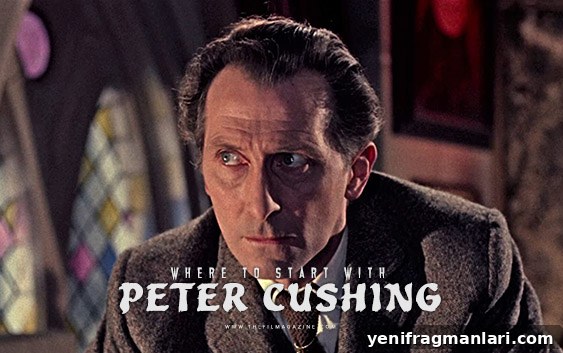
In the nearly 30 years since his passing, the name Peter Cushing still sparks excitement among film enthusiasts. When Guy Henry turned to reveal a computer-generated likeness of the late Surrey-born actor in Disney’s Rogue One, cinemas filled with hushed awe. That posthumous moment—bringing Grand Moff Tarkin back to the screen—remains a fan-favorite sequence in a film packed with iconic scenes. Reactions to that single sequence show that anyone curious enough to explore Cushing’s filmography will not be alone. With a career stretching from the 1930s through the 1980s and more than one hundred credits, Cushing offers a wide range of performances that appeal to many tastes.
Cushing began by seeking a foothold in Hollywood’s Golden Age with small roles in films like The Man in the Iron Mask (1939) and A Chump at Oxford (1939). He soon returned to Britain and contributed to the war effort through the Entertainment National Services Association. His first substantial film role came as Osric in Laurence Olivier’s Hamlet (1948). In the 1950s he became a familiar face on British television, performing in numerous live teleplays. Cushing’s breakthrough came in 1957 with Hammer Films’ The Curse of Frankenstein—an energetic, Technicolor revival that helped re-establish the horror genre. From that point, he became one of Hammer’s principal stars, frequently paired opposite his long-time friend Christopher Lee and occasionally working for rival studios like Amicus.
Across his career Cushing brought to life many of Britain’s most beloved literary and cultural figures: Winston Smith (1984), Mr Darcy, Sherlock Holmes, and even Sir Arthur Conan Doyle. He appeared in major productions including Star Wars-related projects and once played Dr. Who on the big screen. What sets Cushing apart is a combination of craft and humility: he embraced typecasting but treated every role with the seriousness of classical theatre. His screen presence alone elevated much of mid-20th-century British horror and science fiction, and that enduring charisma explains the devoted following he still enjoys.
Below are three essential films that reveal why Peter Cushing remains a cult favorite. Dare you watch them and not be drawn into his world?
1. The Curse of Frankenstein (1957)
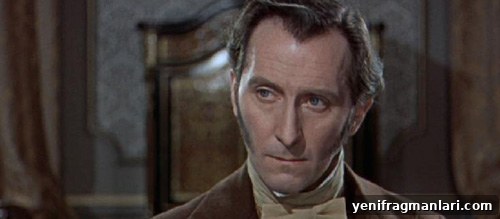
Before Grand Moff Tarkin commanded the Death Star, Baron Victor Frankenstein prowled his laboratory. The Curse of Frankenstein carries quiet reverence: as the first color film adaptation inspired by Mary Shelley’s novel, it is widely credited with reviving mainstream screen horror. Hammer’s original plan for a black-and-white film starring Boris Karloff was altered after legal pressure from Universal, prompting a fresh approach that distanced the production from the 1931 Frankenstein.
The major differences appear in the creature’s makeup and in the creation sequences, but the most important change is to the character of Frankenstein himself. Where Colin Clive’s interpretation in James Whale’s film leans toward tragic romance, Cushing’s Baron is chillingly modern: self-serving, remorseless, and at times gleefully callous. This reinterpretation reframes horror by locating menace in human psychopathy rather than solely in supernatural consequence.
In earlier variants, Frankenstein’s downfall is a melancholic meditation on human pride and scientific hubris. In The Curse of Frankenstein, the thriller element comes from Victor’s moral vacuum. He performs grotesque dissections in the home he shares with his fiancée and murders without hesitation to achieve his aims. Cushing’s performance—equal parts cocky intellect and petulant immaturity—turns the Baron into a deplorable yet oddly magnetic villain. The film’s brutality and Cushing’s energetic wickedness helped shape the modern, gory, action-packed horror that would follow. Cushing returned to this role multiple times, cementing his association with the Frankenstein mythos.
2. The Brides of Dracula (1960)
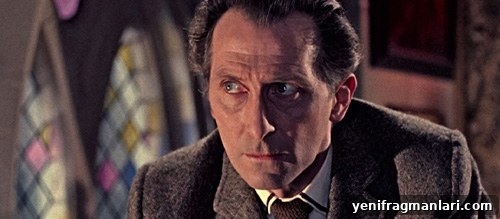
Although Cushing is often remembered for villainous turns, his archetypal role is as Dr. Van Helsing, introduced in Hammer’s Dracula (1958). From that point onward, British B-movies frequently positioned Cushing as the redeeming force—usually a doctor or scientist—who saves the day. In The Brides of Dracula, Christopher Lee initially declined a return to the title role, turning the spotlight over to Cushing’s Van Helsing.
Brides of Dracula is considered a fan favorite for good reason: a wide and talented cast, lavish sets and costumes, and a tonal balance that blends revulsion and seduction. Low budgets are masked by strong production design and confident performances. The film’s campy moments—visible prop bats or the heavy use of crucifixes—are undercut by Cushing’s utterly straight, committed portrayal. His Van Helsing treats his religious instruments as weapons and exudes moral authority, making him a convincing bulwark against dark forces.
Cushing’s Van Helsing is not a brawny action hero; he is gaunt, determined, and humanly vulnerable. That vulnerability increases the impact of the film’s climactic moments, where real physical danger and visceral stakes make the confrontation feel immediate. Cushing’s performance often unites swashbuckling energy with psychological intensity, producing moments of suspense that feel raw and satisfyingly gothic—qualities that modern action sequences sometimes lack.
3. The Skull (1965)
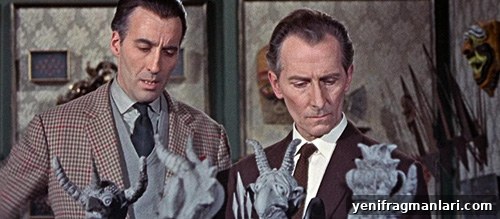
As Hammer dominated the British horror scene, writer-producer Milton Subotsky’s rejected scripts eventually led him to co-found Amicus Productions as a rival studio. Amicus tended toward contemporary portmanteau stories, freeing actors like Cushing to explore roles outside Hammer’s more black-and-white casting choices. The Skull demonstrates this freedom, giving Cushing a character pushed toward the edge of sanity.
Adapted from Robert Bloch’s short story “The Skull of the Marquis de Sade,” the film imagines the Marquis’s depravity as the result of an evil force trapped in his skull. That skull becomes the obsession of Christopher Maitland (Cushing), a demonology researcher who intends to study and dispel the object’s menace. Despite warnings, Maitland’s skepticism gives way to possession and unraveling.
The Skull is knowingly silly in places: padded sequences, visible wires on flying props, and stretches of atmosphere that strain to fill feature length. Yet the film works because Cushing plays everything straight. His descent into madness is at once thrilling and darkly comic. The film’s most memorable moments—camera angles from the skull’s perspective, a hallucinatory trial sequence, and scenes that emphasize psychological breaking points—are elevated by Cushing’s commitment.
Watching The Skull, viewers will alternate between laughter and genuine unease. The movie is not a polished masterpiece, but it is hugely entertaining and, critically, memorable rather than forgettable—a distinction Cushing helps secure. His presence rescues many films from obscurity, giving them heart and dramatic force.
Recommended reading: Where to Start with Universal Classic Monsters
Peter Cushing’s power as a performer lies in his ability to sustain the emotional and entertainment core of a film. Across decades of work he consistently delivered heartfelt, memorable performances that infused modest genre pictures with lasting magic. He remains one of the definitive faces of British horror and science fiction, and his influence helped ensure these films would be watched and enjoyed for generations to come.