
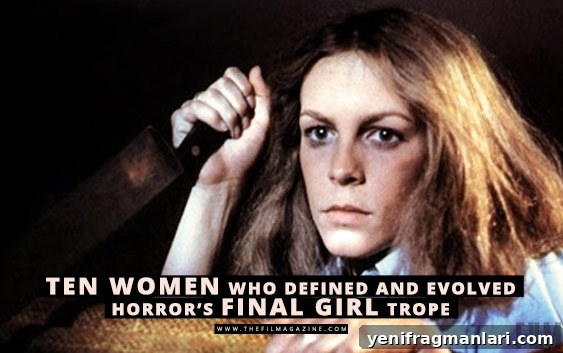
In 1992, Carol J. Clover published the influential study Men, Women, and Chainsaws: Gender in the Modern Horror Film, which examined occult, rape-revenge, and slasher cinema and introduced the concept of the “final girl” — the single character who survives until the end. Clover described this survivor as the one “…who is cornered, wounded; whom we see scream, stagger, fall, rise, and scream again. She is abject terror personified.”
The final girl emerged in response to political and cultural shifts of the 1970s and became a defining element of horror. Over decades she has taken many forms: victim and survivor, virgin and sexually active woman, upstanding heroine and avenger, action-oriented fighter and reluctant killer. Across eras and subgenres, final girls have grown into complex protagonists who repeatedly challenge and redefine the trope.
This Movie List traces the evolution of the final girl from early slasher films — notably The Texas Chain Saw Massacre in 1974 — through contemporary examples. It is both an exploration and a celebration of one of horror’s most enduring archetypes and the women who defined it.
10. Jess Bradford – Black Christmas (1974)
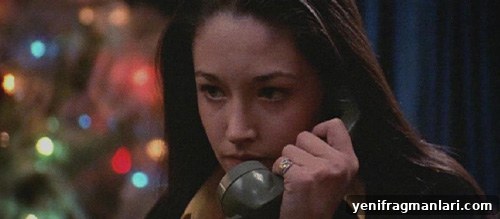
Jess Bradford (Olivia Hussey) represents an early and surprising version of the final girl: complex, politically aware, and emotionally rounded. Unlike some later final girls who survive by conforming to a conservative moral code, Jess is not a virgin; her desire for an abortion marks her as progressive and sex-positive. Her survival asserts that a woman’s sexuality need not be punished by genre conventions.
Jess’s bravery—choosing to stay and attempt to save friends despite knowing the killer is nearby—cements her as a courageous prototype many later heroines would echo. Her ultimate fate is left ambiguous after a violent confrontation with her boyfriend, a narrative device that would become standard in slasher storytelling: the killer may always return for a final scare.
9. Sally Hardesty – The Texas Chain Saw Massacre (1974)
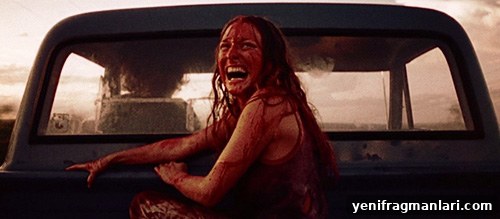
Released months after Black Christmas, Tobe Hooper’s The Texas Chain Saw Massacre follows Sally Hardesty (Marilyn Burns) and her friends as they encounter a family of cannibals. Sally is frequently cited as an archetypal final girl. Although her characterization is minimal—she functions more as a vessel for terror—Marilyn Burns’s raw performance captures a visceral, primal fear that connects powerfully with audiences.
Sally’s battered, terrified survival at the film’s end offers catharsis: the audience shares a collective exhale when the lone survivor escapes. Her depiction shows how the final girl can embody both the body in threat and the body as a site of emotional release, a concept Carol J. Clover discussed in her exploration of horror’s engagement with spectatorship.
8. Laurie Strode – Halloween (1979)
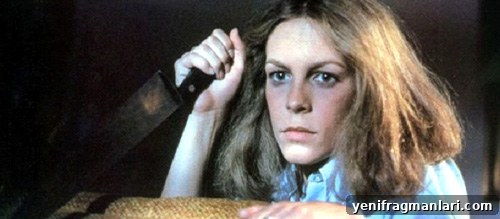
Jamie Lee Curtis’s Laurie Strode in John Carpenter’s Halloween blended traits from prior final girls to form a durable template: cautious, morally upright, and observant. Laurie stands apart from her friends’ reckless behavior and is framed as the “good girl” whose restraint and keenness help her survive a relentless threat.
Over multiple sequels Laurie transforms from a frightened teenager into an enduring action figure—aging into a determined survivor who actively prepares and fights back against Michael Myers. Laurie’s arc helped solidify the final girl as a long-term, evolving protagonist rather than a single-film trope.
7. Ellen Ripley – Alien (1979)
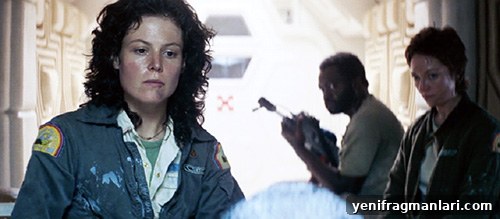
Alien Review
Ellen Ripley (Sigourney Weaver) stands as one of the most celebrated female characters in genre cinema. Originally written as a male, Ripley avoids many gendered clichés and instead embodies competence, intelligence, and leadership. As a senior officer on the Nostromo, she is integral to the crew and survives through skill, resourcefulness, and calm under pressure.
Ripley’s prominence showed that women in genre films could lead through capability rather than narrative luck. Her combination of resilience and tactical thinking influenced many later final girls who survive by confronting threats head-on.
6. Nancy Thompson – A Nightmare on Elm Street (1984)
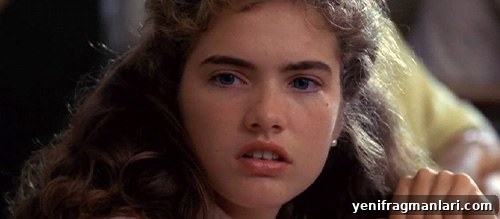
Wes Craven created Nancy Thompson (Heather Langenkamp) as a more active and resourceful heroine, responding in part to criticism of his earlier portrayals of women. Nancy is neither passive nor purely moralistic: she studies her enemy, devises plans, and actively seeks out Freddy Krueger to end his threat.
Nancy’s persistence and ingenuity—fighting back both psychologically and physically—set a template for final girls who are fighters as much as survivors. Though her ultimate arc becomes ambiguous over sequels, Nancy’s influence endures in multiple media and in later self-aware horror that questions the rules of survival.
5. Tina Shepard – Friday the 13th Part VII: The New Blood (1988)
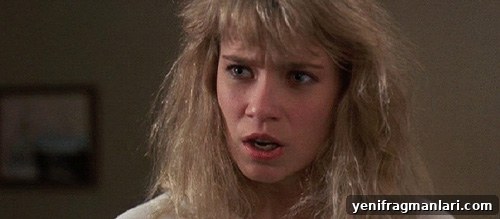
Tina Shepard (Lar Park Lincoln) subverts expectations by bringing supernatural power to the final girl role. Debuting in a film often compared to Carrie, Tina is a telekinetic protagonist who confronts Jason Voorhees with abilities that elevate her from passive survivor to active combatant.
Tina’s guilt over a tragic past and her complex moral standing demonstrate that final girls need not be morally unblemished to survive. Her presence expands the trope to include flawed women with extraordinary means to fight back.
4. Sidney Prescott – Scream (1996)
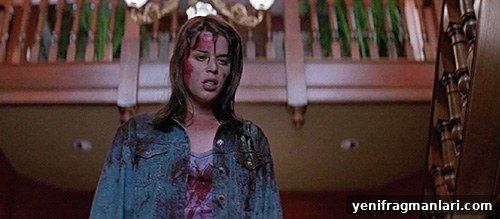
Neve Campbell’s Sidney Prescott helped revive and reinvent the slasher with Wes Craven’s Scream. Introduced as an archetypal “good girl,” Sidney’s journey moves from vulnerability to agency. Scream’s self-awareness and genre-savvy characters explicitly discuss slasher rules—even as Sidney defies them, choosing her own path and surviving despite breaking traditional taboos.
Across sequels Sidney grows into a capable, experienced survivor who confronts threats directly. Her evolution mirrors the trajectory from classic final girl to an action-oriented heroine, echoing the influence of predecessors like Ripley.
3. Anita “Needy” Lesnicki – Jennifer’s Body (2009)
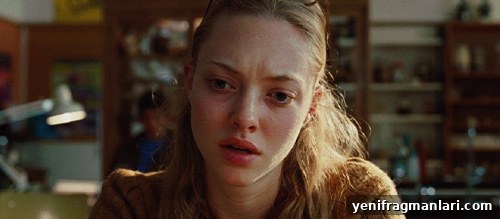
Anita “Needy” Lesnicki (Amanda Seyfried) is an imperfect, emotionally complex final girl: former felon, devoted girlfriend, and best friend to a literal succubus. Needy is sexual and affectionate without shame, and her motivation to avenge the deaths caused by Jennifer highlights a moral clarity rooted in loyalty and justice rather than purity.
When Needy ultimately destroys Jennifer and then confronts the corrupt men behind the tragedy, the film reframes who the real villains are. Needy’s transformation—absorbing power and becoming a darker figure herself—blurs lines between hero and monster and presents a morally ambiguous final girl for modern audiences.
2. Max Cartwright – The Final Girls (2015)

Max (Taissa Farmiga) embodies a reflexive, meta-aware take on the final girl. Pulled into an 80s slasher movie, she is selected as the new final girl largely because she fits the trope’s box: she is a virgin. The Final Girls uses this setup to question the arbitrary moral rules that reward chastity and punish sexuality, asking why only certain women are allowed to survive in genre narratives.
Max’s journey is emotional as well as heroic. When her mother’s on-screen character sacrifices herself so Max can live, Max learns to let go and reclaim her life. The film underscores how survival often comes at a cost but can also lead to growth and healing.
1. Tree Gelman – Happy Death Day (2017)
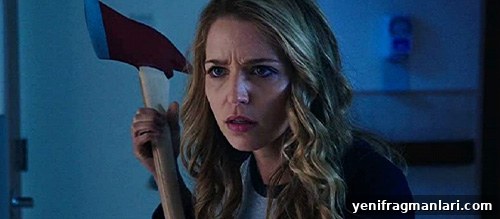
Tree Gelman (Jessica Roth) demonstrates how the final girl has evolved into a layered, redeemable protagonist. Writer Scott Lobdell framed the character by asking: what if the mean girl and the good girl were the same person? Tree begins as selfish and unkind, but repeated confrontations with death force her to change. Over a time-loop narrative she becomes vulnerable, learns empathy, and fights back—not to be punished for past behavior, but to earn a second chance.
Tree’s arc upends the moral calculus of older slashers: she is flawed and finds redemption, and her survival is framed as growth rather than reward for purity. With sequels and ongoing interest, Tree stands as a contemporary model for a final girl who is complex, active, and human.
From early embodiments of terrified endurance to modern survivors who are fighters, thinkers, and morally complex figures, the final girl has continually adapted to cultural change. Has the trope evolved enough to better represent women in film? Are there classic final girls we haven’t mentioned, or new ones who belong on this list? Share your thoughts and favorite final girls in the comments.
Follow The Film Magazine on social platforms for more coverage of horror cinema and character-driven lists.