
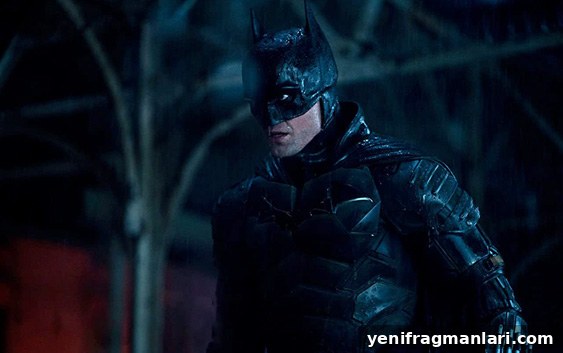
The Batman (2022)
Director: Matt Reeves
Screenwriters: Matt Reeves, Peter Craig
Starring: Robert Pattinson, Zoë Kravitz, Paul Dano, Jeffrey Wright, John Turturro, Peter Sarsgaard, Colin Farrell, Andy Serkis, Jayme Lawson, Alex Ferns
Matt Reeves’ The Batman arrives as a fresh, introspective interpretation of one of cinema’s most enduring superheroes. Over its long history, Batman has been reimagined in many forms: the campy moralist, the haunted vigilante, the tragic avenger, the bitter crusader. Reeves embraces that multiplicity and stakes out a distinct territory: a darker, detective-focused Gotham in which perception, surveillance and obsession are at the story’s core.
In this version, Bruce Wayne (Robert Pattinson) has been operating as the Batman for two years. He is a recluse and a man driven by grief, patrolling Gotham’s streets nightly to contain a rising crime wave. His mission is complicated by two disruptive forces: Selina Kyle, also known as Catwoman (Zoë Kravitz), who occupies a morally ambiguous space between thief and ally, and the Riddler (Paul Dano), a vicious serial killer who claims to be pursuing justice while exposing corruption among the city’s elite and law enforcement. Lieutenant James Gordon (Jeffrey Wright) becomes a key investigative partner, forming a trio that drives the movie’s central mystery.
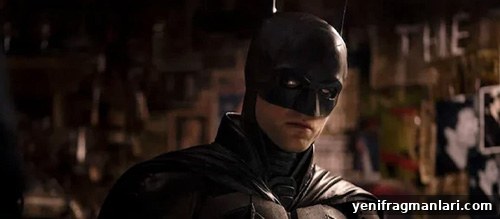
If The Batman can be distilled into a single theme, it is perception. The film constantly returns to the act of looking and being watched—eyes, cameras, lenses and recordings populate many scenes. Instead of relying on high-tech labs and a problem-solving benefactor, this Batman depends on more handcrafted, pragmatic tools: high-tech contact lenses that let him sift through evidence and obsess over details later. Pattinson builds this surveillance-driven intelligence into his performance; his eyes are always active behind the cowl, scanning, cataloguing and calculating.
The film’s detective element is its most refreshing feature. While many cinematic Batmen prioritize action over investigation, Reeves foregrounds sleuthing. The story allows Batman to collaborate rather than operate solo, making room for teamwork that highlights each character’s strengths. Pattinson, Kravitz and Wright form the film’s emotional and investigative center, their chemistry grounded in differing philosophies and methods. Their exchanges feel authentically discordant—partners who respect one another but argue over means and ends.
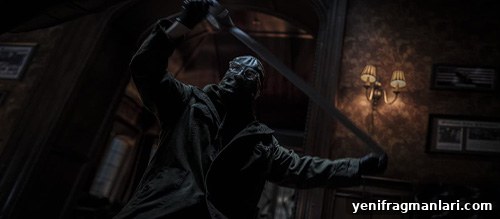
Paul Dano’s Riddler is a chilling portrait of contemporary radicalization: part cult leader, part obsessive conspiracy theorist who weaponizes outrage and online influence. The role demands showmanship, and Dano delivers a disquieting, intense performance. Colin Farrell, almost unrecognizable beneath prosthetics, plays the Penguin with sly humor and ferocious intelligence, offering a different kind of menace that contrasts well with Dano’s volatility.
Gotham itself becomes a character in Reeves’ film. Filmed largely in Glasgow, the city’s Gothic architecture and relentless bad weather create an atmosphere of damp, neon-tinged decay that seeps into every scene. Cinematographer Greig Fraser composes striking images that balance light and shadow, using stark contrasts to emphasize the film’s themes of secrecy and revelation. The production design and cinematography work together to produce a city that feels tangible, oppressive and alive.
Violence in The Batman is brutal and consequential. Fight scenes are raw and unsettling rather than slick; Reeves emphasizes impact and aftermath, often leaving viewers uneasy about how far Batman might go. Early sequences establish this mood when the hero violently subdues a criminal in full view of others, underlining his role as a terrifying presence. The film tracks Batman’s evolution from a figure of fear to a more symbolic, theatrical guardian—someone who must reconcile vengeance with responsibility.
Reeves draws influence from several Batman stories and from classic noir and contemporary thrillers, but the film is not a direct adaptation of any single source. Instead, it synthesizes elements into a unique narrative voice: the mood of noir, the intensity of a modern thriller and the procedural curiosity of a crime drama. Michael Giacchino’s score complements the visuals with a mature, textured sound that deepens the film’s emotional and atmospheric weight.
The Batman offers surprises, including narrative twists and character turns that reframe familiar motivations. While the final act occasionally leans on multiple setups and reversals, the film’s strengths—its performances, world-building and mood—remain consistent. Fans of Batman who appreciate a more contemplative, detective-oriented approach will find much to admire, and viewers seeking a grounded, thematically rich superhero film will find Reeves’ take compelling and purposeful.
Ultimately, The Batman is a bold, distinct reinvention of the Caped Crusader. By focusing on investigation, moral ambiguity and the psychology of its protagonist, the film presents a convincing portrait of a hero teetering between vengeance and vigilantism, and establishes a memorable, textured Gotham that lingers long after the credits roll.
21/24