
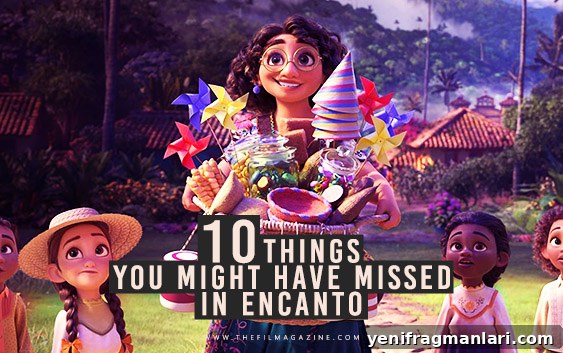
Disney’s 60th animated feature film, Encanto, was released in November 2021 and became an immediate cultural phenomenon.
Directed by Jared Bush and Byron Howard, and featuring voices from Stephanie Beatriz, John Leguizamo and Alan Tudyk, Encanto centers on Mirabel, a young woman who struggles to save the miracle that grants her family their magical gifts—while she herself has none.
With an original score and songs by Lin-Manuel Miranda, the film earned Academy Award nominations for Best Original Score, Best Original Song and Best Animated Feature in 2022.
Disney animations are famously full of layered details, and Encanto is no exception. From subtle visual cues to meaningful symbols that shift how we interpret scenes, the film is packed with background information and cultural references. Below are 10 notable details you might have missed in Encanto. Spoiler alert.
10. Bruno Hiding in “We Don’t Talk About Bruno”
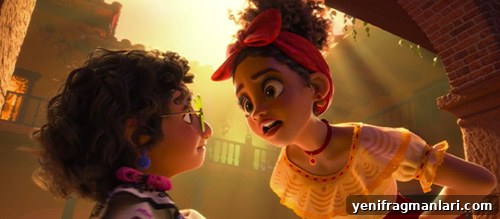
The song “We Don’t Talk About Bruno” became a global hit, but the film sneaks in an additional visual treat: the present-day Bruno. While the song shows Bruno in flashbacks and through Camilo’s shapeshifting, the real Bruno appears briefly during Dolores’ verse. He walks along the upper level of Casita, and Dolores—who can hear everything—steers Mirabel away so she won’t notice him. At the end of the verse Bruno is visible, subtly bobbing his head to the music behind Dolores.
9. Clothing Designs Reflect Each Gift
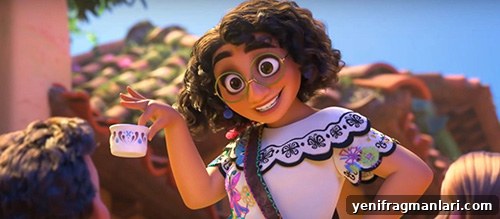
The costume designs in Encanto nod to traditional Colombian styles while embedding symbolic patterns tied to each character’s gift. Abuela’s hemline depicts the mountains that shelter the Encanto; Bruno’s ruana shows hourglasses; Pepa’s dress features suns; Julieta’s apron carries a mortar and pestle; Dolores’ dress includes soundwave-like motifs; Camilo’s ruana has chameleon patterns; Antonio’s waistcoat is decorated with animals; Luisa’s dress hem includes dumbbells; and Isabela’s gown blossoms with orchids, Colombia’s national flower.
Spouses who married into the family also display these connections—Felix’s guayabera echoes Pepa’s sun motif, while Agustín’s wardrobe carries subtle nods to his wife and daughters. Mirabel’s outfit is particularly rich: her embroidery includes a candle for Abuela, a chameleon for Camilo, orchids for Isabela, animals for Antonio, a fist and weight for Luisa, musical notes for Dolores, a rain cloud with sun for Pepa, and a breadbasket for Julieta—visually linking her to each family member.
8. Mirabel’s Lyrics Come True

In “Waiting on a Miracle,” Mirabel sings about moving mountains, making new plants grow and healing what is broken. These lines foreshadow her actions: she plays a role when the mountain cracks open, helps Isabela unlock new ways to grow plants, contributes to repairing the house, and ultimately helps mend the family’s intergenerational wounds. Her song is not mere wishful thinking—it maps directly onto her emotional and narrative arc.
7. Subtle Frozen Callbacks
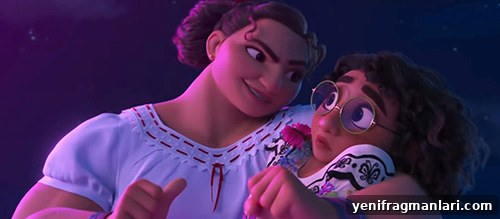
The filmmakers include a few quiet nods to Disney’s own catalog. Beyond broad visual gags that echo earlier films, the clearest musical wink appears in “All of You.” When Bruno asks Pepa for forgiveness he sings a string of imperatives—“Let it in, let it out, let it rain, let it snow, let it go”—and the piano briefly hints at the opening notes of “Let It Go,” a gentle tribute rather than a full quotation.
6. Butterflies Symbolize Change

Yellow butterflies recur throughout the film, closely associated with Mirabel and Abuela. They appear on clothing, in wallpaper, as architectural motifs and during pivotal emotional moments—most notably when Abuela and Mirabel reconcile and are surrounded by hundreds of butterflies. The image of transformation echoes the film’s central conflict: how the family confronts change and what it costs to preserve—or transform—their legacy. The butterfly motif also resonates with Latin American literary imagery, notably Gabriel García Márquez’s frequent use of butterflies as a symbol of fate and metamorphosis.
5. Dolores’ Distinct Mannerisms
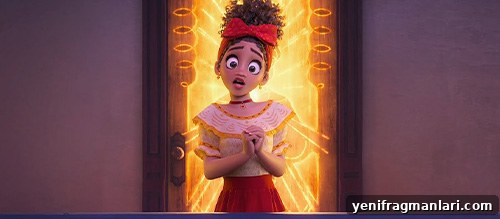
Dolores’ super-hearing is emphasized through subtle animation choices. She often claps using just her index fingers, covers her ears when loud things happen, and speaks almost exclusively in a hush. The scene when Antonio receives his gift is the only moment she raises her voice, which underlines how even normal sounds register intensely for her. These quiet details deepen our understanding of a character whose power would be easy to overlook visually.
4. Bruno’s Wall Slides Tell Stories
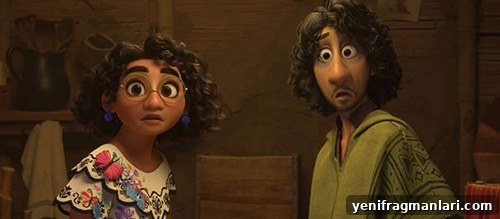
Bruno’s hideout includes wall-mounted “slides” that Bruno uses as entertainment, illustrated by rats acting out scenes. These vignettes contain cultural references: one slide depicts a football match evocative of Colombia’s 1990 World Cup draw with Germany, while another telenovela-style scene hints at melodramatic twists typical of Latin American soap operas. Bruno’s descriptions—such as his joking explanation about an aunt with amnesia—mirror the kind of narrative surprises found in regional literature and popular drama.
3. The Children’s Names Have Meaning
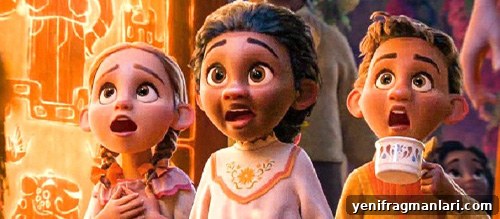
The three children featured during “The Family Madrigal” sequence are named with intention. Cecilia is named after a director’s child; Alejandra honors a cultural consultant who guided the filmmakers through Colombia; and Juancho pays tribute to a designer involved with Mirabel’s costume. The small comic beat about Juancho’s coffee habit playfully references Colombia’s global reputation for coffee production and reflects a normal cultural detail—children sometimes sip weakened coffee in that region.
2. The Power of Threes
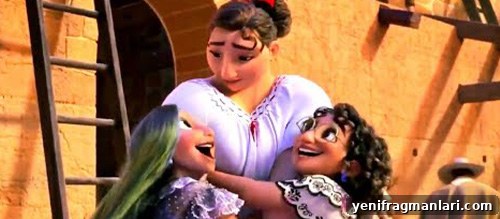
Three is a recurring structural motif: most Madrigal households contain trios, and each trio can be read as a specific “trifecta.” Julieta, Pepa and Bruno align with past, present and future; Camilo, Dolores and Antonio suggest see no evil, hear no evil, speak no evil through their respective gifts; and Isabela, Mirabel and Luisa represent beauty, resourcefulness and strength—an arrangement Mirabel herself alludes to in the film. These groupings reinforce the film’s thematic interplay between identity, role and expectation.
1. The Meaning of Green
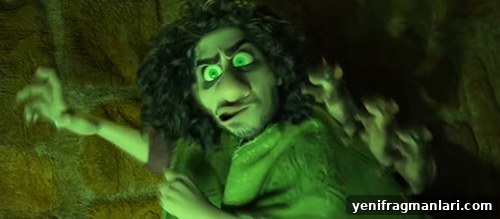
Bruno’s visual palette is dominated by green—his clothing, visions and set dressing—inviting a familiar Disney shorthand that often links green to danger or villainy. The film subverts that expectation by using the same color to connect Bruno and Mirabel: Mirabel’s glasses and her room’s wallpaper also feature green. Rather than marking Bruno as a true antagonist, green becomes a device to highlight how appearances and assumptions can mislead. It underscores one of the story’s central lessons: outward signs do not define a person’s moral worth.
If you noticed other hidden details in Encanto, share what you found in the comments. Follow the original publisher for more lists and film analysis.