

Since its debut at the Cannes International Film Festival in 2021, Joachim Trier’s The Worst Person in the World has been embraced by audiences like the first warm day of spring. The film has earned praise for its honest portrayal of millennial life, its vivid depiction of Oslo, and for a standout central performance by Renate Reinsve, who received BAFTA recognition for her role. Critics and fans alike have celebrated the picture’s emotional clarity, its wry humour, and its unflinching look at modern relationships.
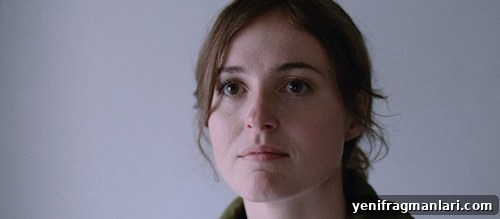
MUBI, the film’s UK distributor, promoted the movie as a deeply romantic experience and even organised Valentine’s screenings in London. Promotional quotes describe it as “a tender relationship comedy with a wonderful freshness” and “one of the best romantic films of recent times.” Those descriptions capture part of the film’s appeal, yet Trier’s drama also quietly resists the conventions of mainstream romance. While it contains moments of sensuality and warmth, it challenges familiar expectations about love, commitment and the shape of a satisfying ending.
The Worst Person in the World follows Julie, a woman navigating her late twenties as she tries to discover who she is. Julie moves through several identities — medical student, psychology student, photographer, bookshop assistant — and the film tracks her personal and professional uncertainty alongside her romantic life. She falls in and out of relationships, and ultimately becomes involved with Aksel, a much older, established author. Later she falls for Eivind, a younger man she meets under spontaneous circumstances. Over roughly two hours we witness Julie’s evolving sense of self as she experiences love, loss, desire and confusion. By the film’s end she is alone, and unexpectedly at peace.
Both central relationships in the film are compelling and richly observed. Each contains tenderness, frustration, passion and moments of pure joy, yet they are very different from one another in tone and significance. Julie and Aksel’s bond is shaped by history, intellectual affinity and a complex power dynamic; Julie and Eivind’s relationship is driven by immediacy, attraction and a sense of unfolding possibility. Trier and co-writer Eskil Vogt use these relationships less to stage melodrama than to reveal Julie’s interior life and her gradual journey toward self-understanding. This is Julie’s story first and foremost.
The film departs from the typical romantic-comedy structure in a few notable ways. Julie occupies the centre of the story, but she engages in two central romances without the narrative forcing a reductive “one true love” choice. The film avoids a conventional love-triangle melodrama; instead, it treats both relationships as meaningful and valid without portraying them as rivals. This approach feels more mature and realistic than many genre entries and reflects how a person’s romantic life can include multiple deep connections without a single defining, final romance.
A key sequence early in the movie highlights how the film rethinks intimacy. When Julie and Eivind first meet, both are technically in other relationships, yet the chemistry between them is electric. They agree playfully to flirt without crossing the line into overt cheating, and the resulting night — full of small, intimate gestures, cigarette smoke, close conversation and shared silences — becomes one of the movie’s most charged and memorable scenes. Remarkably, this scene contains little explicit sexual action yet reads as intensely erotic because of the emotional proximity and the characters’ mutual curiosity.
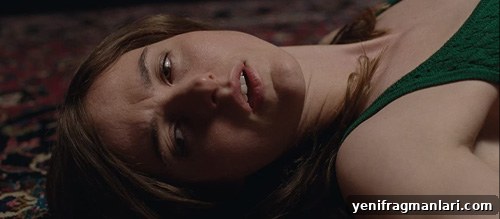
The film also explores intimacy in quieter, more lasting ways. Later, when Julie and Aksel are no longer romantically involved, their bond remains present and meaningful. They seem to understand one another more clearly than when they were together, and their renewed closeness becomes less about rekindling passion and more about acknowledging an enduring human connection. This portrayal refuses simple categorisation: it is neither romantic nostalgia nor bitter regret, but an honest depiction of two people who once loved each other and continue to matter in each other’s lives.
Julie’s self-criticism and vulnerability deepen the film’s emotional stakes. The title suggests a protagonist who believes she is somehow failing, yet the movie refuses to punish her for being imperfect. Instead it renders her complexity with empathy. Modern screenwriting has shifted toward more realistic, messy female leads, and Julie joins a line of characters who are allowed compassion even when they make flawed choices. Renate Reinsve’s performance is central here — she brings tenderness, impatience, warmth and anger to Julie, making her intimately believable and impossible to dismiss as simply selfish or irresponsible.
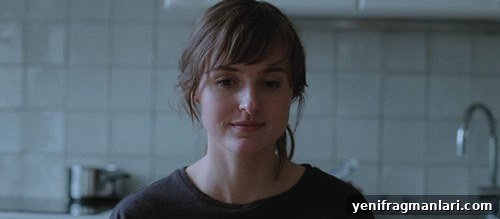
At the film’s close, Julie stands alone and appears content. This outcome defies the expected matchmaking happy ending, but it reads as a genuine resolution for her character: she has learned from her relationships and seems to have found her direction. Trier’s film suggests that the most important love story in a life can be the one a person has with themself — a relationship arrived at through experience, mistakes and self-reflection.
The Worst Person in the World is one of the most thoughtful romantic dramas of recent years. It contains scenes that linger in the mind and swell with yearning, yet its truest achievement lies in depicting the varied faces of intimacy and the messy, humane reality of a protagonist who is far more complicated than the title implies. The film’s tenderness, honesty and refusal to tidy its characters into tidy archetypes make it deserving of the admiration it has received.
Written by Rehana Nurmahi
You can support the author of this article, Rehana Nurmahi, on social platforms: Twitter – @Han_notsolo; Letterboxd – hana_banana97; Portfolio – Authory (RehanaNurmahi)