
Long Live My Happy Head (2022)
Directors: Will Hewitt, Austen McCowan
Screenwriters: Will Hewitt, Austen McCowan
Long Live My Happy Head is a deeply affecting documentary that uses art and animation to explore mortality, resilience, and love. Directed by Will Hewitt and Austen McCowan, the film follows Gordon, a 39-year-old comic artist in Edinburgh, as he navigates life with an inoperable brain tumour. Through his own drawings and voiceover, Gordon transforms painful, personal experiences into tender, darkly comic, and ultimately hopeful storytelling.
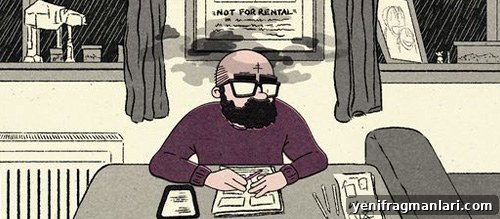
Diagnosed in his early thirties, Gordon was originally given an eight-to-ten-year prognosis that later worsened to two-to-three years as the tumour continued to grow. Defying those expectations, he remains alive seven years on, living alongside the mass he has nicknamed “Rick.” The film balances candid, emotional interviews with animated sequences inspired directly by Gordon’s comics. The contrast between the vulnerable, real-life Gordon and his deadpan animated alter ego—whose eyes remain obscured behind glasses—creates a striking and often humorous tension.
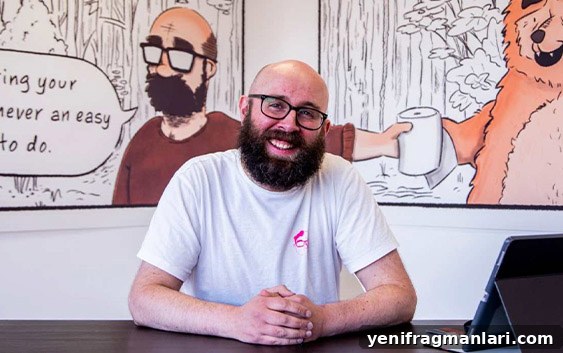
Gordon began creating comics about his condition at the suggestion of his school friend, Richie. His work channels the complexity of confronting a terminal diagnosis into characters and scenarios that are at once candid and clever. The animation preserves the look and tone of his illustrations, turning internal struggles into visual narratives. Humour appears alongside the difficult moments—for example, a comic panel that jokes about the awkwardness of confronting mortality by depicting a character offering a toilet roll to a bear—keeping the film from becoming relentlessly bleak.
A central strand of the film is Gordon’s relationship with Shawn, an American he met while Shawn was visiting the UK for work. What began as a brief encounter grew into a committed partnership after Gordon disclosed his diagnosis. The couple’s tenderness and mutual support are palpable, shown in intimate moments across Edinburgh—most memorably a scene atop Arthur’s Seat overlooking the city—and in their participation in Pride events. Their bond provides the film’s emotional backbone and illustrates how love and companionship persist in the face of uncertainty.
Gordon also engages with broader communities of people who use art to process illness. At a Graphic Medicine conference in Brighton, he connects with others who confront disease through visual storytelling. These encounters illuminate how creative work can both document lived experience and offer material that would have been valuable to read while living through similar challenges. One attendee poignantly frames their motivation: they wrote because they wanted to create the kind of work they would have needed when they were ill.
Seizures are a frequent and terrifying part of Gordon’s life. When they occur, he is disoriented and unable to explain the experience directly—an isolation the film conveys powerfully through animation and testimony. The documentary emphasizes the importance of a caring network during such episodes, a need made even more urgent by the Covid-19 pandemic. Lockdown circumstances compound Gordon’s vulnerability: Shawn could not return from the United States initially, and Gordon—classified as clinically vulnerable—endured a prolonged period of isolation, reliant on his art and routine to maintain his mental health.
The pandemic also threatens the couple’s ability to say goodbye. Gordon turned 40 during lockdown, celebrated over an emotional Zoom call, and at one point it seems they might never reunite in person. Fortunately, when restrictions eased, Shawn was able to visit for a tearful reunion. Despite that reunion, practical obstacles—work, visas, health systems, and finances—prevent either man from relocating permanently, underscoring the systemic barriers that can complicate caregiving and companionship for people with serious illness.
Musically, Alexandra Hamilton-Ayres provides a subtle but effective score that supports the film’s emotional arc without manipulating it. Her compositions underscore moments of reflection and tenderness while allowing Gordon’s story to carry its own emotional weight. The documentary’s tone is measured: honest, unobtrusive, and humane.
While the film focuses primarily on Gordon’s individual journey, it touches on broader themes that will resonate with many viewers. Most people have some experience with cancer, whether personally or through loved ones, making the film’s exploration of fear, acceptance, creativity, and support feel widely relevant. Some viewers might wish the documentary spent more time on interviews with fellow patients and carers who inspired Gordon’s comics. Still, the directors’ choice to maintain a concentrated, intimate portrait of one life allows the audience to connect more deeply with Gordon’s emotional reality.
The documentary’s final tone is quietly optimistic. It does not shy away from sadness or the practical brutality of living with a terminal condition, but it also celebrates moments of laughter, connection, and acceptance. Gordon’s own summation—“I’m happy but sadness is there. Perhaps in equal measure”—captures the film’s bittersweet honesty and its refusal to reduce life with illness to a single feeling.
Score: 22/24