
We live in an age of CGI dreamscapes, where almost any on-set mistake can be “fixed in post” by teams of artists and technicians. Whether it’s a stray hair on an actor’s face or an entire environment that never existed in reality, modern visual effects teams can remove, replace, or create it. Big-studio franchises and auteur filmmakers alike use this capacity to realize their visions more precisely than ever before.
Despite criticism from purists, computer-generated imagery has enhanced many aspects of filmmaking. Directors with a precise visual language can now achieve shots that were previously impossible, and studios can stage battles across galaxies or construct cities that exist only in imagination. CGI has shortened the distance between fantasy and reality, fueling the explosion of spectacle-driven genres such as comic-book adaptations and contemporary fantasy films.
One filmmaker closely tied to the modern rise of CGI is Steven Spielberg. A contemporary and collaborator of George Lucas and his Industrial Light & Magic studio, Spielberg embraced advancing technology early in his career. His third theatrical feature, Close Encounters of the Third Kind (1977), pointed toward a future where visual effects would play a central role in blockbuster storytelling. Over the following years, Spielberg continued to incorporate state-of-the-art effects into films like E.T. the Extra-Terrestrial (1982) and Hook (1991), gradually blending practical techniques with digital innovation.
“I think I’m extinct.”
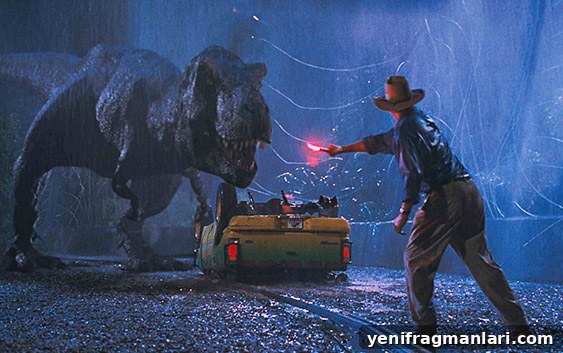
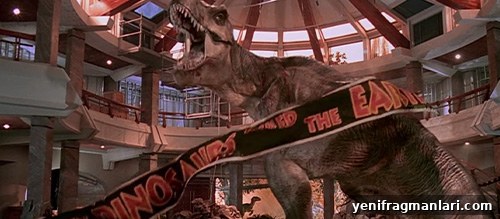
In 1993 Spielberg oversaw what many regard as a pivotal moment in the development of photoreal CGI: the dinosaurs in Jurassic Park. Universal and Spielberg’s Amblin Entertainment joined forces with Industrial Light & Magic to create digital creatures so convincing they instantly became legendary. The story of effects supervisor Phil Tippett reportedly saying, “I think I’m extinct,” upon seeing the new CGI stands as a landmark anecdote in VFX history.
The T-Rex sequence in the rain is still one of the most photoreal moments in mainstream cinema, and its cultural impact ranks alongside some of the medium’s most iconic images. Without the convincing blend of practical animatronics and cutting-edge digital work, key sequences—such as the T-Rex chase after Dr. Ian Malcolm (Jeff Goldblum) or the velociraptor hunt near the film’s climax—would not have felt as threatening or immediate.
Jurassic Park premiered before Titanic, before Pixar’s explosion, and before films like The Matrix reshaped action filmmaking. Groundbreaking visual effects existed before 1993, but Jurassic Park set a new standard: the combination of believable creature design, advanced digital rendering, and a director who knew precisely how to stage suspense. Its continued influence isn’t owed to stagnant technology or declining skill, but to Spielberg’s mastery of cinematic storytelling at the peak of his creative powers.
Soon after, it’s clear Spielberg intended Jurassic Park to rely on as many practical effects as possible. Even so, much of the film’s most memorable imagery depended on software that was still new and untested at scale. Studio executives were anxious, but Spielberg’s excitement—and his desire to honor classical staging and visual storytelling—led him to combine practical animatronics with CGI, using each medium where it could best serve the narrative and emotional truth of a scene.
Jurassic Park may not present the most detailed early CGI ever created, but it remains the gold standard because Spielberg achieved what all filmmakers strive for: he made us believe.
Spielberg’s command of blocking—the movement of people and objects within a shot—contributes enormously to the film’s realism. While Jurassic Park is a high-budget spectacle, many of its scenes are surprisingly restrained and carefully composed. He uses blocking to heighten character reactions and to make interactions with dinosaurs feel palpably real. The result is cinema that suspends disbelief not through flashy technique alone, but through consistent, tangible detail.
Early in the film, an animatronic velociraptor hatches from an egg while John Hammond picks away a fragment of shell from the newborn’s head. Instead of isolating the creature behind glass for safety and narrative convenience, Spielberg chooses what feels truer to the audience’s experience: proximity. The director privileges the viewer’s emotional response, allowing us to share the characters’ awe and unease.
Those small decisions—having characters touch or be touched by the creatures—create a visceral sense of reality. Scenes in which Alan Grant leans his weight against a fallen triceratops or where characters interact directly with animatronic heads make the dinosaurs seem like part of the same physical world as humans. This integration reaches its climax when the T-Rex escapes its enclosure.
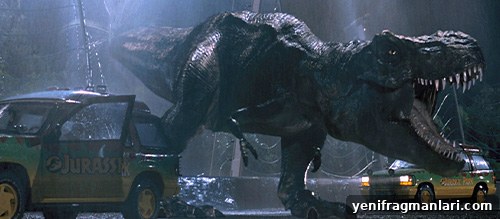
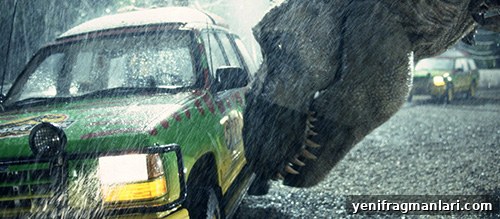
Spielberg presents the T-Rex through close-ups of an animatronic head and wider shots of CGI, switching between media seamlessly to maximize impact. He establishes the environment and the characters’ positions before the creature fully reveals itself, so when the fence gives way and the T-Rex approaches, every tremor, ripple, and shattered object feels consequential. Rain soaks the creature and glints off its constricted pupils; cars are spun and crushed; handheld objects wobble and fly free. These physical reactions anchor the digital creature to the tangible world of the film.
Later moments deepen this approach: Dennis Nedry is attacked by a smaller dinosaur whose presence leaves unmistakable effects on metal and flesh; a velociraptor breathes condensation onto a kitchen window and smashes into a cabinet; the creatures manipulate door handles and open spaces that any viewer would recognize as everyday reality. By focusing on small, believable interactions—spoon trembling in a child’s hand, dust blown by a rotor, jelly wobbling—Spielberg ensures that the dinosaurs’ existence feels immediate and threatening.

From the opening scenes onward, nearly every character is shown interacting with someone or something in their environment. Spielberg’s staging choices make these interactions feel natural and consequential, helping viewers accept the film’s fantastic elements as plausible within its own rules. Even moments that may look dated in isolation—like the first reveal of the dinosaurs—remain effective because the camera frames human reaction before showing the spectacle, extending that moment of wonder and emphasizing scale.
Jurassic Park did more than showcase impressive visual effects; it took a creative and financial risk that helped redefine how movies were made. It combined technological innovation with meticulous direction and practical craftsmanship to produce sequences that still influence filmmakers and VFX teams today. Three decades on, the film remains a benchmark for visual storytelling: a timeless classic that demonstrates how effects best serve cinema when they are married to human performance, careful staging, and a director’s clear vision.
Recommended for you: Jurassic Park / World Movies Ranked