
This article was originally published to SSP Thinks Film by Sam Sewell-Peterson.
Doctor Strange (2016)
Director: Scott Derrickson
Screenwriters: Jon Spaihts, C Robert Cargill, Scott Derrickson
Starring: Benedict Cumberbatch, Chiwetel Ejiofor, Rachel McAdams, Tilda Swinton, Benedict Wong, Mads Mikkelsen, Michael Stuhlbarg, Benjamin Bratt, Scott Adkins
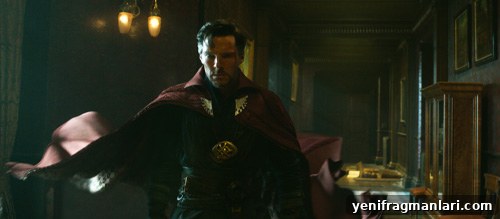
When Marvel introduces a new character to its cinematic universe, it often faces the difficulty that many comic-book origins follow a similar arc: a talented but arrogant individual is humbled, then transforms into a selfless hero. Doctor Strange’s origin shares elements with other MCU figures — the fall from grace, the personal journey toward redemption — and the film’s first act can feel familiar if you’ve recently seen other origin stories. Yet Doctor Strange distinguishes itself through bold visual invention and fresh conceptual ideas that make its familiar beats feel earned rather than derivative.
Stephen Strange (Benedict Cumberbatch) is a brilliant neurosurgeon whose ego and skill define him until a catastrophic car crash leaves his hands damaged and his future uncertain. Desperate for a cure, he travels to the Himalayas and is drawn into the world of the Ancient One (Tilda Swinton), a leader of mystic defenders who safeguard reality from interdimensional threats. Strange must confront his own flaws and learn the rules—and limits—of sorcery before the rogue sorcerer Kaecilius (Mads Mikkelsen) completes a ritual that could tear open the barrier to the Dark Dimension.
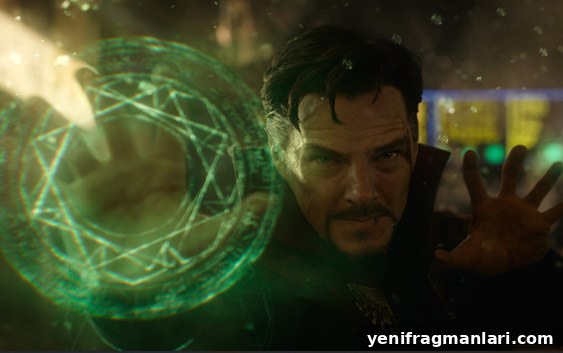
Director Scott Derrickson announces a striking visual identity from the opening sequence: a jolting magical heist and chase through London that immediately sets the tone. The film delivers jaw-dropping imagery—cities folding onto themselves, kaleidoscopic shifts of perspective, shards of reality intruding into familiar spaces, and an inventive, gravity-defying fight staged across reversed timelines. These effects create a psychedelic, mind-bending atmosphere that stands among the MCU’s most original visual achievements and places Doctor Strange in a lineage of films that manipulate perception to dramatic effect.
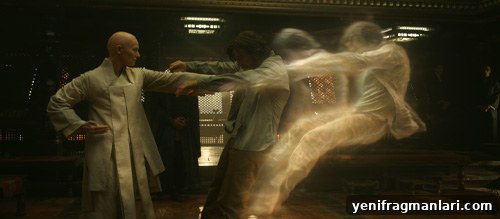
Benedict Cumberbatch gives a performance that suits the film’s blend of arrogance and vulnerability. He plays Strange as a competitive, sharp-witted surgeon who slowly learns humility—but who never entirely loses the quick intelligence and biting humor that made him who he was. Chiwetel Ejiofor’s Mordo suggests deeper internal conflict beneath a composed exterior, while Mads Mikkelsen injects a dry, unsettling charisma into Kaecilius. Rachel McAdams provides a grounded human reaction to Strange’s transformation, refusing to reduce her character to a simple romantic anchor. Tilda Swinton’s Ancient One modernizes and humanizes a figure who could easily have been a stereotype; her presence stabilizes the film’s mystical core, even if the role could have leaned further into eccentricity to better harness Swinton’s unique talents.
Marvel’s frequent injection of humor into dramatic sequences works well here. A recurring joke—Strange comparing the stoic librarian Wong (Benedict Wong) to a list of famous mononymous musicians—adds lightness without undermining stakes. Even intense action set pieces are leavened by moments of physical comedy, particularly in early scenes where Strange’s spells misfire and his successes often come more from chance or his sentient cloak than from mastery of sorcery.
That said, the film’s sensory overload can be a double-edged sword. At times the visual complexity becomes nearly overwhelming; human perception can only absorb so much rapid, reality-bending imagery before clarity suffers. The opening and final set pieces succeed through boldness and cinematic ambition, but the sequence that concludes the film’s second act—Chasing Kaecilius through the malleable Mirror Dimension—features so many simultaneous transformations that tracking emotional and narrative beats becomes a real challenge.
Doctor Strange isn’t a dense thematic odyssey, nor does it need to be. It is abundant in imagination, flair, and character: a vivid, entertaining entry in the MCU that elevates spectacle with personality. The film leaves the broader cinematic universe with intriguing narrative possibilities, and Strange’s abilities—while formidable—don’t eliminate future tension. The MCU contains other powerful, color-coded mystics whose own stories and struggles have occasionally undermined their advantages; those dynamics ensure Strange’s power remains a source of story potential rather than inevitability.
19/24