
Thor: Love and Thunder (2022)
Director: Taika Waititi
Screenwriters: Taika Waititi, Jennifer Kaytin Robinson
Starring: Chris Hemsworth, Christian Bale, Natalie Portman, Tessa Thompson, Taika Waititi, Russell Crowe, Jamie Alexander
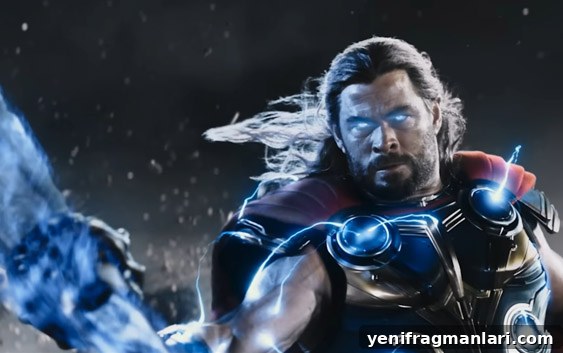
The comic arc that reimagined Jane Foster as the Mighty Thor and explored her struggle with terminal illness was one of the strongest Marvel runs in recent years. That storyline is the clear inspiration behind this film, which finally brings Natalie Portman’s Jane Foster back into the Marvel Cinematic Universe in a much larger role than she occupied after 2013’s Thor: The Dark World. Chris Hemsworth returns as Thor, and the story reintroduces familiar dynamics while adding a new, darker threat in the form of Gorr the God-Butcher.
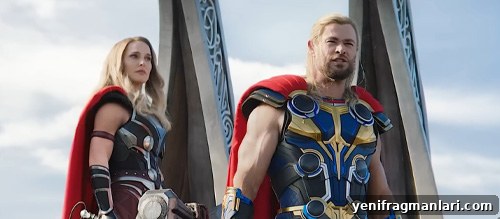
Following the events of the Infinity Saga, Thor has regained his physical form and spends time adventuring alongside the Guardians of the Galaxy. His life is interrupted when Jane reappears, now wielding Mjolnir and carrying Asgardian powers. Meanwhile, Gorr (Christian Bale) rises as a terrifying antagonist: a god-killer armed with a weapon capable of destroying deities, driven by a wrecked faith and a ruthless mission.
Taika Waititi leans into a surprisingly romantic and often comic tone, turning parts of the film into an offbeat rom-com about two former lovers and the jealous, anthropomorphized hammers that stand between them. Fans of the comics will appreciate how the film gives personalities and agency to Mjolnir and Stormbreaker, using that conceit to explore Thor and Jane’s unresolved relationship in a fresh, frequently absurd way.
Natalie Portman proves a standout as both action hero and emotional center, giving Jane Foster genuine heart and agency. Christian Bale delivers a committed, unsettling performance as Gorr, crafting a villain whose pain and conviction make him both frightening and strangely sympathetic. Like other memorable Marvel antagonists, Gorr’s motives are not purely villainous; his tragic origin gives the character real weight and moral complexity.
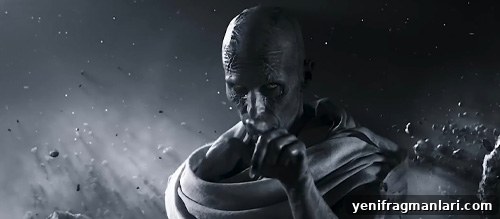
The film opens by tracing Gorr’s origin: a man whose faith is shattered by the cruelty or indifference of gods, leading to a destructive quest for revenge. This sets up a recurring theme: many gods portrayed here are corrupt, self-absorbed, or cruel. The film’s depiction of divine beings questions whether gods deserve worship and whether their fall might, in some ways, be justice.
Russell Crowe plays an extravagantly hedonistic Zeus who presides over a decadent, pleasure-soaked city. His performance is intentionally over the top, emphasizing the contrast between the gods’ indulgence and the real suffering caused by divine negligence. This portrayal reinforces Gorr’s moral logic while highlighting the film’s satirical edge.
The screenplay, by Waititi and Jennifer Kaytin Robinson, mixes comedy, pathos, and spectacle, but it is uneven. The first hour often feels cluttered and unfocused: Thor drifting with the Guardians, jokes that repeat beyond their welcome, and narrative beats that echo themes the character has already explored in earlier films. The film revisits Thor’s familiar arc about what it means to be a hero and to be worthy, sometimes without adding significant new depth.
Certain production choices also distract. Some set pieces and large-scale visual effects are dazzling, especially sequences that play with bold visual contrasts, but other moments feel cheap or unfinished. Scenes where characters appear frozen on sparse backlots or in indistinct spaces undermine the film’s otherwise vibrant palette. When the creative team leans into striking aesthetics—like the monochrome Shadow Realm—the film’s ambitions shine; when it relies on cheaper-looking setups, the contrast is jarring.
Waititi’s signature humor is on full display, though sometimes it undercuts emotional stakes. Korg, voiced by Waititi, delivers many charming and funny moments, but his repeated storytelling beats dilute their impact. A few visual gags—like the screaming goat joke—work once but feel overused when repeated. The balance between comedy and pathos occasionally tips too far toward broad humor, which can reduce tension in key scenes.
The supporting cast delivers mixed results. Tessa Thompson’s Valkyrie remains compelling and charismatic, but her arc and presence are often sidelined. She receives a few memorable moments in action and character beats, yet the film doesn’t consistently integrate her into the main emotional throughline. Other ensemble characters contribute color and energy, but the film’s focus shifts frequently, affecting cohesion.
Despite its flaws, the film works when it narrows its focus on Jane Foster and Gorr. Portman and Bale elevate the material, creating a compelling emotional core and a credible, menacing antagonist. The movie offers genuine laughs, striking visuals, and moments of sincere feeling, even if its tonal swings and pacing issues keep it from being among the strongest entries in the Marvel canon.
Thor: Love and Thunder is entertaining, imaginative, and occasionally moving, but it is also uneven. It excels in scenes anchored by strong performances and bold visuals, while weaker structural choices and inconsistent effects prevent it from fully realizing its potential. Fans of the comics and of Waititi’s offbeat sensibility will find much to enjoy, but viewers seeking a consistently tight, emotionally steady superhero movie may be left wanting more.
Score: 15/24
Recommended for you: Every MCU Marvel Cinematic Universe Movie Ranked