
Blonde (2022)
Director: Andrew Dominik
Screenwriters: Andrew Dominik
Starring: Ana de Armas, Adrien Brody, Bobby Cannavale, Xavier Samuel, Julianne Nicholson
Blonde sets out to dramatize the private life of Marilyn Monroe, presenting a version of Norma Jeane that blurs the line between historical fact and speculative fiction. The film follows her from a traumatic childhood—marked by instability and abandonment—to her rise as a screen icon, tracing the cost of fame through a succession of abusive relationships and personal losses. It promises an intimate, unsettling portrait of the woman behind the public persona.
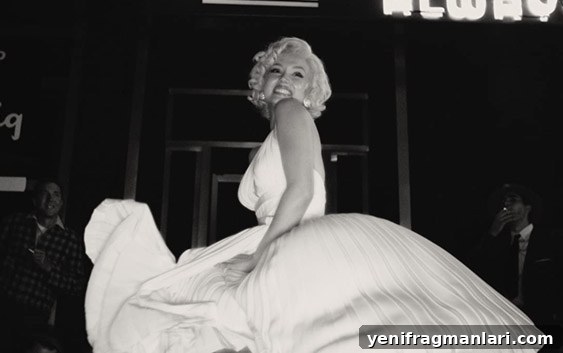
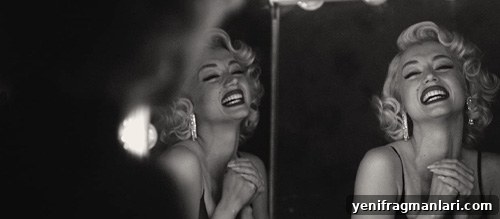
Ana de Armas offers a striking, committed performance, fully inhabiting the fragile, bewildered figure at the film’s center. She convincingly conveys vulnerability, confusion, and a yearning for affection that never quite takes root. De Armas’s work is nuanced and emotionally present; it is the clearest achievement in a film that otherwise struggles to find a consistent dramatic purpose.
Director Andrew Dominik makes bold formal choices. The film shifts repeatedly between aspect ratios and color palettes—moving from tight 1:1 frames to expansive 2.35:1 widescreen, and alternating between color and black-and-white sequences. Those transitions call attention to the constructed nature of cinema and to the artifice of Hollywood itself. In doing so, Dominik aims to unsettle the viewer and to mirror the split between Norma Jeane’s private identity and her public mask of Marilyn. At its best, this formal play amplifies the film’s themes: the pressure to perform, the fragmentation of self, and the industry’s role in shaping—and exploiting—women’s images.
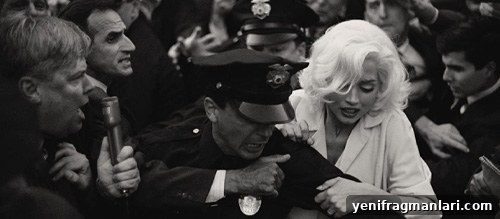
However, bold style does not always translate into effective storytelling. After the first hour, the film frequently lapses into repetitive cycles: a relationship forms, a pregnancy or hope arises, the partner departs, and Monroe is left to endure another round of public scrutiny and private anguish. This pattern, repeated across multiple episodes, creates a feeling of monotony rather than deepening our understanding of the character. The repetition may be intended to evoke the relentless nature of abuse and exploitation—but the result is often a slow, wearisome rhythm that undercuts emotional impact.
The screenplay takes liberties that can feel more sensational than illuminating. By favoring a stylized, almost mythic account over clearer, more focused psychological insight, the film sometimes flattens Marilyn into an archetype of victimhood. That choice raises questions about the ethics of transforming a real person’s life into speculative melodrama: when does artistic interpretation become exploitation? Dominik’s approach rarely offers the counterbalance of nuance that would make the darker episodes feel necessary rather than overwrought.
Visually, the film is meticulous and at times haunting. Production design, costuming, and cinematography work together to recreate Hollywood glamour while exposing its seams. These technical accomplishments enhance the atmospheric quality of the piece, even when the narrative momentum falters. Moreover, the decision to foreground artificiality—the changing frame sizes, the deliberate shifts in tone—can succeed as a critique of performance and persona. Yet, employed without sharper dramatic stakes, those devices risk feeling like stylistic ornamentation rather than substantive commentary.
There is a persistent tension between the film’s ambition to unsettle and its occasional indulgence in spectacle. If the project’s aim is to present a fictionalized, tragic view of Norma Jeane as someone perpetually seeking validation and safety in doomed attachments, it accomplishes that aim. If the aim is to offer a cohesive, revelatory reappraisal of Marilyn Monroe’s life and legacy, the film comes up short. A tighter script, less repetition, and a clearer sense of purpose might have transformed this into a more powerful experience.
Ultimately, Blonde is a film anchored by a remarkable central performance but hampered by its own excesses. It is visually daring and emotionally raw in places, yet overstays its welcome and too often substitutes style for narrative clarity. Viewers should watch for Ana de Armas’s extraordinary portrayal, while remaining aware that the film’s speculative treatment of a real woman’s life may feel sensational and inconclusive.
Score: 10/24