
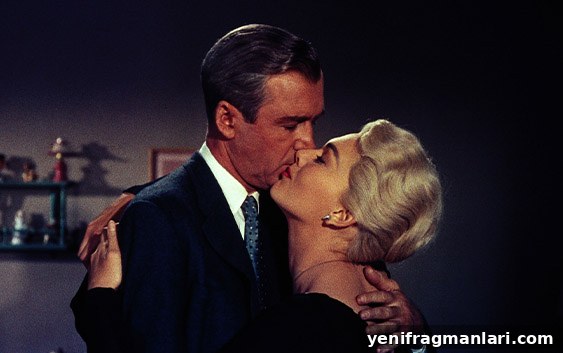
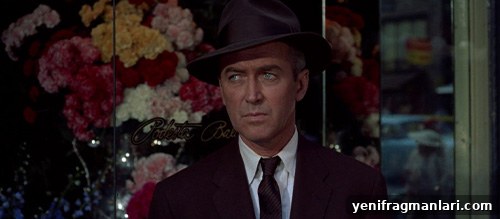
Vertigo (1958)
Director: Alfred Hitchcock
Screenwriter: Alec Coppel, Samuel A. Taylor
Starring: James Stewart, Kim Novak, Barbara Bel Geddes, Tom Helmore, Henry Jones
The name Alfred Hitchcock carries a weight of expectation that can make approaching his films an intense experience. Widely regarded as a master among filmmakers and critics, Hitchcock’s influence stretches across generations and genres. His 1958 film Vertigo occupies a particularly prominent place in his body of work. Over the years it has been reassessed and celebrated for its inventive storytelling, psychological depth, and visual craft, and now stands as one of the most discussed and analyzed films of the mid-20th century.
Vertigo is an excellent example of Hitchcock’s reach and the many creative currents that trace back to him. Elements of its mood and structure appear in later works by a diverse set of directors: the dreamlike atmosphere resonates with the surreal narratives embraced by filmmakers such as David Lynch, while echoes of its character dynamics and setting can be spotted in other, very different films. The movie’s San Francisco locations, haunting score, and careful composition have all contributed to its enduring cultural footprint.
The story begins with John “Scottie” Ferguson, played by James Stewart, who has retired from the police force after a traumatic incident revealed a crippling acrophobia—an extreme fear of heights. The film’s early dialogue can feel dated in its expository clarity, at times resembling the stagey, direct approach Hitchcock employed in his anthology television work. Despite that, these early scenes are effective in setting up the characters and their emotional stakes. Midge (Barbara Bel Geddes) emerges as a poignant foil for Scottie: intelligent, loyal, and patient, she exposes his blind spots and becomes an emblem of the life and affection Scottie is unable to fully accept.
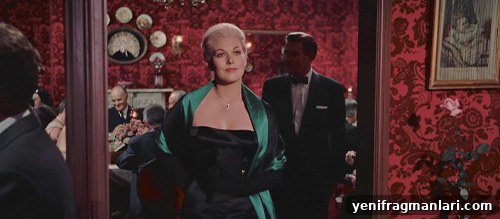
An old college acquaintance, Gavin Elster (Tom Helmore), enlists Scottie’s help with a troubling matter. Gavin believes his wife Madeleine (Kim Novak) has been behaving as if possessed by a deceased relative, and asks Scottie to shadow her to determine what is happening. As Scottie follows Madeleine through the city’s fog-shrouded streets and misty landmarks, a connection develops between them—one that will drive the plot into increasingly dark and obsessive territory.
Although contemporary reviewers sometimes praised the film as a captivating love story, Vertigo ultimately unfolds as a study of obsession and identity. Scottie’s fixation is less on the living woman before him than on an idealized image he projects onto her. This theme of projection—creating an obsession out of a mutable idea of someone—is central to the film’s power. Hitchcock’s craftsmanship elevates even routine lines into moments of suspense and sorrow, and the careful buildup of character and mood allows later revelations to land with emotional force.
As with many Hitchcock thrillers, Vertigo twists expectations and repurposes clues to surprising effect. The film operates like a finely tuned attraction: it delivers jolts of suspense and visual spectacle, but it does so primarily through psychological tension rather than simple shock tactics. In that sense, Vertigo engages viewers intellectually as well as emotionally—its narrative requires attention and invites interpretation, making the audience an active participant in piecing together motives and consequences.
This layered approach helps explain why Vertigo has become so highly regarded. The film blends elements of different entertainment forms—romance, mystery, melodrama, and psychological study—while maintaining a cohesive artistic vision. Its dramatic highs and melancholic lows, combined with Hitchcock’s visual inventiveness and Bernard Herrmann’s evocative musical sense, create an immersive experience that rewards repeat viewings and deep analysis.
Not everyone embraced Vertigo upon its release. Early criticism described it as implausible or overly fanciful, and some contemporary voices were cool to its themes and narrative choices. Over time, however, critical opinion shifted. As film scholarship evolved and critics reevaluated genre cinema and auteurism, Hitchcock’s films were reexamined and their formal innovations recognized. The French New Wave and other movements helped frame Hitchcock as an artist whose techniques—suspense construction, psychological focus, and inventive camera work—were worthy of serious study.
For many viewers and scholars today, Vertigo represents Hitchcock at his most concentrated and artful. It synthesizes many of the qualities that later defined his reputation as an auteur: precision in visual storytelling, an obsession with character psychology, and an ability to transform cinematic tools into emotional currents. The film’s lasting influence and capacity for reinterpretation make it a key work for understanding how critical perspective can change the fortunes of a movie over time.
Score: 21/24
Recommended for you: Top 10 Alfred Hitchcock Films
Written by Rob Jones
Support the author at rbrtjones.com
Twitter: @rbrtjones