
Kill (2023)
Director: Rodger Griffiths
Screenwriter: Rodger Griffiths
Starring: Brian Vernel, Daniel Portman, Calum Ross, Paul Higgins
Rodger Griffiths makes his feature debut with Kill, a tense family drama that premiered at the 2023 Edinburgh International Film Festival. The film expands on Griffiths’ 2017 short Take The Shot and explores whether a short, high-concept premise can sustain the emotional and narrative demands of a feature-length film. The result is a movie with a striking concept and potent moments, but one that struggles to fully realize its dramatic potential.
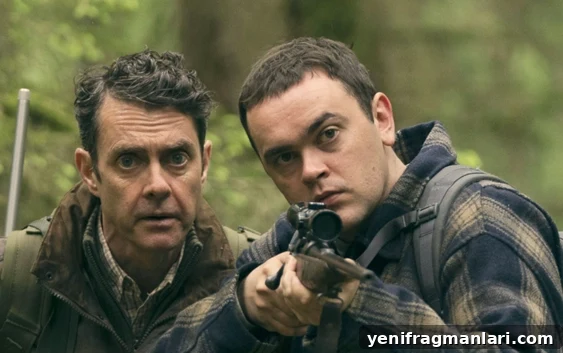
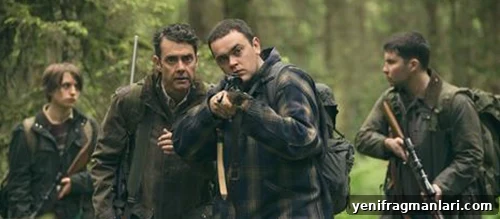
Kill centers on three brothers who conspire to murder their abusive father, Don (Paul Higgins), after years of torment and the suspicious death of their mother. The plot quickly moves into the aftermath of that violent decision: guilt takes hold, tensions rise between the siblings, and the situation grows darker when the father’s grave is found disturbed. Paranoia and mistrust begin to corrode the already fragile bonds between the brothers, and the film tracks how those fractures grow into obsession and self-destruction.
The film’s premise is immediately compelling. A tightly drawn moral dilemma—siblings responding to prolonged abuse with extreme violence—promises psychological complexity and character-driven suspense. However, Kill does not always give itself the time required to deepen that complexity. The inciting violence happens early, and the narrative quickly shifts into the fallout, leaving limited space to fully develop the brothers’ preexisting dynamics. Each sibling is introduced through a dominant trait: the eldest mirrors their father’s aggression, the middle brother struggles with repression and indecision, and the youngest remains the favored child under his father’s control. These archetypes are effective starting points, but the film often relies on them instead of probing the subtler emotional layers that would make the characters feel fully realized.
Paul Higgins delivers a convincing physical performance as Don, the abusive patriarch, and the film benefits from his presence. Yet the screenplay gives the role limited nuance, making Don largely a symbol of cruelty rather than a fully dimensional antagonist. That simplification reduces the emotional stakes; without a fuller exploration of what made Don who he was, it is harder for the audience to grasp the brothers’ motivations beyond surface revenge and grief.
Among the brothers, Daniel Portman and Calum Ross turn in memorable moments that show real potential, but the script does not always support sustained character arcs for them. Portman’s portrayal of the eldest brother brings raw volatility, but the character’s rage often reads one-note rather than layered. The film drops a surprising detail—an act of ritual or desperation meant to revive their mother—yet it is treated briefly and then largely abandoned, diminishing narrative cohesion. Calum Ross effectively communicates the youngest brother’s conflicted loyalty and fear, but the screenplay offers too few opportunities for sustained emotional growth.

Brian Vernel carries most of the film’s central perspective as the middle brother and nominal protagonist. His character undergoes the most noticeable transformation—moving from the family outsider to someone who gains a firmer sense of self as events unfold. Vernel’s interpretation of that arc shows promise, but at times his performance feels muted where the material asks for heightened emotional clarity. This restraint sometimes contributes to a lack of urgency, making it harder to fully invest in his internal journey.
Tonally, Kill is uneven. It spends time in flashbacks to illustrate the brothers’ traumatic past and to justify their actions, but these sequences tend to reiterate rather than complicate what we already understand about their suffering. When the film leans into suspense and paranoia, it becomes compelling; the later stages of the story build to effective, unsettling confrontations and reveal sharper psychological turns. Unfortunately, those stronger moments arrive late. The third act redeems much of the film’s early restraint by delivering tense, surprising climaxes that restore some of the narrative momentum and leave the viewer with a more favorable final impression.
Griffiths’ direction shows ambition and a clear visual sensibility, particularly in how he stages the brothers’ shifting loyalties and the claustrophobic atmosphere of their environment. The production commits to the bleakness of the story and captures the underlying dread that stems from familial violence. Still, the attempt to expand a short into a feature highlights common pitfalls: themes that were compact and potent in a shorter runtime feel stretched here, and the screenplay would have benefited from deeper character development and a tighter dramatic focus.
In summary, Kill is a debut feature with a powerful central idea and moments of genuine intensity. The cast includes strong work and the film finds its stride toward the end, delivering scenes that justify the film’s darker impulses. Yet the uneven pacing, limited character nuance, and occasional narrative disjunction keep Kill from fully realizing its promise. It remains a promising first feature from Rodger Griffiths that, with more refined writing and fuller character exploration, could have been more consistently gripping.
Score: 6/24
Recommended reading: More coverage from EIFF and reviews of independent film debuts and festival premieres.