
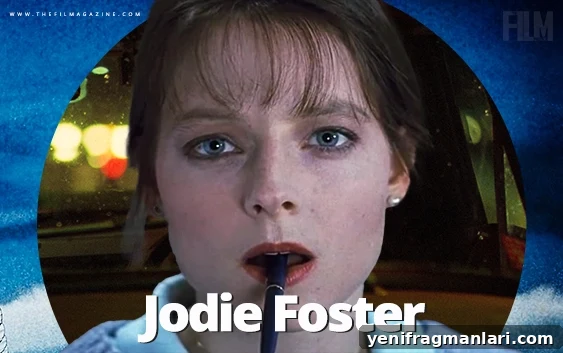
Alicia Christian “Jodie” Foster has been in front of a camera since she was three years old, appearing in commercials and Disney films throughout her childhood. A child prodigy of the film industry, by adolescence she was starring in major television projects like Paper Moon (1974) and sharing the screen with Robert De Niro in Taxi Driver (1976). Paper Moon, an adaptation of Peter Bogdanovich’s 1973 film, featured Foster as Addie Loggins, a nine-year-old accomplice to a con man—a role that made Tatum O’Neal the youngest-ever Academy Award winner in 1974. By 1977, at age 13, Foster earned her first Oscar nomination for her breakout performance as Iris in Martin Scorsese’s Palme d’Or-winning Taxi Driver. She displayed a maturity and skill beyond her years, often delivering performances that matched or surpassed her adult co-stars. As the roles grew, Jodie Foster’s ascent to stardom seemed almost inevitable.
But success carried burdens. The downside of growing up in the spotlight intensified during her time at Yale, where in 1980 she was stalked obsessively by John Hinckley Jr., who later attempted to assassinate President Reagan. Despite this traumatic period, Foster continued to act between semesters and graduated in 1985, though many of her films during that era failed to achieve major critical or commercial success. In the years that followed, she sought to redefine herself as an adult performer. Known for resilience and quiet strength on and off screen, Foster needed roles that reflected the depth she had cultivated.
That creative resurgence arrived with The Accused (1988), in which Foster played a rape survivor fighting for justice, and reached a career peak with The Silence of the Lambs (1991), where she embodied the iconic FBI trainee Clarice Starling opposite Anthony Hopkins’ Hannibal Lecter. Foster won Academy Awards for both films, then continued her momentum through the 1990s with acclaimed roles in Nell (1994) and Contact (1997), and she made her directorial debut with Little Man Tate (1991). By the early 2000s she had solidified her reputation among peers and audiences; she was invited to head the jury at the 2001 Cannes Film Festival before stepping down to star in David Fincher’s tense thriller Panic Room (2002).
Throughout the 2000s, Foster delivered memorable performances, including the role of the shrewd Madeleine White in Spike Lee’s Inside Man (2006). She also explored complex, controversial projects such as her intention to make a biopic about the Nazi filmmaker Leni Riefenstahl—an endeavor that drew criticism from some quarters but underscored Foster’s willingness to engage with risky material. Critics who accused her of playing it safe overlooked the persistent vulnerability and emotional acuity she brings to even the most composed characters.
Foster has long guarded her private life, with notable exceptions including a candid 1982 Esquire essay titled “Why Me?” and a 2011 Golden Globe speech in which she addressed persistent speculation about her personal life. That guarded vulnerability has become a hallmark of her work: she not only performs with technical skill but also imbues roles with pieces of herself. After spending years focusing on directing, she has returned to acting in recent projects, including the upcoming True Detective: Night Country (2024) and the personal drama Nyad (2023).
In a 2021 interview with The New York Times, Foster described herself: “I am a solitary, internal person in an extroverted, external job. I don’t think I will ever not feel lonely. It’s a theme in my life. It’s not such a bad thing. I don’t need to be known by everyone.” Her preference to let work speak for itself is evident across a career defined by powerful, quiet performances. Below are three career-defining roles that capture the range and depth of Jodie Foster’s artistry.
1. Taxi Driver (1976)

Taxi Driver Review
Any assessment of Jodie Foster’s career must begin with her revelatory performance as Iris Steensma in Martin Scorsese’s early masterpiece. Widely regarded as one of the best child performances in cinema, her turn in Taxi Driver earned her the first Oscar nomination of her career at just 13. Foster had already appeared in family films such as Napoleon and Samantha (1972) and Tom Sawyer (1973), but Taxi Driver proved she was a major talent destined for serious dramatic work.
Foster had worked with Scorsese previously on Alice Doesn’t Live Here Anymore (1974), and by the time Taxi Driver was cast, the director trusted her capabilities. Casting a 12-year-old as a child prostitute opposite Robert De Niro’s Travis Bickle was controversial. The production took extensive measures to protect Foster’s emotional well-being, including psychiatric check-ins, a social worker on set, and substituting Foster’s older sister for certain suggestive shots.
Foster later recalled that she understood the difference between playing a role and real life and that the film did not confuse her about sexuality. Whether or not she fully grasped the film’s darker themes at the time, her fearless, emotionally honest portrayal made Iris the movie’s emotional center. Iris doesn’t dominate screen time until the final act, yet she anchors the film’s moral and psychological stakes. Her interactions with Bickle highlight the film’s critique of a damaged society and reveal the human toll beneath Bickle’s violence. Without Foster’s intelligent and affecting performance, Taxi Driver’s portrait of post-Vietnam America would have been incomplete.
Foster continued to expand her range with roles in Freaky Friday (1976) and Bugsy Malone (1976), but Taxi Driver marked her coronation as a serious actor well beyond child-star fare. De Niro mentored her during production, helping her learn improvisation and nonverbal character-building—lessons that would inform a lifetime of compelling work.
2. The Silence of the Lambs (1991)
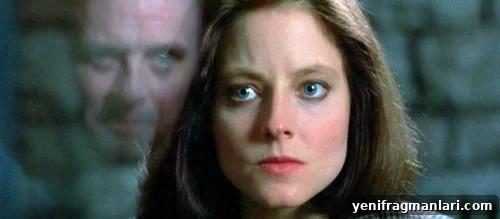
The Silence of the Lambs Review
Foster earned her second Academy Award for portraying Clarice Starling, the determined young FBI trainee opposite Anthony Hopkins’ chilling Hannibal Lecter. Fresh from her win for The Accused, Foster was at the peak of her powers, and her performance as Clarice has become iconic.
Several established actresses declined the role due to the film’s unsettling themes, but Foster, who had long expressed interest in the novel, embraced the challenge. The Silence of the Lambs has become a modern classic, despite debate over some of its portrayals and themes. Foster’s Clarice is at once small in stature and immense in presence; she consistently holds the frame, even in scenes opposite Hopkins. Director Jonathan Demme frequently uses close-ups on Clarice, emphasizing the scrutiny and male gaze that follow her. Foster’s restrained, emotionally exact performance communicates a woman who is both resolute and vulnerable, capable of outshining even the most famous co-stars. Her Starling remains a template for complex, courageous women in genre cinema.
Clarice’s experience in the film echoes themes that have shaped Foster’s life and work: the demand to appear unflappable and the cost of secrecy and solitary strength. In her essay “Why Me?” Foster wrote about the pressure to be perceived as strong and unaffected, a tension she channels into roles like Clarice Starling.
3. Contact (1997)
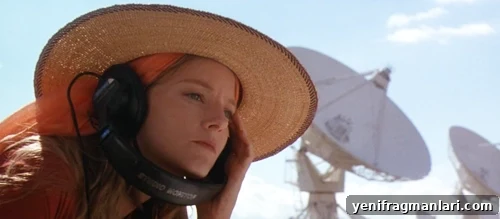
By 1997 Jodie Foster was an unequivocal movie star, attracting larger and more ambitious projects. Among these, Robert Zemeckis’s sci-fi drama Contact stands out as a defining performance of her adult career. Adapted from Carl Sagan’s novel, Contact was a box-office success and has endured in reputation. Foster’s performance as Dr. Ellie Arroway is the film’s emotional core: she brings a rugged sensitivity that balances scientific curiosity with personal longing.
Foster’s Ellie is more than a genre protagonist; she embodies the film’s central tension between faith and reason. The screenplay avoids clichés, and Foster grounds the story with a humanistic, believable portrayal. As Ellie navigates the global upheaval following the discovery of an extraterrestrial transmission, Foster keeps the character honest and relatable, making her voyage into space emotionally compelling. Foster has said that Ellie Arroway is one of the characters most like how she wishes to be seen—intelligent, solitary, and determined—a role that allowed her to explore facets of herself within a broad, ambitious drama.
Across decades and genres, Jodie Foster consistently delivers performances that resonate with audiences and critics alike. Her filmography spans precocious children, resolute heroines, and complex adult women, and she has also built a respected career as a director. Now entering her sixties, Foster continues to take on challenging work, and her legacy as one of Hollywood’s most thoughtful and fearless actors remains secure.
Written by Connell Oberman
You can support Connell Oberman in the following places:
Twitter: @ObermanConnell
Instagram: @connello_22
Substack: ConnellOberman