
The Ten Commandments (1923)
Director: Cecil B. DeMille
Screenwriter: Jeanie Macpherson
Starring: Theodore Roberts, Leatrice Joy, Richard Dix, Rod LaRocque, Nita Naldi
Cecil B. DeMille’s 1923 silent epic The Ten Commandments is a film that still astonishes. From its opening moments the movie demonstrates remarkable artistry—meticulous production design, striking cinematography, and ambitious technical effects all contribute to a spectacle that helped define early Hollywood grandeur. Though DeMille’s later 1956 remake, starring Charlton Heston and Yul Brynner, is often better known today, the original 1923 version stands on its own as an extraordinary achievement of silent-era filmmaking and a valuable historical record of cinematic innovation.
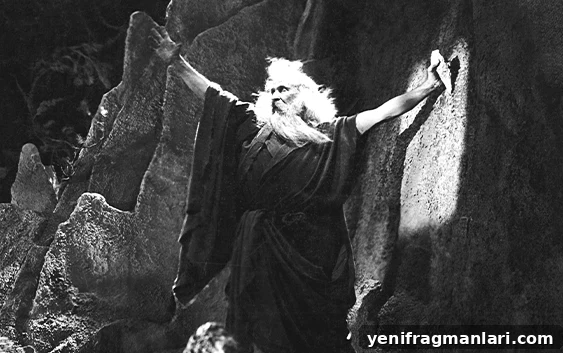
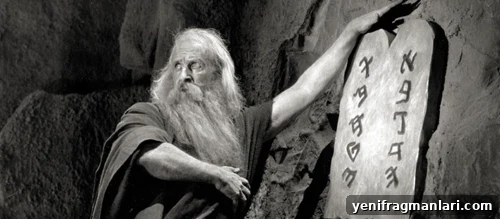
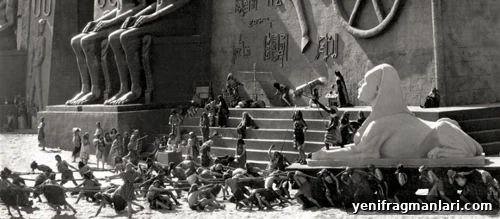
The film begins with a prologue that recounts the Exodus story in lavish detail. DeMille stages a monumental retelling: Moses, played by Theodore Roberts, leads the Israelites out of bondage in Egypt; the Pharaoh’s forces pursue them; Moses parts the Red Sea and ascends the mountain to receive the Ten Commandments. The prologue delivers breathtaking set pieces and large-scale crowd sequences that remain impressive even a century later. Many sequences were enhanced with color techniques available in the silent era—tinting and selective colorization—displaying that color was used creatively well before the dominance of modern Technicolor.
This opening forty-five minutes set an exceptionally high bar for spectacle. The prologue’s scale and craftsmanship—massive sets built by hundreds of artisans, elaborate crowd staging, and dramatic visual effects—are the film’s greatest strengths. They demonstrate DeMille’s instinct for epic storytelling and his ability to harness the resources of the studio system to create cinema that felt biblical in scope.
After the prologue, the narrative shifts abruptly to a contemporary morality tale. The story moves to modern times and follows the McTavish family: the pious matriarch Martha McTavish, portrayed by Edythe Chapman, and her sons John (Richard Dix) and Dan (Rod La Rocque). John is a humble carpenter content with a modest life; Dan is ambitious and tempted by worldly pleasures. Both men fall in love with Mary (Leatrice Joy), and their rivalry sets off a chain of events that becomes the film’s moral center.
The second half of the film is didactic and melodramatic, intent on illustrating the consequences of moral compromise and the importance of religious faith. Its tone is more straightforward and heavy-handed than the prologue. Characters often act according to clear moral imperatives rather than complex internal motivations, and the dialogue—conveyed through intertitles—is explicit in its messaging. Modern viewers may find this section preachy or simplistic, yet it offers insight into the cultural and religious attitudes of post-World War I America.
Although the contemporary storyline lacks the visual fireworks of the Exodus sequence, it contains memorable and well-executed moments. A later sequence depicting the destruction of a church is notably powerful, and smaller dramatic set pieces—like Mary’s ascent to the top of the church—are staged with careful tension. The film’s acting is often more naturalistic than many modern viewers expect from silent cinema. Richard Dix’s performance as John is particularly affecting: his charm and sincerity provide emotional grounding for the picture.
DeMille’s dual identity as a devout Bible reader and a flamboyant showman is evident throughout. He balances moral instruction with sensational imagery, sometimes courting controversy. For contemporary audiences and censors, the film’s candid depiction of human failings—greed, adultery, and violence—could seem at odds with its religious themes. Yet this blend of moralizing and spectacle is part of what made DeMille a dominant figure in early Hollywood: he understood audience appetite for both sermon and spectacle.
Historically, the survival of The Ten Commandments is notable. Many silent films were lost due to fragile nitrate stock and neglect, but this film has been preserved and restored. Restoration efforts have helped retain the striking visual qualities of the original release, including its color effects, ensuring modern audiences can appreciate the film’s scale and ambition.
In evaluation, the picture is a mixed but compelling work. The prologue is a masterpiece of silent-era filmmaking—ambitious, technically daring, and genuinely awe-inspiring—while the contemporary segment is earnest but heavy-handed. Together they form a document of DeMille’s cinematic vision: a filmmaker who could marshal spectacle to serve moral storytelling, even when the message sometimes overwhelmed subtlety. For students of film history and viewers who appreciate early cinematic spectacle, the 1923 The Ten Commandments remains an essential and rewarding experience.
Score: 21/24
Recommended for you: Read more retrospective reviews and film essays for deeper context and appreciation.