
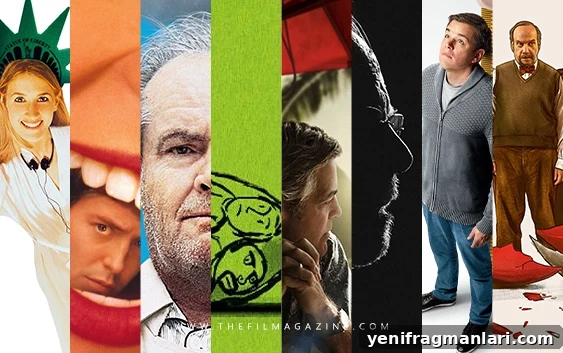
Achieving major critical acclaim early in a career creates high expectations for everything that follows. That was certainly true for Alexander Payne after Election and Sideways were hailed as among the best films of their decades and earned Academy Award recognition.
A film school graduate who started by directing softcore shorts for Playboy, Payne quickly developed a reputation for sharp, darkly comic satires of American life. He became known for his skill in working closely with lead actors to shape memorable, often abrasive protagonists.
Born and based in Omaha, Nebraska, Payne’s films frequently acknowledge that life is hard and people can be deeply flawed. Yet his work usually allows us to laugh at the compromising situations his characters find themselves in, while still empathising with their motivations. His movies can be uncomfortable at times, but they often finish with a lightness of touch and a sliver of hope.
Although Payne’s more recent films are unmistakably personal and distinctive, they sometimes suffer in comparison to his breakthrough work. Still, there is much to admire across his filmography beyond what awards bodies recognised. Below is a considered ranking of Alexander Payne’s eight feature films, ordered from least to most successful in terms of execution, impact, and staying power.
8. Downsizing (2017)

Facing environmental collapse, Paul Safranek (Matt Damon) chooses a radical procedure to shrink to five inches tall and join a miniature community promising a better life. There he forms an unexpected friendship with Ngoc Tran (Hong Chau), a Vietnamese political dissident.
Downsizing represents Payne’s most ambitious commercial gamble, but it is uneven in tone and scope. The opening act effectively establishes the speculative premise, yet the film soon loses focus as it tries to juggle satire, social commentary, and human drama. Damon is sympathetic as the everyman protagonist, but Christoph Waltz’s broad turn and an underused Hong Chau character weaken the emotional core. The film’s scale and budget are ambitious, but the narrative needed sharper focus and clearer thematic cohesion.
7. About Schmidt (2002)
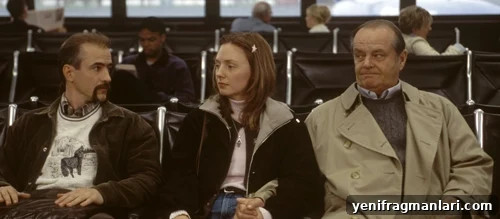
After retiring from a long career as an actuary, Warren Schmidt (Jack Nicholson) struggles to fill his days. A bereavement prompts him to travel across the country in a Winnebago to reconnect with his past before his daughter’s wedding.
Nicholson delivers a remarkably restrained, layered performance as a prickly, opinionated man confronting his regrets. About Schmidt began as an early screenplay for Payne and took years to reach the screen, giving it the feel of a long-gestating passion project. The film balances dry comedy and melancholy, with strong supporting turns—though its leisurely two-hour runtime occasionally meanders.
6. Citizen Ruth (1996)

A young, pregnant addict named Ruth (Laura Dern) becomes a pawn in the clash between a fundamentalist Christian group and abortion-rights activists, both eager to use her as a symbol for their causes.
Payne’s most politically charged film, Citizen Ruth, is anchored by Dern’s raw, empathetic performance. The film presents the abortion debate with sharp satire, showing how both sides can exploit vulnerable people for their agendas. It deliberately limits comic relief and leans into discomfort, leaving a memorable final image of Ruth walking between opposing protesters who fail to see her humanity.
5. The Descendants (2011)

When his wife falls into a coma after a boating accident, Hawaii lawyer Matt King (George Clooney) must reconnect with his daughters and decide the future of his family’s land. The film explores grief, legacy, and the fragile bonds that hold a family together.
Clooney shows surprising physical comedy and emotional restraint, while Shailene Woodley and Amara Miller provide compelling turns as his daughters. The Descendants pairs somber subject matter with the lush beauty of Hawaii, producing an affecting story about a privileged man learning humility and acceptance as his family reshapes itself.
4. The Holdovers (2023)
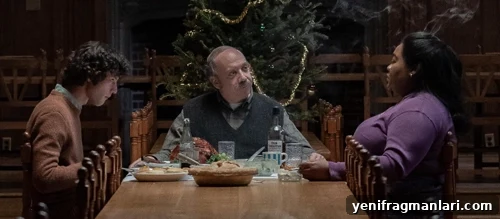
A disliked boarding school teacher, Paul Hunham (Paul Giamatti), supervises students who must stay at Barton Academy over Christmas. He unexpectedly connects with the kitchen manager Mary (Da’Vine Joy Randolph) and a troubled pupil, Angus (Dominic Sessa).
Seen as a return to form after Downsizing, The Holdovers is a restrained character study that unfolds slowly and rewards patience. Payne uses a muted palette, subtle visual jokes, and patient performances to let the central trio’s relationship develop naturally. The film’s gradual emotional warming avoids melodrama, and a final act that broadens the story still keeps the focus on the fragile bonds these characters form.
3. Nebraska (2013)

Woody Grant (Bruce Dern), an irritable, often inebriated septuagenarian, and his estranged son (Will Forte) journey to Nebraska after Woody believes he has won the lottery. The trip forces both men to confront past mistakes and their strained relationship.
Shot in striking black-and-white, Nebraska leans toward arthouse sensibilities and gives space to expressive landscapes and faces. Bruce Dern delivers one of his finest performances, and the film’s episodic structure reflects Woody’s faltering grasp on reality while exploring themes of mortality, dignity, and familial reconciliation.
2. Election (1999)
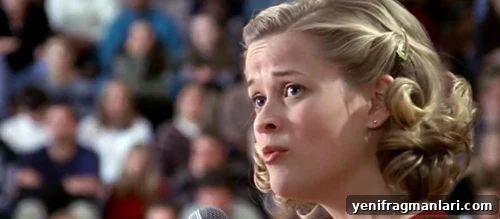
Ambitious high school student Tracy Flick (Reese Witherspoon) clashes with teacher Jim McAllister (Matthew Broderick) as a contentious school election unfolds. The rivalry spirals into manipulation and revenge.
Election is a masterclass in performance, sharp scripting, and inventive editing. Witherspoon is magnetic as the obsessive Tracy and Broderick delivers a surprisingly dark, complex turn as a seemingly ordinary teacher with secret resentments. The film is Payne’s funniest, with acerbic voiceovers and bold comic choices that expose issues such as inappropriate authority, mental health, and social inequality.
1. Sideways (2004)
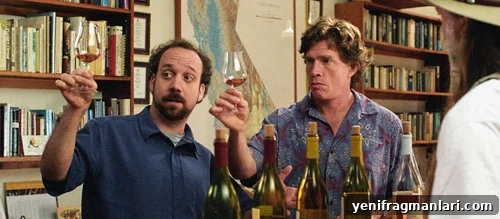
Depressed teacher Miles (Paul Giamatti) and struggling actor Jack (Thomas Haden Church) take a week-long wine country trip in California before Jack’s wedding. Their misadventures, personal flaws, and conflicting desires test their friendship and affect the relationships they form along the way.
Sideways is the film that established Payne’s reputation for combining melancholy, humor, and character-driven storytelling. Giamatti and Haden Church form a memorable odd-couple pairing, and the movie balances road-movie freedom with rom-com elements that are bittersweet rather than conventionally comforting. Its cultural influence—both in character and in how it shaped perceptions of wine—underscores the film’s lasting impact.
Alexander Payne’s strength lies in making flawed characters feel authentic and human, often blending sharp satire with tender observation. His films tend to reveal the contradictions of contemporary life, presenting characters we love to criticise and then, gradually, to understand.
Which of Payne’s films do you consider his best? Share your thoughts in the comments.