
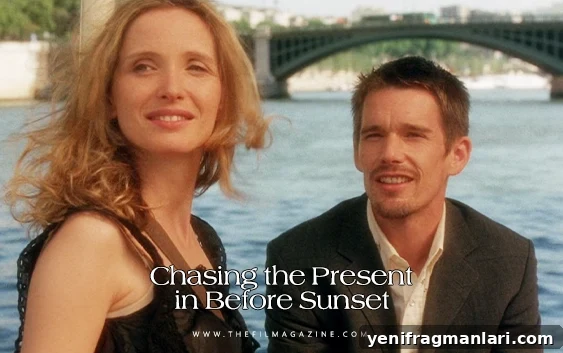
Before Sunset unfolds like a race against the clock on a flawless summer afternoon. The light is golden, the city feels wide open, and the entire film conveys the rare sensation that anything might still be possible.
Released on February 10, 2004, Before Sunset is the middle chapter of Richard Linklater’s acclaimed Before Trilogy. It follows the cult favorite Before Sunrise (1995) and precedes Before Midnight (2013). In the first film Jesse (Ethan Hawke) and Celine (Julie Delpy) are young and incandescent, spending a single transformative night walking through Vienna and talking as if they exist outside of time. They part at dawn with a promise to meet again, agreeing to reunite at a train station in six months. In the years that follow, that promise becomes the memory that shapes their lives.
Set nine years after their initial encounter and filmed on location in Paris, Before Sunset was co-written by Richard Linklater with Ethan Hawke and Julie Delpy. The film doubles down on what made the original so compelling: character-driven dialogue, electric chemistry, and long, intimate conversations that reveal personality and history rather than conventional plot mechanics. With its conversational rhythms and monologue-heavy structure, the film nods to the spirit of the French New Wave while remaining distinctly contemporary. Where Before Sunrise is about imagining a future and Before Midnight is about reflecting on a shared past, Before Sunset is an attempt to live fully in the present.
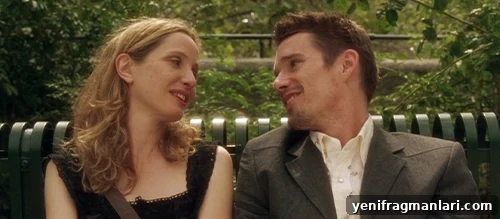
Now in their early thirties, Jesse is in Paris for the final stop of his European book tour. His novel recounts the night he spent with a French woman on a train—an encounter that changed him—and the book tour has unexpectedly brought that private memory into the public realm. While talking about his next idea—a story that collapses past and present into a single moment—Jesse catches sight of Celine for the first time since Vienna. He continues the thought aloud, stunned by the simultaneity of memory and reality: “For a moment, all his life is folding in and it’s obvious to him that time is a lie… it’s all happening all the time and inside every moment is another, all happening simultaneously.”
That line functions almost as the film’s manifesto. Linklater, Hawke, and Delpy craft a script that captures what it feels like to try to be present while the past stands directly in front of you—familiar, vivid, and impossibly alive after years of existing only in thought.
Before Sunset plays out in near real time. At just under 80 minutes, the film follows Jesse and Celine as they stroll through Parisian streets and parks, pause in a café for coffee and a cigarette, and end the day with a song in Celine’s apartment. The naturalism is striking: the movie feels like two people finally closing a decades-long conversation. Yet the film never becomes dull. The chemistry between Hawke and Delpy, combined with the precision of the writing, makes each hesitation and glance compelling. Although the trilogy’s long takes and apparent spontaneity suggest improvisation, the films were rehearsed and tightly scripted to produce the sense of effortless realism—every gesture and breath carefully calibrated to feel offhand.
“Memory is a wonderful thing if you don’t have to deal with the past,” Celine observes, and throughout the afternoon the pair continually oscillate between reminiscence and the effort to remain in the present. The clock is always there—Jesse has a plane to catch—and that looming deadline heightens each exchange. Both characters fear that this reunion might merely become another memory to be tucked away, another private scene they will someday recall while building new lives with other people.
Before Sunset is at once restrained and utterly honest. The film is full of longing without relying on overt romantic gestures; Jesse and Celine do not kiss, but the desire is palpable. They avoid and then confront difficult truths: Jesse avoids discussing his wife and child at first, while Celine occasionally forgets the man she says she loves. Conversation starts lightly and then deepens, as old familiarity allows defenses to drop and candidness to surface. Small gestures—a raised middle finger offered playfully, repeated—become loaded with meaning as the afternoon advances and the sun descends.
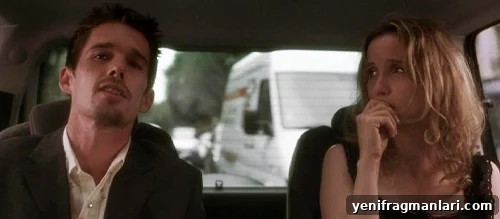
Their reunion confirms that the years of longing were not wasted. Jesse’s decision to publish his memory of that night was a way of calling out to Celine; she, in turn, read his book and recognized herself. Both have been shaped by their decisions and their regrets. They confess disappointments—failed relationships, dissatisfying domestic lives, the gap between who they are and who they thought they would be. Their confessions culminate during a long car ride and an emotional return to Celine’s apartment, where vulnerability finally breaks through the remaining barriers between them.
Jesse admits he is wired toward dissatisfaction, constantly searching and rarely content. He struggles to reconcile his identity as a father and husband with the restless creative temperament that resists commitment. Celine, once idealistic and connected to the world through activism, has become guarded and more cynical after years of accumulated loss. Each accuses the other—and themselves—of avoiding pain by avoiding full engagement. When they lay those truths bare, a fragile intimacy forms that feels like a rare, honest reconciliation between the past and the present.
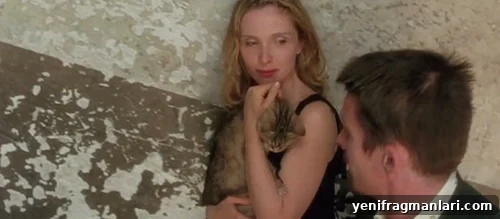
Early in their encounter, over coffee and a shared cigarette, Celine asks Jesse what’s wrong with him. As the day progresses and they draw closer together, the light in his eyes changes. He answers, simply and honestly: “Right now, I don’t have any. I’m just damn happy to be here.”
The film’s longest silence occurs on the staircase outside Celine’s apartment, where each step seems to carry the imagined possibilities of what might happen once they are alone again. She plays a song she has written—a waltz about their initial meeting—and for a moment both are entirely present, absorbed in the small, domestic ritual of music and memory. The film’s many philosophical asides about change, responsibility, and modern relationships lead to this quiet, human conclusion: the recognition that time passes, and that the truest response is to accept and savor the present.
“Baby, you are gonna miss that plane.”
Jesse leans back, his wedding ring catching the light as he laughs.
“I know.”
Recommended reading: The Before Trilogy: How to Capture a Moment
Written by Kyra Lieberman
Support the author:
Portfolio: Kyra Lieberman
Blog: & More
X (Twitter): @kyralieberman
Instagram: @kyralieb