
Perfect Days (2023)
Director: Wim Wenders
Screenwriters: Wim Wenders, Takuma Takasaki
Starring: Koji Yakuso, Aoi Yamada, Arisa Nakano, Min Tanaka
Nominated for the Academy Award for Best International Feature, Perfect Days is a quietly meditative film that traces the life of a man who cleans public toilets in Tokyo. Under Wim Wenders’ attentive direction, the film becomes a tender character study that celebrates ordinary life, routine, and the small wonders that make each day meaningful.
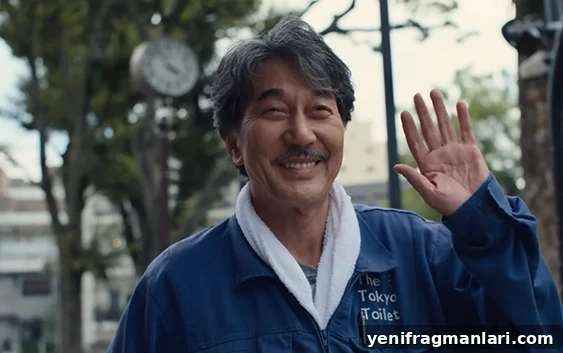
The central figure, Hirayama, played by Koji Yakuso—who was awarded Best Actor at Cannes—is a gentle, middle-aged man who finds deep satisfaction in everyday rituals. His life could be dismissed as uneventful or even grim, yet Hirayama treats his routine with reverence. He rises before dawn, tends to his houseplants, photographs trees during his lunch break, and savors quiet evenings reading. His daily movements are deliberate and unhurried; each action appears to be part of a personal practice that brings him contentment and calm. He meets each day with a smile, not out of naiveté but because he has learned to value the present.
That mindful attitude extends to his work. Hirayama cleans public toilets not as a chore but as a craft, approaching each space with respect and care. The film highlights the architecture and design of these restrooms, treating them as spaces worthy of attention rather than scenes of indignity. Wenders frames these places with the same affection Hirayama brings to them, inviting the viewer to rethink notions of dignity, labor, and beauty.
Hirayama’s solitary existence is gently disrupted when his teenage niece arrives. Her presence introduces a new rhythm and perspective into his carefully ordered life, and through their interactions the film explores the quiet ways people can change one another without dramatic upheaval. A brief meeting with his sister, who later returns to collect the niece, hints at an understated family history and hints of pain, though Wenders chooses to keep those elements sparse and unfixed, allowing the emotions to surface without explicit exposition.
On the surface, little happens in Perfect Days, yet its emotional impact is lasting. The film is built from small, precise moments that accumulate into a profound reflection on presence and gratitude. One memorable line captures this ethos perfectly: “Next time is next time. Now is now.” Such phrasing distills the story’s philosophy—an embrace of this single moment rather than a fixation on future change. In that way, the film shares affinities with contemporary minimalist dramas that favor image and mood over plot, reminding viewers that cinema can be a space for contemplation as much as for narrative drive.
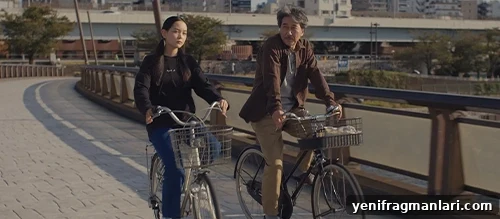
A story so pared down depends entirely on the director’s eye, and Wenders delivers. His cinematography lingers on details—a shaft of light falling across leaves, the texture of morning sky, the patient composition of a tree trunk—immersing the audience in Hirayama’s perception. These images do the work of the script, conveying internal states through visual rhythm and composition. Even Hirayama’s dreams are crafted with care: rendered in black and white, they echo the day’s images with an otherworldly clarity, suggesting how deeply he is attuned to his surroundings.
Sound plays an equally important role. Much of the soundtrack consists of the vintage rock cassette tapes Hirayama listens to in his car: The Rolling Stones, Lou Reed—the latter lending the film its title—and others that provide a comforting thread through the days. One of the film’s most moving sequences pairs Hirayama’s drive home with Nina Simone’s “Feeling Good.” The camera holds on his face as his expression shifts between joy and a quiet, lingering melancholy—an emotional complexity Yakuso conveys largely without words.
The restraint of the screenplay and the subtlety of the performances encourage a different kind of viewing: one that pays attention. Perfect Days invites reflection on how routine, ritual, and small acts of care can accumulate into a life worth living. It argues, gently and persistently, that gratitude for what is present can be as transformative as any dramatic upheaval. In a culture that often prizes spectacle and transition, this film’s quiet insistence on the value of the everyday feels both radical and restorative.
Overall, Perfect Days is a humane, beautifully composed meditation on simplicity, patience, and appreciation. It rewards slow viewing and offers a lesson in how ordinary acts—tending plants, photographing trees, cleaning thoughtfully—can become forms of devotion that sustain a person. For viewers willing to sink into its pace, the film delivers lasting emotional rewards and a renewed sense of the dignity inherent in everyday life.
Score: 23/24
Rating: 5 out of 5.
Written by Gala Woolley
You can support Gala Woolley in the following places:
Twitter – @GalaWoolley
Blog – screenqueens.co.uk