

Madame Web (2024)
Director: S.J. Clarkson
Screenwriters: Matt Sazama, Burk Sharpless, Claire Parker, S.J. Clarkson
Starring: Dakota Johnson, Sydney Sweeney, Isabela Merced, Celeste O’Connor, Tahar Rahim, Adam Scott, Emma Roberts, Kerry Bishé, Mike Epps, Zosia Mamet, José María Yazpik
Madame Web first appeared in Marvel Comics in 1980 as an elderly, paralyzed clairvoyant. Sony’s 2024 film reimagines that origin dramatically, centering instead on Cassandra “Cassie” Web, a young New York paramedic who develops precognitive visions. The movie abandons direct ties to Spider-Man, presenting a standalone chapter in Sony’s Spider-Man Universe. While the film attempts to combine supernatural suspense, origin-story drama, and blockbuster spectacle, it often feels like a collection of interesting fragments that never fully cohere into a unified identity.
The narrative opens with an evocative prologue set in the Peruvian rainforest in 1973, where Cassie’s pregnant mother, Constance, searches for a rare spider rumored to have healing properties. That scene introduces a mysterious indigenous group whose vivid red-and-black aesthetic and uncanny agility hint at a broader mythological thread the film only intermittently pursues.
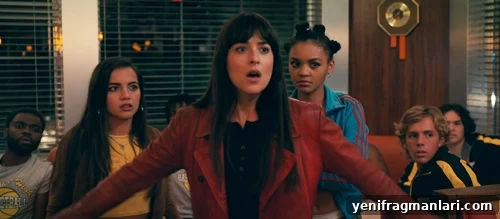
We jump forward to 2003, where adult Cassie (Dakota Johnson) works as a paramedic in New York City alongside Ben Parker (Adam Scott), her dependable partner. Their scenes lean into a grounded buddy-comedy rhythm, with Johnson and Scott bringing natural chemistry and moments of light humor that offset the film’s heavier supernatural elements. Cassie’s visions—portrayed as fleeting, often fragmentary glimpses of the near future—drive the plot. She becomes determined to protect three teenagers, Julia, Anya and Mattie (played by Sydney Sweeney, Isabela Merced and Celeste O’Connor), from a menacing, wall-crawling antagonist named Ezekiel Sims (Tahar Rahim).
The film’s approach to precognition is one of its more compelling ideas. Visions are used not as straightforward plot devices but as moments that seep slowly into the storytelling, forcing Cassie to learn by trial and error and keeping the audience off balance. These sequences suggest a strong cinematic potential that the director, S.J. Clarkson, only partially realizes: many scenes rely on repeating the same moments with subtle variations rather than fully exploring bold visual or narrative permutations.
Dakota Johnson stands out by committing to Cassie’s awkwardness and social discomfort. Her performance captures a character who struggles with basic human interaction—moments such as a tense baby shower visit or an awkward attempt to explain why three teenagers are in the back of her taxi show Johnson’s knack for balancing humor and vulnerability. Adam Scott provides grounded, wry support, while the three young leads bring sincerity and dimension to roles that could easily have been underwritten. Their chemistry is a highlight, and many of the film’s warmer moments arise when the cast is allowed to inhabit everyday, human scenes rather than exposition-heavy origin beats.
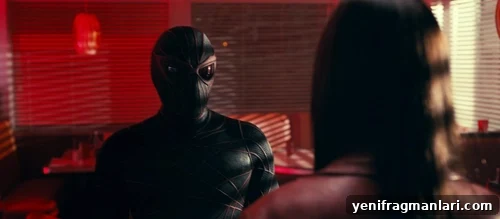
Where the film stumbles most is its antagonist. Ezekiel Sims remains underdeveloped: his motivations beyond a self-preservation instinct are vague, and the script never fully explains his goals or everyday life when he is not pursuing the teenagers. This lack of clarity weakens the tension; unlike classic comic-book villains whose villainy often serves a larger, coherent plan, Sims feels like a force of nature without a convincing purpose. The film’s decision to obscure or alter spoken lines in places further blunts the character’s presence.
Structurally, the film sometimes evokes the relentless pursuit found in Terminator-style thrillers, with an apparently unstoppable antagonist chasing vulnerable targets across city locations. Yet the comparison is imperfect: the movie lacks the steady momentum and escalating stakes that make that formula compelling. Because Cassie’s powers are primarily precognitive rather than combative, set-pieces prioritize chases and evasive maneuvers over hand-to-hand superhero combat. Flash-forward glimpses hint at the more spectacular arachnid abilities the teenagers will one day possess, but these moments serve mostly as teases rather than full action payoffs.
Tone is another persistent issue. The film alternates between a grounded, street-level portrayal of working-class first responders and a more self-aware, occasionally campy comic-book sensibility. That mismatch produces an uneven experience: the South American mythological elements and the grounded paramedic scenes sometimes clash with the conventional origin-story beats and meta-references. The choice to set the story twenty years in the past creates a specific period atmosphere but also raises practical questions—chiefly, why the filmmakers needed to avoid modern technology to make the plot work.
Despite its flaws, Madame Web is not without merit. Strong performances, particularly from Dakota Johnson and the younger cast, keep the film engaging. Moments of genuine inventiveness and the movie’s willingness to attempt different tonal directions make it more interesting than many recent spin-offs. However, patchy editing choices and a muddled final act prevent those strengths from coalescing into a satisfying whole.
Overall, Madame Web lands as a mixed entry in Sony’s Spider-Man Universe: entertaining in stretches and notable for its bold reinterpretations, but ultimately uneven in storytelling and tone. It’s a guilty-pleasure viewing experience—worth watching for the cast and certain ambitious sequences, yet held back by a lack of clear purpose and fully realized execution.
Score: 8/24
Recommended reading: Spider-Man movies ranked