
Love Lies Bleeding (2024)
Director: Rose Glass
Screenwriters: Rose Glass, Weronika Tofilska
Starring: Kristen Stewart, Katy O’Brian, Dave Franco, Ed Harris
After screenings at Sundance and the Berlin International Film Festival, Rose Glass’s sophomore feature Love Lies Bleeding opened the 2024 Glasgow Film Festival, a fitting choice for a festival celebrating bold and provocative cinema. Following the director’s acclaimed debut, Saint Maud, expectations were high. Glass doesn’t repeat herself; instead, she expands her cinematic language to deliver a dark, unpredictable drama that blends emotional intensity with violent undertones and a hint of the uncanny.
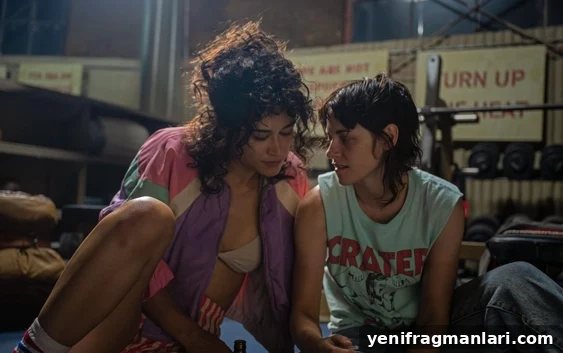
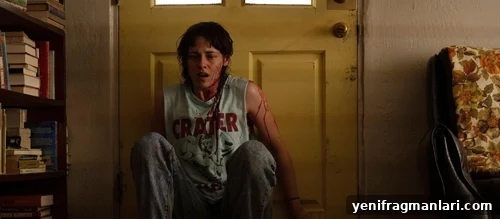
The film centers on Lou (Kristen Stewart), a withdrawn gym manager whose solitary life is upended when she meets Jackie (Katy O’Brian), a driven bodybuilder with ambitions of making it in Las Vegas. Their relationship quickly becomes the emotional core of the story, but passion draws them into danger as Lou’s ties to a criminal family begin to pull both women into a spiral of violence and betrayal. The narrative moves between tender intimacy and sudden brutality, keeping viewers off balance in a way that feels deliberate and controlled.
Glass’s background in horror is evident not in jump scares but in tone and atmosphere. She crafts a world that feels slightly out of sync with reality — a stylized, bleak small-town America where poverty and menace coexist with moments of strange beauty. The setting is presented with heightened textures: grim roadside bars, fluorescent-lit gyms, and empty stretches of highway. Background characters are often sketched as aggressive, stereotypical figures — abusive partners, opportunistic men, and corrupt or inattentive authorities — creating an environment that isolates the film’s female leads and amplifies their differences.
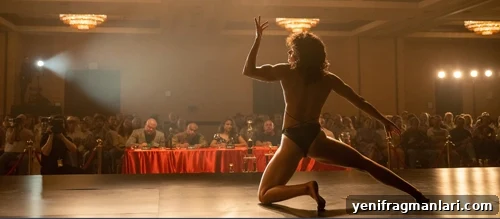
Against this backdrop the two protagonists stand out: Lou, whose internal life is shadowed and mysterious, and Jackie, who is physically formidable and determined. The contrast between their bodies and personas — one reserved and damaged, the other muscular and aspirational — becomes a source of both attraction and friction. Men in the film loom large as antagonistic forces: Ed Harris plays Lou’s father, an intimidating criminal figure whose past actions haunt the present; Dave Franco portrays JJ, abusive and entangled in criminal dealings that threaten both women. Even law enforcement is presented as a male-dominated presence that adds pressure rather than protection.
Performance-wise, Kristen Stewart brings a quiet intensity to Lou, suggesting layers of trauma and secrecy without spelling everything out. Stewart’s portrayal leans into ambiguity, allowing the audience to feel her confusion and obsession rather than be given explicit answers. Katy O’Brian’s Jackie conveys determination and vulnerability, though the screenplay offers her less interior detail, leaving parts of her motivation and history underexplored. This lack of background for Jackie sometimes makes her choices feel abrupt, even if they serve the film’s larger tension.
Among supporting cast, Anna Baryshnikov’s Daisy is a notable highlight. Daisy’s unrequited love for Lou and the lengths she goes to deepen her involvement create one of the film’s most tragic and affecting subplot arcs. Her storyline lends emotional resonance and human consequence to the increasingly dangerous choices made by the leads.
Stylistically, Love Lies Bleeding borrows elements from noir, road movie dynamics, and the black-comic edge of certain crime dramas. There are echoes of classic female-on-the-run tales and hints of the Coen-esque blend of dark humor and menace. Glass also introduces moments of body-focused visual intensity that verge on body horror, reinforcing the film’s preoccupation with physicality, identity, and control. Cinematography and production design help sell this uncanny world, using color and composition to underline the film’s emotional states.
Thematically, the film engages with ideas of belonging, resistance, and survival in a hostile social landscape. It interrogates how love can be both liberating and destructive, particularly when weighed against family loyalty and criminal entanglement. While some characters — most notably Jackie — would benefit from greater development, the film’s central mood and the strength of key performances keep it compelling.
Love Lies Bleeding is a bold, strange, and often brutal work that will appeal to viewers who appreciate genre-bending cinema with a dark sensibility. Rose Glass confirms that her debut was not a one-off; she continues to be a director willing to take risks, explore discomfort, and craft films that linger in the mind long after the credits roll.
Score: 20/24