
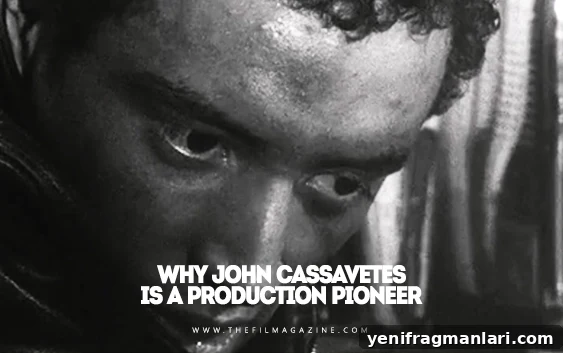
The year is 1956. On the radio, Jean Shepherd—host of Night People—introduces a 26-year-old actor who is in town to promote his latest film, Edge of the City. That same night, without knowing it, the actor John Cassavetes would help invent a kind of grassroots film financing that resembles modern crowdfunding.
What began as a blistering critique of Hollywood’s superficiality turned into an extraordinary gamble. Cassavetes asked listeners to send money if they believed he could make a better picture given the chance. Donations trickled in and, to everyone’s surprise, the stunt raised about $2,000. That seed money helped launch his first feature, Shadows (1958). The remainder of the film’s modest $40,000 budget came from a patchwork of supporters—established figures who contributed funds, plus a significant personal investment from Cassavetes himself.
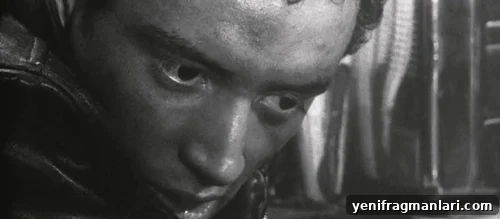
That early success set the tone for Cassavetes’s career: fiercely independent, resourceful, and committed to authenticity. Of the twelve feature films he directed, seven were financed independently. He is rightly regarded as a founding figure of American independent cinema, a filmmaker who chose the risks and rewards of creative freedom over the comforts of studio backing. In an era dominated by five major studios, this path was virtually unheard of.
Cassavetes’s ability to make seven self-funded features was never easy. It required constant hustling, personal sacrifices, and an informal company of collaborators who believed in his work. Long-term friends and performers often accepted little or no pay, contributed money from better-paying studio jobs, doubled as crew members, and lent emotional and practical support. Many films were shot in the house he shared with his wife and principal collaborator, Gena Rowlands, and edited in their garage. The intimate, low-budget conditions helped shape a unique cinematic energy—spontaneous, intense, and unmistakably personal.
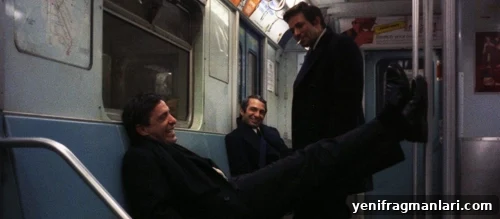
Above all an actor, Cassavetes wrote for actors and for performance. He favored scenes that breathed and unfolded in real time, frequently allowing long, uninterrupted takes that ran counter to conventional pacing. One famous example is a nearly 30-minute bathroom sequence in Husbands (1970) that foregrounds emotional truth over tidy plot mechanics.
Cassavetes was openly contemptuous of movies made primarily to pacify or entertain audiences. In the documentary The Making of Love Streams, he remarked, “A movie tries to pacify people by keeping it going for them so that it’s sheer entertainment. Well, I hate entertainment.” Rather than follow Hollywood conventions, he pursued messy, risky portrayals of flawed human beings, giving actors space to perform without easy resolution or consolation.
Commercial success rarely followed his aesthetic. Even when critics praised his films, they were seldom box-office hits, forcing Cassavetes repeatedly to finance and distribute his work independently. Shadows introduced a different way of making films, but Faces (1968) proved the model’s ongoing power. Shot over several years on a budget of roughly $275,000, Faces was financed largely from Cassavetes’s acting paychecks from more mainstream films and by mortgaging his home with Rowlands. The shoot was an intensely homegrown operation—assembled in homes, edited in garages—yet Faces earned three Academy Award nominations, including Best Original Screenplay for Cassavetes.
A Woman Under the Influence (1974) continued that pattern of sacrifice and recognition. Cassavetes and Rowlands mortgaged their house again to complete the film, which ultimately received Academy Award nominations for Best Director and Best Actress. Lead actor Peter Falk loved the script so much he contributed a substantial sum toward the budget, illustrating how Cassavetes’s artistic magnetism inspired personal investment from collaborators.
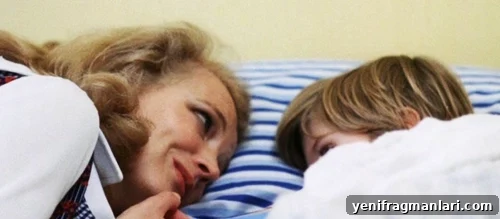
Later features—The Killing of a Chinese Bookie (1976), Opening Night (1977), and Love Streams (1984)—followed the same scrappy model. Cassavetes leaned on his community of collaborators for favors, borrowed resources, and uncompromising dedication. Over time his work inspired a wide range of filmmakers who admired his bravery and his refusal to prioritize commercial formulas over personal truth.
While European movements like the French New Wave are often celebrated as revolutionary, Cassavetes was pioneering in his own right. Shadows preceded some of the well-known New Wave films and demonstrated that radical, personal filmmaking could emerge outside of established systems. His emphasis on improvisation, intense character study, and minimalist production anticipated and influenced later movements and directors. Contemporary filmmakers and critics have pointed to his influence on directors who prize rawness, urgency, and human immediacy in their work.
Cassavetes’s legacy is recognized institutionally as well as artistically. Awards and honors in the independent film community carry his name, celebrating emerging filmmakers who follow a similarly daring path. Many directors have cited the experience of watching Shadows and other Cassavetes films as a decisive moment that pushed them to stop talking about making movies and to start making them.
When he made that radio appeal in 1956, John Cassavetes did more than raise money for a single film. He demonstrated a vital truth: passionate, determined artists can create work that matters with limited resources, persistent collaboration, and a refusal to compromise on emotional honesty. That spirit remains central to independent cinema today.
Written by Leah McDonald