
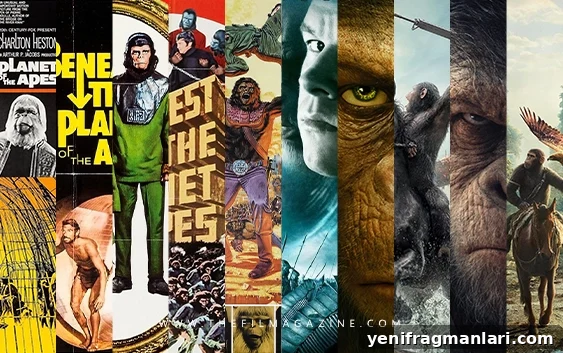
Planet of the Apes remains an often under-appreciated landmark of science fiction cinema. Across decades the franchise has repeatedly returned to large, provocative ideas—exploring power, prejudice, faith and the darker instincts of humankind—while delivering memorable performances and groundbreaking make-up and visual effects. From John Chambers’ pioneering prosthetics on the original films to Weta Digital’s astonishing VFX in the recent trilogy, the series has been anchored by strong central performances from actors such as Roddy McDowall, Andy Serkis and Owen Teague.
Since its debut in 1968, the Planet of the Apes franchise has gone through many reinventions and has grossed well over $2 billion worldwide. Below is a considered ranking of the films, focusing on what each entry contributes artistically and thematically, and noting where some instalments falter.
10. Planet of the Apes (2001)
Planet of the Apes Review
Tim Burton’s 2001 remake—starring Mark Wahlberg—revisits the familiar premise of an astronaut stranded on a world ruled by apes. The film is grand in scale and heavy on action, but it often sacrifices emotional depth and coherent tone for spectacle. Rick Baker’s prosthetic work is superb and performers such as Tim Roth and Helena Bonham Carter bring commitment to their roles, yet the film’s choices—especially its twist on the classic ending—feel misjudged and diminish the remake’s overall impact. It remains the least compelling entry in the franchise despite notable individual achievements.
9. Beneath the Planet of the Apes (1970)
Beneath the Planet of the Apes follows another astronaut searching for the missing protagonist from the first film and introduces a subterranean society of mutated, psychic humans who worship a nuclear bomb. While the film attempts social commentary—targeting religious fanaticism and the threat of nuclear proliferation—its execution feels padded and heavy-handed. Visual limitations and a lack of subtlety weaken a story that otherwise has ambitious themes.
8. Battle for the Planet of the Apes (1973)
In Battle for the Planet of the Apes, Caesar attempts to maintain a fragile peace between apes and the last human survivors, only for a military uprising to threaten both communities. The film aspires to be a war epic, but limited resources show: large-scale battles never reach the intended impact. Still, Roddy McDowall’s performance as Caesar is compelling through the prosthetics, and the final act delivers a surprising, darkly thoughtful conclusion that re-examines the series’ core conflicts.
7. Kingdom of the Planet of the Apes (2024)
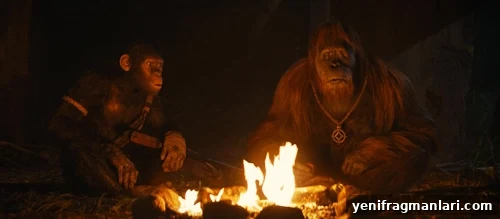
Kingdom of the Planet of the Apes Review
This 2024 instalment advances the timeline dramatically and places apes even more clearly at the story’s center. Technically the film is impressive—Weta’s effects and worldbuilding are top-notch—but it struggles to create deep emotional bonds with its characters. Owen Teague turns in a solid performance as Noa, yet some supporting figures, particularly the film’s antagonist, can overshadow the protagonist. For the franchise to continue thriving, future entries should better integrate emotional stakes with the franchise’s technical achievements.
6. Rise of the Planet of the Apes (2011)
The 2011 reboot reframes familiar elements to fit a contemporary context and introduces Andy Serkis’s Caesar in a performance-capture role that revitalized the character. The film’s early emotional sequences—Caesar’s formative years and his later heartbreak—are genuinely moving. However, many human characters are thinly sketched, which highlights how potent Serkis’s portrayal is by contrast. The premise tying scientific experimentation to increased intelligence recalls earlier genre ideas, but the film succeeds on the strength of its central emotional core and convincing visuals.
5. Conquest of the Planet of the Apes (1972)
Built around another affecting Roddy McDowall turn as Caesar, Conquest of the Planet of the Apes depicts a world where apes are forced into servitude and a revolt brews. The film’s political parallels can feel overt, likening the setting to historical totalitarianism, but it also delivers raw energy and a strong final monologue from McDowall. Its rough edges and direct approach give the movie a visceral sense of urgency that differentiates it from later, more polished retellings.
4. War for the Planet of the Apes (2017)
A sweeping, emotionally charged finale to the Caesar arc, War for the Planet of the Apes mixes epic scale with intimate character drama. Drawing on influences from war cinema and large-scale fantasy, the film examines the cyclical nature of violence and the cost of revenge. Andy Serkis and Woody Harrelson deliver deeply felt performances, while standout supporting turns add tonal variety. The movie combines spectacle and character work to close this trilogy on a resonant, tragic note.
3. Planet of the Apes (1968)
The original 1968 classic remains a striking cinematic experience. Its ideas—critiques of religious extremism, totalitarianism, prejudice and the causes of war—remain potent and thought-provoking. John Chambers’ makeup effects still impress, and the performances, especially by Kim Hunter and Roddy McDowall, give emotional weight to the story. The film’s twist ending is famously powerful and rewards both first-time viewers and repeated viewings with its carefully placed clues and thematic resonance. Jerry Goldsmith’s eerie score amplifies the movie’s unsettling atmosphere.
2. Escape from the Planet of the Apes (1971)
Escape from the Planet of the Apes takes the series in a different direction by sending Zira and Cornelius back in time to 1970s Earth. The film becomes a sharp satire, skewering Cold War anxieties, celebrity culture and scientific hubris, while leaning on the strength of its central characters. Kim Hunter and Roddy McDowall’s chemistry and physical acting elevate the material, delivering humor and poignancy in equal measure. It stands out as one of the most enjoyable and cleverly written entries in the original run.
1. Dawn of the Planet of the Apes (2014)
The 2014 sequel is widely regarded as the franchise high point for good reason. After a brief action prologue, the film immerses viewers in ape society, using non-verbal communication and nuanced performance-capture work to build a vivid, believable culture. The central conflict is an ideological clash between Caesar and Koba—both motivated by protection but sharply divided over whether coexistence with humanity is possible. The film balances a thoughtful moral core with gripping action, and director Matt Reeves crafts an emotionally rich, visually stunning entry that expanded the series’ potential and solidified its modern renaissance.
Which entries in the Planet of the Apes saga resonate most with you? Do you prefer the original series’ bleak allegories or the modern trilogy’s emotional realism and technical achievements? Share your thoughts and revisit these films to weigh their themes, performances and lasting influence on science fiction cinema.