
The Third Man (1949)
Director: Carol Reed
Screenwriters: Graham Greene
Starring: Joseph Cotten, Alida Valli, Orson Welles, Trevor Howard, Bernard Lee
The Third Man has grown into a cinematic legend. Released in 1949 and awarded the Palme d’Or that year, the film later won an Academy Award for Best Cinematography (Black and White) for Robert Krasker. From its initial critical acclaim to its enduring position on many lists of the greatest films, Carol Reed’s masterpiece is widely regarded as one of the finest achievements in cinema, notable for its performances, its haunting score, and its striking visual composition.
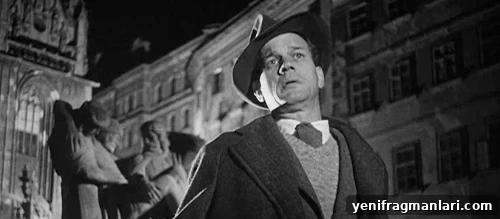
Graham Greene wrote the story as a novella while developing the screenplay, and the resulting film places a tightly wound mystery within a devastated, divided postwar Vienna. Joseph Cotten plays Holly Martins, a modest writer of pulp Westerns who arrives in Vienna at the invitation of his old friend Harry Lime, played by Orson Welles. Martins discovers instead that Lime has supposedly died in a traffic accident. The circumstances surrounding Lime’s death are ambiguous from the moment Martins begins asking questions: eyewitnesses disagree about what happened at the scene and whether another person was present. The repeated references to a possible “third man” open the film’s larger inquiries into truth, loyalty, and the moral compromises of survival.
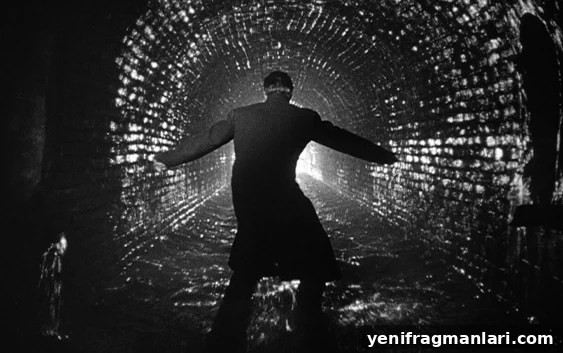
More than a conventional detective story, The Third Man is a mood piece that uses the ruined city as the film’s most compelling character. Wien (Vienna) appears as a fractured, disorienting urban landscape, apportioned to occupying powers and populated by people scarred by war and scarcity. Krasker’s Oscar-winning black-and-white cinematography and Reed’s direction draw from both film noir sensibilities and German Expressionist influences: tilted camera angles, deep shadows, and layered compositions create a constant sense of unease. The city’s streets, stairwells, and subterranean sewers are framed so that architecture and light reflect the characters’ moral ambiguity and social breakdown.
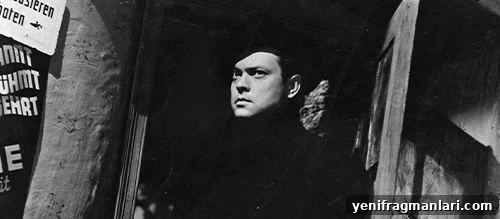
Orson Welles delivers one of his most memorable screen performances as Harry Lime, combining charm and menace with magnetic presence. His character shifts a scene’s energy as soon as he appears; the cinematography often frames him in ways that heighten his larger-than-life aura. Joseph Cotten’s understated performance as Holly Martins functions as the moral center and point of audience identification: his bewildered, earnest pursuit of truth contrasts with Lime’s urbane amorality. Alida Valli, Trevor Howard and the supporting cast add layers of emotional texture and complexity, deepening the film’s portrait of a city in moral suspension.
One of the film’s most distinctive features is Anton Karas’s zither score, which diverges from the orchestral norms of the time. The zither’s plucked, waltz-like theme—commonly called the “Harry Lime Theme”—creates an oddly jaunty, carnival-like mood even as the story reveals corruption and human cost. That musical dissonance—light melody set against dark action—intensifies the film’s unsettling tone and makes the soundtrack instantly recognizable. Karas’s music remains one of the film’s defining signatures and contributes to its enduring popular appeal.
Narratively, the film unfolds like a moral detective story: the mystery of what really happened to Harry Lime becomes a lens through which the audience examines postwar dislocation, profiteering, and the erosion of ethical certainties. Reed and Greene do not offer clean answers at every turn; the plot leaves certain loose ends and moral ambiguities unresolved, but that restraint is part of the film’s power. The film’s loose threads mirror the loosened social fabric of the city it depicts. Rather than frustrating, these choices reinforce the film’s commitment to atmosphere and thematic weight over tidy resolution.
Technically and artistically, The Third Man remains exemplary. Krasker’s use of shadow and composition creates images that are studied and admired by filmmakers and scholars. Reed’s direction keeps the film taut while allowing room for character detail and mood. The dialogue is sharp and notable for memorable lines that have entered the vocabulary of classic cinema. Taken together—direction, performance, cinematography, and score—the film represents a near-complete alignment of creative elements.
Over seventy years after its release, The Third Man continues to be taught, referenced and celebrated for its aesthetic innovations and its exploration of moral complexity in a time of geopolitical upheaval. It is an essential film for anyone interested in noir, postwar cinema, or the ways visual style and narrative meaning can intertwine to create an enduring cultural work.
Score: 23/24
Recommended for readers: An introduction to Orson Welles’s career and a study of film noir and postwar European cinema provide useful context for appreciating the film’s lasting influence.