
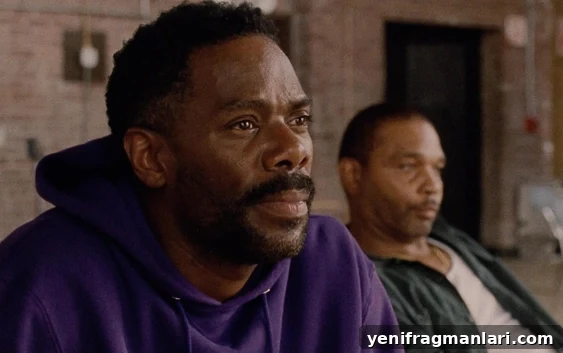

Sing Sing (2024)
Director: Greg Kwedar
Screenwriters: Clint Bentley, Greg Kwedar
Starring: Colman Domingo, Clarence Maclin, Sean San Jose, Paul Raci, David Giraudy, Patrick Griffin, Mosi Eagle, James Williams, Sean Dino Johnson
In recent years cinema has repeatedly turned inward: films about filmmakers, plays about plays, and stories that meditate on the creative act itself. These works examine the motivations behind art, the processes of making it, and the social and political contexts that shape it. At their best, they invite reflection, empathy and sometimes even personal change. Greg Kwedar’s Sing Sing sits squarely within that tradition, using theatre as a means to explore redemption, identity and the human capacity for transformation.
Inspired by a true story first reported in a magazine feature, Sing Sing chronicles a theatre program inside New York’s Sing Sing prison. It follows the men who participate—both professional actors and incarcerated performers—as they collaborate to create and stage a play. Colman Domingo leads the cast as Divine G, a gifted inmate whose creativity and voice anchor the project. The film focuses less on crime details and more on the process of artistic growth, offering a humane portrait of people often reduced to their worst acts.
One of the film’s most striking choices is the casting of real incarcerated and formerly incarcerated men alongside trained actors. Kwedar and cinematographer Patrick Scola shoot on textured 16mm stock, often holding the frame on faces that convey lived experience. These are not caricatures; they are individuals presenting themselves, sometimes as versions of characters in the play they are building. The camera finds moments of joy—a man spinning, participants enacting a fight, a recitation of Shakespeare—and treats those moments with care. When the lens rests on a man with a bold tribal tattoo running down his face, the image disarms the viewer’s assumptions and asks us to look beyond fear to personhood. A later scene, in which a camera-shy participant accidentally meets the lens during a sharing circle, feels unscripted and entirely authentic: a small, powerful human moment.
Structurally, the film borrows from the sports-team template: assembling a group, training together, confronting setbacks, coping with loss, and pursuing a shared goal. That familiar arc works here because it frames the ensemble’s emotional beats and ensures each participant has a moment to matter. Yet the film never loses sight of the specific reality these men inhabit. The stakes are real, and the environment shapes their interactions, making the familiar story beats feel earned rather than contrived.
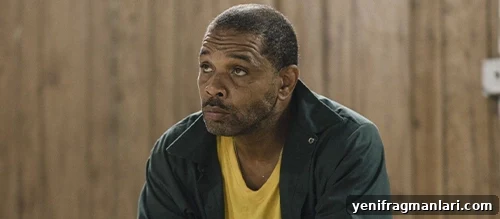
Sing Sing is intentionally selective about backstory. The film does not dwell on the crimes that put these men behind bars, because its interest is reform and the potential for change. What matters here is vulnerability: the slow unpeeling of defenses, the difficult conversations, the truth-telling that emerges as trust grows. The result is an intimate study of human beings attempting to evolve—people risking emotional exposure in a place designed to harden them.
The script excels in its restraint and realism. Conversations develop naturally; admissions and confrontations happen in time, often at the edges of rehearsals or in quiet, off-campus moments. The verbal exchanges feel true to male friendships and group dynamics—initial sarcasm and bravado give way to quiet confession and empathy. This gradual opening is central to the film’s emotional impact and reinforces its thesis: that creative collaboration can be a vehicle for personal transformation.
Acting lifts the material. Colman Domingo gives a nuanced, restrained performance as the lead: his spoken lines are credible, but his face conveys the most complex truths. Paul Raci contributes a grounded, gravelly presence that complements the ensemble. Clarence Maclin, a man who appears in the film as a version of himself and is credited with the nickname Divine Eye, stands out for the depth and range of his presence—at times terse and guarded, at others startlingly tender. His portrayal of a hardened exterior yielding to artistic sensitivity is one of the film’s most memorable achievements.
There will always be critics ready to dismiss films that humanize incarcerated people, often for ideological reasons, but such responses miss the point. Sing Sing is not an apology for wrongdoing; it is an argument for the restorative power of creativity. By combining professional filmmaking craft with real voices from inside the prison system, the film creates an immediate, affecting experience. It invites viewers to witness transformation without excusing harm, to be present with people who are attempting to change.
Visually and thematically, the film rewards close attention. The choice of film stock, the patient framing of faces, and the focus on ensemble dynamics all contribute to a cinematic language that privileges humanity over spectacle. In the darkness of a theater, the film’s impact is amplified: small gestures, quiet admissions, and shared laughter become acts of reclamation. Sing Sing is a thoughtful, emotionally resonant work about creativity, accountability and the capacity to remake oneself.
Score: 20/24
Rating: 4 out of 5.