
West Side Story (1961)
Directors: Robert Wise, Jerome Robbins
Screenwriter: Ernest Lehman
Starring: Natalie Wood, Richard Beymer, George Chakiris, Rita Moreno, Russ Tamblyn, Simon Oakland, William Bramley
Like great films, music often surprises us by how well it understands who we are. Without any prior meeting, the right score or song can reveal hidden emotions, lift us up, or lay our private sorrows bare. In a few frames or lines, cinema and song can unlock feelings we keep closely guarded. That connection—between audience and art—is one of the most powerful human experiences. When music and filmmaking are combined, the effect is magnified; a musical can make us tingle with excitement and ache with longing. It has the rare ability to make audiences fall in love on screen and in the theatre seats.
West Side Story began life on Broadway. Opening in 1957, its depiction of youth, love, and social tension ran for 732 performances. When Robert Wise and Jerome Robbins adapted it for the screen, they brought a theatrical intensity to filmcraft: many cast members came from the stage production and carried with them choreography that translated Stephen Sondheim’s incisive lyrics into physical poetry. The film pairs brash youthful energy with a deep emotional core and a probing look at social division; it refuses to be neatly categorized. At the time of release, a major trade magazine hailed it as an achievement for the movie musical, and the film cemented itself as a defining expression of the form.
Shakespeare wrote, “If music be the food of love, play on.” From the first aching strings of the prologue, West Side Story asks us to surrender to its music. Once its rhythm takes hold, it is hard not to be carried along.
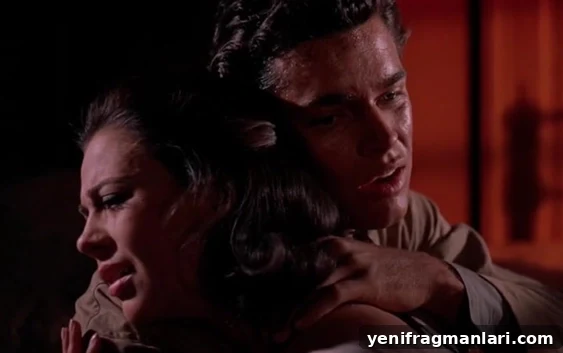
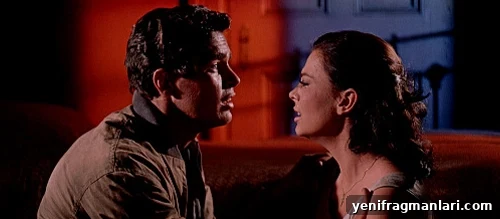
A modern reworking of “Romeo and Juliet,” the film centers on a romance between members of rival groups. On the 1950s streets of New York, two gangs vie for control of the Upper West Side: the Jets, a group of white American youths, and the Sharks, Puerto Rican migrants. Lieutenant Schrank (Simon Oakland) watches the escalating tension. Riff (Russ Tamblyn) and Bernardo (George Chakiris) plot a rumble. Riff turns to his former friend Tony (Richard Beymer) for help, while Bernardo’s sister Maria (Natalie Wood) prepares for the dance where the gangs will mingle. When Tony and Maria meet, their instant attraction threatens to tear the rival factions apart. Their love is passionate but fragile—can it survive the violence and prejudice around them?
Arthur Laurents, one of the original writers, noted that the story addresses murder, violence, prejudice, and attempted rape—tough subject matter for a musical. Yet that contrast is the film’s power: its bright choreography and melodic invention sit beside shadowed themes, creating a tension that gives the piece its emotional weight.
Visually, the film is abundant and precise. Choreography becomes architecture; performers move like flocks of birds, filling frame after frame with kinetic energy. Costumes splash color across the screen, and the sound design matches that vibrancy with brassy, urgent arrangements. Underneath the spectacle, though, the quieter moments—lovers’ gazes, aching strings, and small gestures—carry devastating poignancy. Tony and Maria’s romance, the loss of innocence, and the aftermath of violence become heartbreakingly real when the noise falls away.
Jerome Robbins insisted that editing should prioritize emotion even if it meant compromising some dance coverage—he believed the heart of the piece lived in feeling rather than flawless display. That choice pays off: the choreography communicates character and conflict as much as spectacle. Bernstein’s score and Sondheim’s lyricism work through the film like breath, shaping dialogue and action into musical sentences that reveal what the characters cannot say outright.
Numbers such as “Gee, Officer Krupke!” expose the film’s social critique, turning satire on institutions that fail young people. The Jets play out roles—judge, therapist, social worker—searching for reasons for their alienation. “America” juxtaposes the promise of the American Dream with the complex realities of immigrant life, blending Latin rhythms and jazzy textures to dramatize cultural friction and aspiration.
Recurring motifs—melodic refrains from “Maria,” “Tonight,” and the plaintive hope of “Somewhere”—weave the story together. Those musical threads elevate scenes into moments of shared longing; the score transforms individual pain into something universal.
The choreography expanded the language of dance for film. Dancers move with precise group formations and sudden, jagged breaks that reflect the two gangs’ identities: the Jets’ sharper, jazz-infused moves contrast with the Sharks’ more grounded, passionate rhythms. Critics have called the dance sequences athletic and exhilarating, unlike anything the movie musical had offered before.
Richard Beymer and Natalie Wood, despite reported tension offscreen, create a memorable pairing on film. Beymer, introduced by the song “Something’s Coming,” conveys hopeful energy and an almost worshipful devotion to Maria. By the film’s tragic turns his optimism is worn thin. Wood’s Maria begins as an innocent, sheltered presence whose costume and delivery underline a purity that gradually becomes complicated by the world she enters. Her transformation across the film reflects the corrosive effect of surrounding hatred.
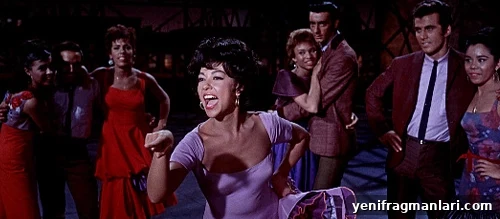
Rita Moreno and George Chakiris bring combustible energy to their roles. Moreno’s Anita is full of life and expressive nuance; her outrage in the drugstore scene marks a pivotal turn in the story. Chakiris’s Bernardo is elegant and proud, projecting a charm that fuels the couple’s chemistry during the dance and social scenes.
One of the film’s strengths is its economical script. Though rooted in Shakespearean tragedy, the screenplay often relies on short, direct lines that let music, movement, and images carry the emotional load. Simple declarations—”Oh Maria, see only me”—need no embellishment to transmit deep feeling. Other lines—such as “You were never my age!” or Anita’s sharp reflections about the immigrant experience—cut cleanly to central themes about youth, authority, and identity.
However, the film is not without serious flaws that have become more apparent with time. Casting choices that failed to include Latinx actors in key Puerto Rican roles—and the use of makeup to darken skin—are now recognized as misguided and offensive elements of the 1961 production. Later adaptations have struggled to fully address these representational failures, highlighting enduring problems in Hollywood’s depiction of Latino identities.
On a performance level, some critics have noted limitations in Natalie Wood’s screen presence compared with the burning intensity displayed by Rita Moreno, particularly in scenes demanding raw, visceral emotion. The final act also invites critique: after the rumble, the momentum wanes and the film’s tone becomes more uniform, losing some of the dramatic contrast that had sustained it earlier. Structurally, the ending departs from Shakespeare’s finality—Maria survives, leaving a sense of unresolved grief that some viewers find less satisfying compared with the tragic certainty of “Romeo and Juliet.”
Even with those shortcomings, the film’s emotional power remains potent. Its strengths lie in how it evokes different responses: as a portrait of youthful rebellion, a critique of broken promises, and, above all, a love story that lingers. Whether through a dance, a kiss, or a riot, West Side Story asks us to feel without apology. It invites tears, embraces, and outrage, and holds a mirror to the social tensions that still resonate today.
Score: 23/24
Rating: 5 out of 5.
Recommended for you: West Side Story (2021) Review
Written by Bella Madge
You can support Bella in the following places:
Substack: BellaWatchesFilms
Instagram: @bellawatchesfilms
TikTok: @bellawatchesfilms
Picturehouse Fresh Takes: Name Me Lawand Review