The Critic (2023)
Director: Anand Tucker
Screenwriter: Patrick Marber
Starring: Ian McKellen, Gemma Arterton, Lesley Manville, Mark Strong, Ben Barnes, Romola Garai, Alfred Enoch
The British film landscape often narrows the pathways for funding: modest genre pieces, period dramas, wartime tales, or intimate social realism tend to attract investment more readily than riskier modern-set projects. When money does flow, the film frequently reaches across the Atlantic for co-production support. In that context, The Critic positions itself squarely within the period drama tradition—an elegantly costumed, class-conscious piece set in the 1930s—but it refuses to settle into gentle nostalgia. Instead, this film sharpens its teeth, delivering a dark, uncompromising study of power, art, and moral compromise.
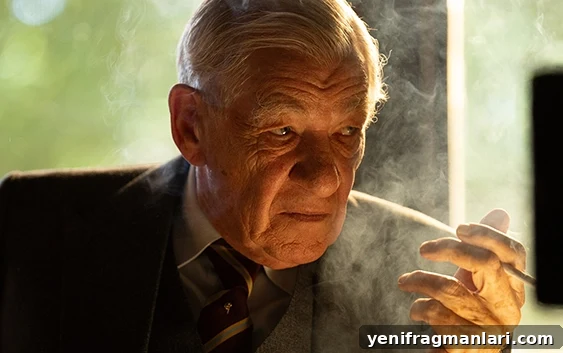
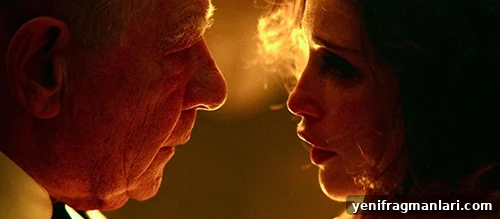
At the centre of the film is Ian McKellen as Jimmy Erskine, an imposing theatre critic whose authority and acerbic prose make him both revered and feared. Gemma Arterton plays a rising actress whose ambitions collide with Erskine’s intolerance; Mark Strong appears as the new editor of the paper where Erskine writes. Filmmaking choices—the period production design, the vintage cars, the gaslit streets, and the careful accent work—establish an unmistakably British setting. Yet the film’s strengths lie beyond period detail: it probes the corrosive effects of gossip columns, the press’s influence on careers, and the grim calculation of those willing to do anything to retain influence.
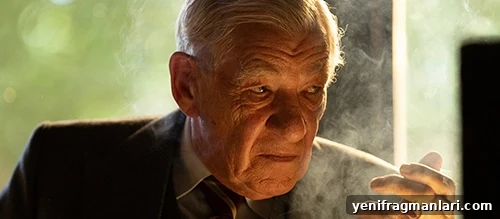
McKellen’s performance is the film’s keystone. He navigates a complex portrayal that is both magnetic and repellent, alternating between moments of aristocratic conviction and chilling ruthlessness. The role allows him to explore darker terrain than many of his better-known parts; the character’s moral blindness in the name of protecting “great” theatre becomes almost tragic and yet deeply unsettling. Importantly, the film treats the character’s homosexuality as one facet of who he is rather than as a defining tragedy or a simplistic explanation for his actions. That approach feels judicious and respectful: it avoids sensationalising identity while allowing the audience to focus on the character’s ambitions and flaws.
The narrative starts with meticulous economy, establishing the key players and the stakes in tidy, classical fashion. The middle of the film is where it thrives: the second act deepens into a genuinely dark examination of 1930s theatrical life and the newspaper business. It lays bare how reputations are built and destroyed, how editors and critics wield cultural capital, and how personal vendettas intertwine with public influence. The film’s tone deliberately diverges from other recent films about older protagonists, choosing noirish bitterness rather than nostalgia or gentle introspection, and this tonal choice helps it stand out among contemporary period pictures.
Performances beyond McKellen also add texture. Gemma Arterton brings a credible mix of vulnerability and tenacity to her role, and the supporting cast furnishes the work with believable professional and social friction. Direction and production design collaborate effectively to recreate a world that feels both historically specific and dramatically urgent. The cinematography and the production’s attention to detail deliver an immersive environment where small social cues carry heavy meaning, and the power dynamics among characters are consistently clear and compelling.
Where the film falters is its closing section. At festival screenings the ending drew criticism for feeling hurried and underdeveloped. The narrative arrives at its final beats with little breathing room, leaving several character arcs insufficiently resolved. What had been a carefully orchestrated build-up does not receive a proportionate denouement; the last minutes rush to a conclusion that diminishes the emotional impact of many earlier choices. A modest extension—allowing characters to process the fallout and giving the story one or two additional scenes—would have made the film’s final impressions land far more satisfyingly.
This structural imbalance is regrettable because it undercuts an otherwise rich and provocative film. The first hour and the central section demonstrate fine storytelling, accomplished performances, and an intelligent perspective on the relationships between art and power. The ending’s abruptness doesn’t erase the film’s strengths, but it does prevent The Critic from fully realising its potential.
Verdict: A dark, vividly acted period drama anchored by a commanding Ian McKellen performance. Superb in its middle stretches, the film loses momentum in a rushed final sequence that weakens its overall impact.
Score: 17/24