
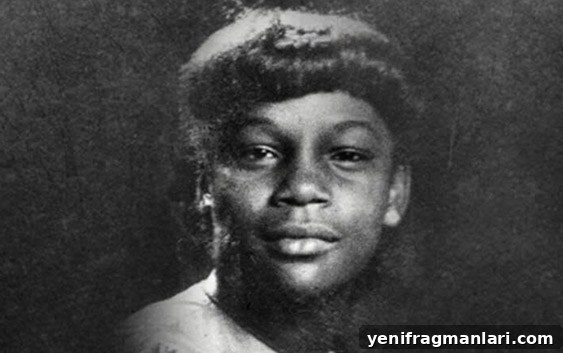

A Love Song for Latasha (2020)
Director: Sophia Nahli Allison
Review
Sophia Nahli Allison’s Oscar-nominated short documentary A Love Song for Latasha is a quietly powerful piece of cinema that lingers well beyond its 19-minute runtime. The film does more than recount a tragic event; it reconstructs a life with tenderness, nuance and a lyricism that turns memory into a kind of hymn. Through intimate testimonies, creative visual design and a restrained but evocative tone, Allison shifts our focus away from headlines and statistics to the human being at the center of a larger story of racial injustice.
The documentary revisits the 1991 killing of 15-year-old Latasha Harlins in South Central Los Angeles. While the legal outcome and its role in the climate that preceded the 1992 Los Angeles uprising are often discussed in public discourse, Allison chooses to foreground Latasha’s personality, hopes and the way she affected the people around her. The result is a film that restores dignity and specificity to a name too often reduced to a symbol.
Central to the film are the personal recollections of Latasha’s friends and family. Their voiceovers—soft, precise and full of affection—shape a portrait of a young woman who was bright, responsible and full of ambition. We learn about her role within her family, how she cared for younger siblings, and about small, telling moments that reveal her character. One memory, recounted with warmth, describes Latasha meeting her best friend by intervening in a rough prank at a public pool—an anecdote that captures her loyalty, boldness and playful authority.
Allison complements these oral histories with inventive visual elements. Hand-drawn graphics and stylized recreations weave around archival material and contemporary interviews, creating an aesthetic that feels both immediate and dreamlike. This design choice helps the film avoid the cold distance of traditional documentary reportage and instead invites the viewer into a shared act of remembrance. The sound design and pacing enhance that intimacy, allowing moments of grief and joy to respire without being rushed.
What makes A Love Song for Latasha especially effective is how it balances mourning with celebration. The film acknowledges the brutal reality of Latasha’s death and the inadequacies of the legal system while dedicating its primary energy to portraying the light she brought into other lives. By emphasizing the ordinary, luminous details of her short life, Allison resists letting Latasha become merely an emblem of injustice. Instead, she becomes visible as a person: curious, devoted and full of potential.
Beyond its portrait of one life, the film functions as a meditation on memory, loss and the civic consequences of dehumanization. In focusing on individual testimony rather than courtroom spectacle, the documentary invites reflection about empathy, community and how stories are told and carried forward. In that sense, it resonates strongly with contemporary movements seeking recognition and understanding, reminding audiences that empathy and human connection are crucial to social progress.
While brief, the film’s concentrated approach makes a lasting impression. It demonstrates how short-form documentary can be both formally inventive and emotionally profound—how a few carefully chosen voices and images can reconstruct a life in ways that matter.
20/24
A Love Song for Latasha is now available worldwide on Netflix.