
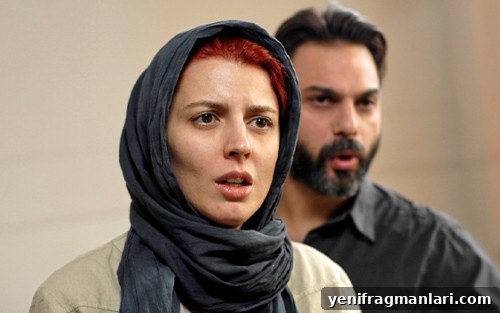
This article was written exclusively for The Film Magazine by Bradley Weir of Brad Watching Film.
A Separation (2011)
Director: Asghar Farhadi
Screenwriter: Asghar Farhadi
Starring: Leila Hatami, Peyman Moaadi, Shahab Hosseini, Babak Karimi, Sareh Bayat, Sarina Farhadi
The 2010s proved to be a remarkable decade for international cinema, and among its standout achievements is Asghar Farhadi’s intimate Iranian family drama, A Separation. The film is a masterclass in character-driven storytelling, blending moral complexity with razor-sharp observation of social and familial pressures. Farhadi’s screenplay and direction create an immersive, realistic drama that spots fault lines in relationships and society without preaching or simplifying.
The story centers on Simin (Leila Hatami) and Nader (Peyman Moaadi), a married couple at odds over the future of their family. In a striking opening, both characters address the camera directly, each presenting their side. Simin wants to leave Iran with their daughter to seek better opportunities abroad; Nader insists on staying to care for his ailing father. The court finds insufficient grounds for divorce, so Simin moves in with her parents. Their daughter Termeh (Sarina Farhadi) is caught between them, favoring her father while feeling the strain of the household split.
To help care for Nader’s father, he hires Razieh, played with remarkable depth by Sareh Bayat. Razieh is devout, vulnerable, and increasingly overwhelmed. Her nervousness about certain tasks—driven by religious convictions and fear—creates tension that escalates into a traumatic incident involving her and Nader. From that moment, the film becomes a tense moral puzzle: accusations, denials, and competing accounts multiply as everyone searches for the truth.
What distinguishes A Separation is its refusal to take an easy moral stance. Farhadi assembles a layered ensemble in which every character has clear, believable motivations. Simin’s decision to leave may seem self-interested, yet she believes it is best for the family. Nader’s insistence on staying is grounded in duty and the emotional burden of caring for his father. Razieh’s choices emerge from exhaustion, fear, and economic precarity. Even supporting figures—like the volatile Hojjat (Shahab Hosseini)—are portrayed with nuance rather than caricature.
The film also examines class and cultural divisions within contemporary Iran. Simin and Nader, more modern and aspirational, contrast with Razieh and Hojjat, who are portrayed as economically vulnerable and more traditionally religious. Farhadi avoids stereotyping; instead he highlights how different social positions and pressures shape decisions and misunderstandings, allowing Western viewers to see the variety and complexity of Iranian daily life beyond reductive assumptions.
A Separation has a theatrical, almost documentary-like feel. Notably, Farhadi eschews a musical score and relies on dialogue, ambient sound, and precise camera placement to sustain tension and emotion. The screenplay won widespread acclaim and earned Farhadi an Academy Award nomination for his writing. Several scenes—especially the courtroom sequences and heated confrontations where multiple perspectives collide—are outstanding for their dramatic control and moral ambiguity. Characters inflict pain and are hurt in return, yet the film makes it clear that few are simply villains.
Farhadi’s camerawork is unobtrusive but incisive, keeping the audience close enough to scrutinize expressions and gestures while preserving the naturalism of each encounter. The film’s observational approach forces viewers to weigh evidence, recognize bias, and empathize with conflicting positions. It’s a rare quality to create a story that feels lived-in: the dialogue, the choices, and the consequences all feel remarkably authentic.
Performances across the cast are uniformly strong. Sareh Bayat’s portrayal of Razieh is a standout—her vulnerability, resilience, and unraveling are emotionally devastating. Leila Hatami and Peyman Moaadi render a marriage eroding under pressure with quiet complexity, and Shahab Hosseini adds an unpredictable energy in his supporting role. Farhadi’s script and direction allow these actors to inhabit real people rather than archetypes, and the ensemble’s chemistry makes every interaction pulse with moral urgency.
In sum, A Separation is one of the decade’s most powerful films. It balances careful craftsmanship with an ethical seriousness that lingers long after the credits roll. The narrative refuses to simplify its characters’ motives and instead presents a humane, heartbreaking portrait of how separation—not just between spouses but between values, classes, and expectations—can irrevocably alter lives. For viewers seeking a film that combines riveting drama with intellectual clarity and emotional truth, Farhadi’s work remains essential viewing.
24/24
Written by Bradley Weir
You can support Bradley Weir in the following places:
Twitter: @bradderzz98
Blog: Brad Watching Film