
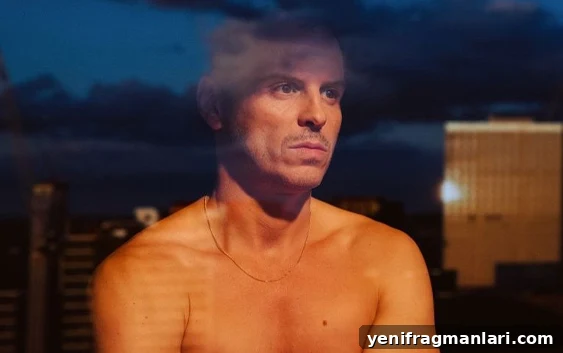
All of Us Strangers (2023)
Director: Andrew Haigh
Screenwriter: Andrew Haigh
Starring: Andrew Scott, Paul Mescal, Claire Foy, Jamie Bell
Andrew Haigh’s All of Us Strangers has become one of the most talked-about queer films of recent years. Since its UK release, audiences have been leaving screenings visibly moved, often in tears. But emotional reaction aside, does the film deliver on craft and storytelling? The short answer is yes: this is a finely crafted, emotionally exacting work that earns its tears.
The film centers on Adam (Andrew Scott), a man who returns to his childhood flat to write a screenplay about his parents, who are portrayed by Claire Foy and Jamie Bell. To his bewilderment, his parents appear to be living exactly as they were on the day they died thirty years earlier. While Adam wrestles with memory and grief, he forms a tender, complicated relationship with his enigmatic neighbor Harry (Paul Mescal). The story moves between past and present, fantasy and reality, following Adam as he confronts loss, longing, and the gaps left by unresolved family dynamics.
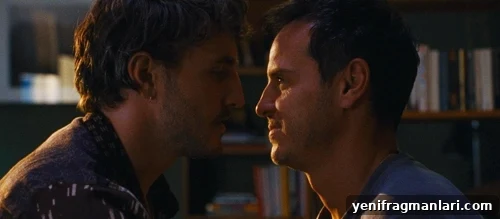
Haigh opens the film in intimate, mundane detail: Adam sprawled on a couch, trying to work, eating leftovers, stuck in a loop of inertia and recollection. His new apartment block is nearly empty, amplifying his sense of isolation—until Harry moves in. The two meet during a fire drill, a scene that immediately establishes the chemistry between Scott and Mescal. Harry arrives with a bottle of whiskey and a blend of bravado and vulnerability. Mescal balances charm and fragility with nuanced control: a glance or a softly delivered line reveals layers beneath the surface. Scott’s Adam oscillates between guardedness and small, genuine smiles, showing how wary hope and fear can exist together.
A recurring motif in the film is Frankie Goes To Hollywood’s “The Power of Love.” Early on, Harry quotes a lyric—“There’s vampires at my door”—and the song’s opening lines echo throughout the narrative. That refrain becomes more than background music: it’s a thematic anchor that evolves as Adam’s story unfolds. Initially used to underline loneliness and a yearning for protection, the song’s presence shifts in meaning over the course of the film, underscoring love’s ambiguity and resilience. Haigh’s decision to weave a single song motif through the film demonstrates his subtlety as a writer-director and strengthens the emotional logic of the story.
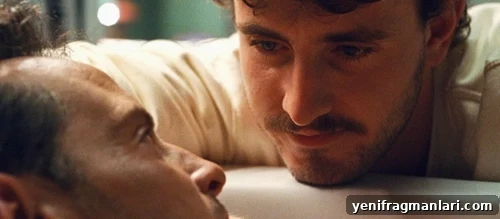
The narrative tackles challenging territory—time shifts, memory, and a blurring of reality and imagination—but Haigh renders it accessible by focusing tightly on character. The film studies four people closely: Adam, Harry, and Adam’s mother and father. This small ensemble allows the story to explore intimacy without getting lost in gimmickry. Close attention to the tiny gestures and unspoken tensions in family life makes the film feel lived-in and honest. Instead of relying on plot mechanics, Haigh lets character reveal the emotional stakes.
Performances are a major strength. Andrew Scott delivers a layered portrayal of a man carrying a private ache; his scenes with Claire Foy and Jamie Bell capture the complicated, often contradictory nature of familial love—where tenderness and resentment coexist. Foy and Bell create a believable, deeply felt parental presence that grounds Adam’s memories. Paul Mescal, meanwhile, continues to demonstrate why he is among the most compelling actors of his generation. He never overshadows his co-stars; instead, he enriches every scene he inhabits with small but powerful choices—moments that are quietly disarming and emotionally precise.
Individually, Haigh’s direction, the screenplay, the performances, and the musical choices are impressive. Together, they elevate the film, producing an experience that resonates long after the credits roll. All of Us Strangers is, at heart, a film about love in its many forms—romantic, familial, and self-directed—and about how people attempt to reconcile with the past. Its quiet intensity and emotional clarity make it a film that will linger with viewers.
This is a melancholic, moving love story that moves steadily toward its emotional center. Haigh offers a restrained but powerful meditation on grief and connection, directed with care and performed with conviction. Prepare to be moved—and to need a box of tissues.
Score: 22/24
⭐⭐⭐⭐