
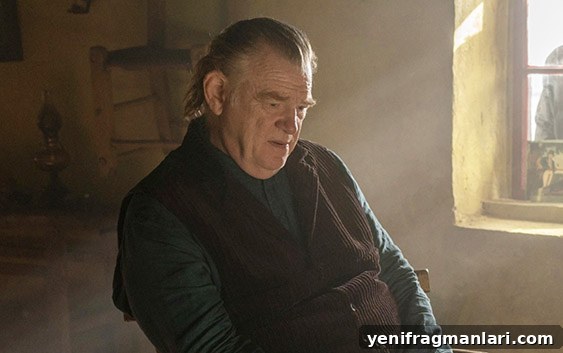
Throughout his more than thirty years in film and television, Brendan Gleeson has established himself as an actor of remarkable range and conviction. Every part he inhabits is delivered with an intensity and honesty that elevates the material, bringing emotional depth and tonal nuance few performers manage with such natural ease.
Gleeson’s path to acting demonstrates that success in the arts can come at any stage of life. Born in Dublin, he earned a Bachelor of Arts in English and Irish before training as a professional actor. He spent several years working as a secondary-school teacher while continuing to act in and write plays for the theatre, including productions such as Brownbread (1987), Home (1988) and his own written work like The Birdtable (1987). He kept his artistic ambitions alive during those years and ultimately moved into acting full-time in the early 1990s.
After early screen appearances in The Treaty (1991), Gleeson began accruing prominent supporting roles in films including Braveheart (1995), Angela Mooney Dies Again (1996), Michael Collins (1996) and The General (1998). As his career progressed, he reached wider audiences with standout performances in films such as 28 Days Later (2002), Harry Potter and the Goblet of Fire (2005) and Beowulf (2007). Across those and many other films, Gleeson has become known for portraying stern, complex and deeply human characters whose presence often defines the projects he joins.
Below are three career-defining performances that showcase the breadth of Gleeson’s talent and why he is regarded as one of contemporary cinema’s most compelling actors.
1. In Bruges (2008)
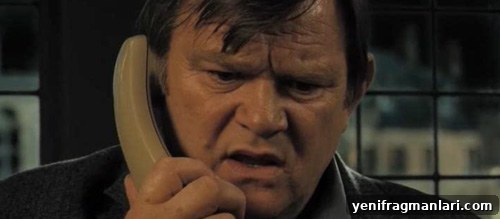
In Martin McDonagh’s darkly comic film In Bruges, Gleeson plays Ken, a pragmatic, straight-laced mentor to a pair of young hitmen. The role allows Gleeson to balance a stony, no-nonsense exterior with warmth and unexpected comedic timing. The film’s success hinges on sharp writing and on the chemistry between Gleeson and co-star Colin Farrell, but it is Gleeson’s measured, subtly expressive performance that anchors many of the film’s most memorable moments.
Gleeson demonstrates an often-overlooked gift for dark comedy, delivering one-liners and sustained comic beats with an authenticity that complements the film’s bleak humour and noir-tinged plot. Ken’s stern demeanour becomes a vessel for the film’s offbeat tone, and Gleeson’s ability to inhabit that character brings both gravitas and levity to the story. In ensemble pieces such as this, a strong central performance can lift the entire film; Gleeson’s controlled, commanding presence consistently draws attention and leaves a lasting impression.
2. Calvary (2014)
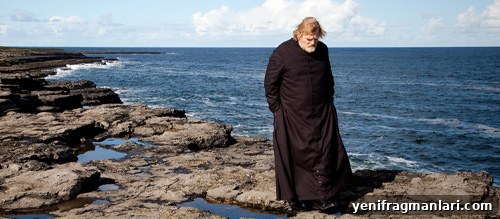
In John Michael McDonagh’s Calvary, Gleeson portrays Father James, a compassionate parish priest living in a small Irish town who is confronted with a shocking threat during confession: an anonymous penitent vows to kill him. The film explores institutional abuse, moral responsibility and the erosion of trust within a community. As Father James, Gleeson opens the role with warmth, kindness and the reassuring presence of a trusted figure, then gradually reveals the character’s inner doubts and sorrow as the story exposes darker truths.
Gleeson’s portrayal is built on restraint and quiet emotional shifts. He conveys an honorable man forced to grapple with disillusionment, pain and a changing moral landscape. The performance is a study in empathy and endurance: by the film’s end, Father James remains principled but changed, having encountered profound hurt and existential uncertainty. Gleeson’s ability to chart that transformation while maintaining the character’s dignity is a striking example of his dramatic range.
3. The Banshees of Inisherin (2022)
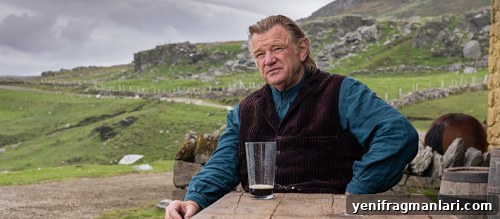
The Banshees of Inisherin pairs Gleeson with Colin Farrell in a tragicomic exploration of friendship and existential sorrow. Gleeson plays Colm, a laconic, world-weary Irishman who abruptly ends his decades-long friendship with Pádriac (Farrell). The film shifts between biting humour and profound sadness, and Gleeson’s performance is central to that tonal balance.
As Colm, Gleeson embodies a melancholy and stern presence that grounds the film’s philosophical undertones. His portrayal highlights the complexities of aging, artistic integrity and emotional isolation. Gleeson’s restrained sorrow and subtle gravitas provide the film’s emotional core, making the interplay between his character and Farrell’s both heartbreaking and darkly comic. The performance stays with the viewer, demonstrating how Gleeson can make even small gestures convey a lifetime of feeling.
Across a career that spans stage, television and cinema, Brendan Gleeson has proven himself adept at crafting fully realized characters—often flawed, frequently stoic, but always human. Whether delivering sharp comedic timing or quiet, devastating drama, he consistently finds the emotional truth in a role. His work in In Bruges, Calvary and The Banshees of Inisherin offers a clear window into his strengths as an actor: a capacity for depth, nuance and an unforced authenticity that enriches every film he joins.
Gleeson’s rise from theatre and teaching to international recognition underscores an admirable dedication to craft and a willingness to evolve as a performer. His varied body of work is a testament to his versatility, and his many memorable roles continue to influence and inspire audiences and fellow actors alike.