


Cobweb (2023)
Director: Samuel Bodin
Screenwriter: Chris Thomas Devlin
Starring: Lizzy Caplan, Anthony Starr, Cleopatra Coleman, Woody Norman
Cobweb opens on an unsettling, familiar premise: eight-year-old Peter (Woody Norman) is an isolated child in the small town of Holdenfield, a week before Halloween. Peter’s loneliness is shown through quiet, lingering moments—walking to school alone, sitting withdrawn while classmates create noise and chaos. At night, something knocks from inside the wall of his bedroom. After a few hesitant attempts, Peter answers and something answers back. The film initially sets itself within the well-worn territory of domestic horror—an invisible presence, a child in peril, and parents with secrets—but it quickly pivots and keeps evolving, refusing to settle into a single recognizable formula.
The early scenes tease several possible directions. You might expect a straight possession narrative or a supernatural tormentor whispering malicious instructions, and there are echoes of other contemporary and classic works that mine childhood fears and domestic menace. Yet Cobweb distinguishes itself by consistently subverting those expectations. The voice behind the wall urges Peter to stand up to a school bully—an intimate, almost practical manipulation rather than the purely malevolent horror of many possession tales. From this point the screenplay, which had been notable enough to appear on the Black List of acclaimed unproduced scripts, starts to reveal its appetite for reshaping tone and stretching subgenre boundaries.
Director Samuel Bodin keeps the film tight and propulsive across a brisk runtime of under 90 minutes. The screenplay by Chris Thomas Devlin uses shifts in perspective and genre beats to maintain tension: it becomes domestic thriller, then psychological drama, then uncanny horror, each transition feeling organic rather than jarring for the majority of the film. Those tonal shifts are largely a strength; they keep the audience invested, guessing, and consistently off-balance. There is an economical approach to storytelling here—scenes are compact, visual information is delivered with precision, and the film rarely overstays its welcome.
Performances are a major reason Cobweb succeeds as often as it does. Lizzy Caplan and Anthony Starr make an effective, uneasy parental pair, both layered with hints of dread and hidden tension. Caplan, who has a track record with roles that balance surface charm and buried menace, delivers a nuanced portrait of a mother under strain. Starr brings a volatile intensity that adds to the film’s discomfort. At the story’s emotional center is Woody Norman, who carries the film with a remarkably grounded portrayal of fear, confusion, and sorrow. His reactions feel truthful; he embodies the vulnerability and resilience of a child caught inside an unraveling household.
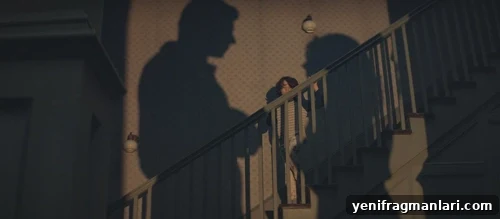
Where the film falters is its final act. The last twenty minutes attempt a big, cathartic reveal—one that leans heavily into a more literal, dramatic presentation of the film’s central horrors. The idea of confronting abuse, neglect, and fractured family dynamics in a visceral way is compelling on paper, and Cobweb tries to deliver a high-stakes, emotionally raw conclusion. Instead, the finale feels at times overly theatrical and indebted to certain visual tropes from Japanese horror cinema, blending those influences with a Hollywood-style crescendo. As a result the ending sometimes reads as incongruous with the quieter, intimate dread that proceeds it.
A few visual effects moments also undercut the emotional weight the film is trying to build: occasional, less convincing CGI pulls the audience out of the otherwise carefully maintained atmosphere. When a film spends much of its runtime grounded in the believable terror of concealed truths and subtle family dysfunction, a finale that escalates into spectacle can feel misaligned. Had the movie opted for a more restrained, emotionally centered resolution that leaned into the psychological fallout rather than spectacle, Cobweb might have emerged as one of the most memorable and unexpected horror films of the year.
Even with the shortcomings of its closing sequence, Cobweb is an ambitious and mostly effective film. Its willingness to play with genre expectations, its tight pacing, and the committed performances—especially Norman’s—make it worthwhile. The movie comes very close to transcending its influences and delivering something uniquely unsettling; it only stumbles at the final turn. For viewers who appreciate horror that prioritizes characterization and keeps shifting tone, Cobweb offers a rewarding, if imperfect, experience.
Score: 17/24
Rating: 3 out of 5