

Dream Scenario (2023)
Director: Kristoffer Borgli
Screenwriter: Kristoffer Borgli
Starring: Nicolas Cage, Julianne Nicholson, Michael Cera, Dylan Baker, Tim Meadows, Lily Bird, Jessica Clement, Paula Boudreau, Marie McPhail
Nicolas Cage has become a cultural phenomenon in recent years, a rare screen presence who can play exaggerated versions of himself without it feeling purely self-indulgent. Cage’s range is striking: he can anchor a high-budget blockbuster with the same intensity he brings to smaller, direct-to-streaming projects. No matter the scale of the production, he commits fully to the role, frequently turning performance choices into memorable moments that reverberate online or attract critical attention. That willingness to go all-in makes any Cage-led film worth watching.
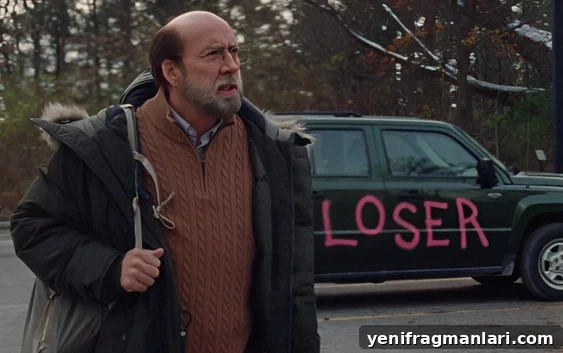
Dream Scenario arrives as a film that seems tailor-made to play to Cage’s strengths. At its center is Paul, an unassuming college professor portrayed by Cage, who suddenly becomes famous after inexplicably appearing in other people’s dreams. The premise is unusual and fertile with possibility: a modest, quietly unhappy man unexpectedly becomes a viral sensation when strangers begin dreaming about him. The film is produced with the support of a studio known for distinctive independent releases, which raises expectations that this could be a thought-provoking indie with mainstream appeal rather than just a quirky viral oddity.
Paul is a study in ordinariness. He leads a steady life with a steady job and a long-term marriage to Janet, played by Julianne Nicholson. Their life is comfortable but lacking the excitement Paul secretly craves. An early scene that reveals Paul’s frustration involves a meeting with a former colleague, Sheila (Paula Boudreau), whose academic work Paul believes owes a debt to his input. Whether his claim is justified remains ambiguous; Sheila disputes it, and Paul’s sense of grievance feels like part resentment and part longing for recognition.
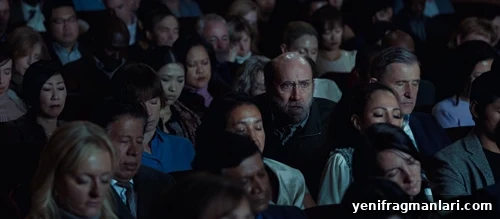
That longing is a key emotional driver for the story. After another mundane evening at the theater, Paul encounters an ex-girlfriend, Claire (Marie McPhail), who confesses she’s been dreaming about him. Soon after, Paul learns his students and strangers across social platforms have begun seeing him in their dreams. The discovery propels him into sudden, surreal fame. Initially, Paul is intoxicated by the attention. For the first time in his life, strangers are eager to meet him, ask questions, and treat him like a public figure. He savors interviews and even abandons classroom material to field questions about his dream appearances.
But the attention is a double-edged sword. Although the world projects larger-than-life expectations onto him, Paul’s dream-self often plays a passive, awkward role—mirroring his real-life insecurities. As Paul begins to assert himself more aggressively in waking life, the version of him that manifests in other people’s dreams changes as well, and not always for the better. The film charts a steady escalation from bemused fascination to darker consequences as mass recognition warps both public perception and Paul’s behavior.
Tonally, Dream Scenario is less surreal than the premise suggests. Like other films that use an odd conceit to dig into human and cultural truths, this one treats the dream phenomenon as a lens through which to examine contemporary fame. The story asks how quickly modern culture elevates and then dismantles a suddenly visible figure, how nuance collapses under viral attention, and how cancel culture and rapid judgment affect individuals who become symbols rather than people. Rather than pursue a metaphysical explanation for Paul’s intrusion into dreams, the film focuses on the social consequences and the psychology of a man confronting sudden notoriety.
That choice—eschewing an explicit origin story for the dream occurrences—works to keep the movie grounded in the human stakes, but it also leaves a sense of missed opportunity. The film rarely attempts to interrogate the mechanics of what is happening; instead, the strange phenomenon functions primarily as a device to trigger the main character’s arc. If the film had treated the dream premise as a stand-in for any modern viral moment—an odd photo, an unguarded video clip, a meme that suddenly defines a person—the narrative would remain largely intact. In that sense, the dream conceit is symbolic rather than explanatory.
Where Dream Scenario shines is in its character focus and in Cage’s performance. Paul is a man whose dissatisfaction is quietly powerful: he wants recognition not for vanity alone but as validation of a life’s work gone unnoticed. The film’s exploration of that desire is compelling, sometimes darkly comic, and occasionally unsettling. It evokes elements of character-driven works that interrogate identity, fame, and the messy overlap between public image and private self.
The supporting cast contributes to the film’s texture, grounding Paul in relationships that illustrate how sudden public scrutiny affects family, colleagues, and former intimacies. Julianne Nicholson’s Janet provides a warm but strained anchor, offering both encouragement and exasperation. Smaller performances help populate the world of viral fascination—students, strangers, and online commentators who turn an ordinary man into a trending figure.
Visually and narratively, the film avoids leaning too heavily on surreal spectacle. Instead it channels the absurd premise into an exploration of contemporary celebrity culture, social media dynamics, and individual psychology. Some viewers may wish for a deeper dive into the surreal origins of Paul’s dream appearances; others will appreciate that the film keeps its focus tight on how fame distorts character and connection.
Ultimately, Dream Scenario is a character study that uses an offbeat idea to illuminate familiar modern anxieties. It showcases Nicolas Cage’s ability to inhabit a role that blends fragility, hunger, and menace. The movie is at once entertaining, occasionally unsettling, and thoughtful—an engaging examination of what happens when an ordinary life becomes extraordinary overnight.
Score: 19/24
Written by Rob Jones
Support the writer at rbrtjones.com
Twitter: @rbrtjones