

Dream Scenario (2023)
Director: Kristoffer Borgli
Screenwriter: Kristoffer Borgli
Starring: Nicolas Cage, Julianne Nicholson, Michael Cera, Dylan Baker, Tim Meadows, Lily Bird, Jessica Clement, Paula Boudreau, Marie McPhail
Nicolas Cage has become a beloved figure on the internet in recent years, to the extent that he can play a version of himself on screen without it feeling self-indulgent. Unlike the rare celebrity cameo, Cage remains one of the most versatile and unpredictable actors working today: equally likely to headline a major studio blockbuster, to anchor an intimate indie, or to lead a low-budget streaming release. What unites these roles is Cage’s total commitment—he always gives everything he has to a part. That energy makes him fascinating whether the performance sparks a new meme or earns awards-season acclaim.
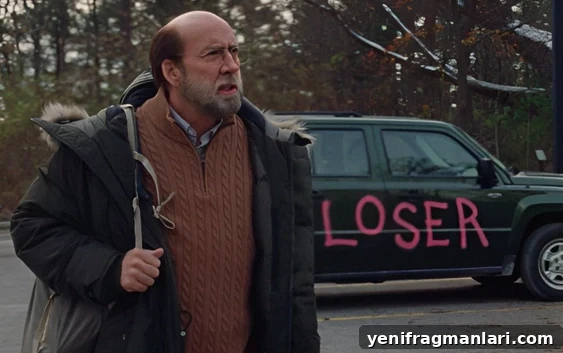
Dream Scenario feels tailor-made for Cage. On the surface, it’s a peculiar, high-concept premise: an ordinary college professor—played by Cage—suddenly starts appearing in other people’s dreams and becomes a viral sensation. The idea is strange and attention-grabbing, the sort of concept that could spawn internet obsession. But the film is not purely an oddity; it is also backed by an arthouse sensibility that aims to interrogate how modern fame is created and consumed.
Cage’s character, Paul, is immediately relatable. He has a steady job, a steady marriage, and a predictable routine—comfortable but unremarkable. Early scenes reveal the quietly frustrated man beneath that placid exterior. Paul believes he has been shortchanged by a former colleague, Sheila, who is publishing research that he thinks should acknowledge his contribution. Whether he was actually owed credit remains ambiguous, but the encounter shows Paul’s yearning for recognition. His wife, Janet, urges him to record the meeting so she can prove what happened, yet Paul deletes the recording before she can hear it—an action that hints at insecurity and pride.
The catalyst arrives when Paul’s ex-girlfriend recognizes him at the theater and tells him he has been appearing in her dreams. He soon learns that students and strangers around town are dreaming about him, and social media lights up with people posting about the mysterious man who keeps turning up in their sleep. Initially, Paul is intoxicated by the attention. For a man who has lived a life of quiet anonymity, sudden fame feels like vindication. He relishes public encounters, derails lectures for impromptu Q&A sessions, and soaks up the new admiration.
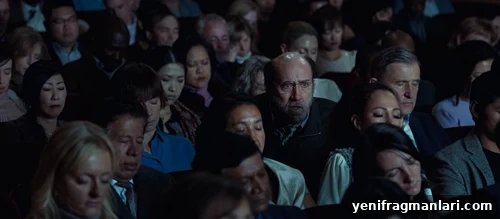
But the film complicates that thrill. In people’s dreams Paul initially appears passive and peripheral; as he begins to act more decisively in his waking life, the dream versions of him start to act more aggressively. The story tracks not just the exhilaration of overnight fame but its corrosive effects—how public attention magnifies flaws, strips away nuance, and twists intentions into caricature. The film uses its surreal premise to reflect on contemporary cultural dynamics: viral fame’s rapid ascents, the rush to judgment in public life, and the fickle, often punitive nature of online attention.
Unlike some high-concept works that aim to explain their premise, Dream Scenario is not invested in revealing a scientific or supernatural mechanism behind Paul’s appearances. The narrative treats the dream phenomenon as a device rather than a mystery to be solved. That choice can be a strength and a limitation: it keeps the focus on character and social commentary, but it also leaves the central oddity underexplored. Had the film chosen a more grounded trigger—Paul going viral for a strange gesture caught on camera—the arc would remain largely the same, perhaps even clearer. Nonetheless, the ambiguity allows the story to concentrate on the human costs of notoriety.
At its heart, Dream Scenario is a character study and a showcase for Cage’s skills. He portrays a man who, despite leading what many would consider a satisfying life, is consumed by the longing for validation and reinvention. The film’s tone blends dark humor and melancholy, balancing moments of absurdity with sharper observations about identity and image. It occasionally evokes the spirit of metafictional comedies that use surreal ideas to probe ordinary anxieties, but it keeps its focus on the personal and cultural fallout of fame rather than on metaphysical spectacle.
The movie succeeds because it gives Cage room to play a nuanced, sympathetic everyman who becomes something else in the public imagination. It’s compelling to watch how his optimism and desperation curve into something darker as attention grows and expectations shift. While a deeper exploration of the dream logic might have enriched the concept, the film’s real interest lies in dissecting how modern celebrity is manufactured and how quickly society can consume, exalt, and discard a person.
Score: 19/24
Rating: 4 out of 5.
Written by Rob Jones
You can support Rob Jones on his website: rbrtjones.com
Twitter: @rbrtjones