
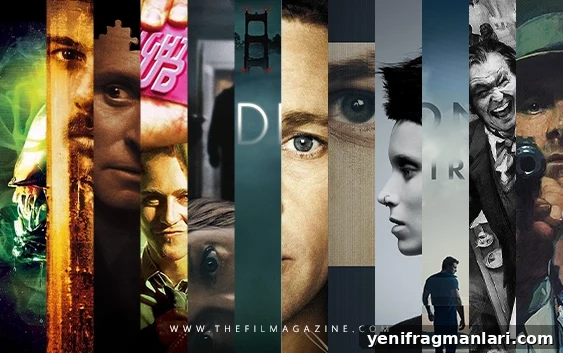
“I don’t know how much movies should entertain. To me I’m interested in movies that scar.” – David Fincher (“Seventh Hell” by Mark Salisbury)
David Fincher is one of the most accomplished filmmakers working in 21st-century Hollywood. He has received three Academy Award nominations for Best Director for The Curious Case of Benjamin Button, The Social Network, and Mank — each of those films was also nominated for Best Picture. His Zodiac earned a Palme d’Or nomination at Cannes. Fincher’s projects are consistently well-funded, widely reviewed, and regularly embraced by audiences.
Fincher blends a variety of cinematic traditions. He draws on Stanley Kubrick’s cool observational precision and Steven Spielberg’s command of visual composition, combining both directors’ famed attention to detail. His versatility across genres — from science fiction and drama to psychological thriller — shows his ability to meet the demands of different stories while maintaining a recognizable visual and tonal identity.
His visual style is defined by high-contrast lighting, careful use of distance and close-ups to emphasize critical moments, and a disciplined montage approach. Even when he shifts color palettes or experiments with camera techniques, Fincher’s signature tendencies remain evident. He has also been a major force in advancing digital visual effects in cinema: notable examples include the digital de-aging in Benjamin Button, the twin effects in The Social Network, and the subtle CGI blood in Zodiac.
Fincher was an early adopter of large-scale digital production. Zodiac was among the first major features to be recorded directly to digital storage, and Mank was shot on a black-and-white digital camera rather than converting color footage in post-production. These technical choices often served practical problems — improving workflow, facilitating effects, or achieving particular performances — but they also became part of his aesthetic toolbox.
Although Fincher rarely writes his own scripts, he is exceptionally skilled at choosing material and shaping it through development and production. The characters he gravitates toward are often tested physically and emotionally; his narratives frequently contain a mystery the audience unravels alongside the protagonists, and they conclude with a clarity that can feel either hopeful or bleak. His interest in serial killer stories and procedural investigations also extends to television, most notably in the Netflix series Mindhunter, where characters investigate crimes while losing pieces of themselves in the process.
Fincher resists being labeled a brand, yet his films share a distinct identity: meticulous craft, a collaborative work ethic, a synthesis of classic and modern technique, and a preference for dark, quietly unsettling stories presented with restraint. This article ranks Fincher’s films according to how well they embody that “David Fincher” sensibility — films that reflect his control, his aesthetic, and his interest in narratives that linger.
Follow @thefilmagazine on X (Twitter).
12. Alien 3 (1992)
“No one hated [Alien 3] more than me,” Fincher told the press. Alien 3 follows Ripley after she crash-lands on a prison planet populated by religious inmates who react harshly to the presence of a woman.
The film’s special effects and its drab, grungy mise-en-scène are the most memorable aspects of an otherwise aimless story that drifts through an uneven plot. The Assembly Cut, often cited by defenders of the film, was assembled without Fincher’s direct supervision, making it difficult to attribute the revision to his vision even though his name remains on the project.
For many viewers, Alien 3 remains an odd detour in Fincher’s career — best remembered for its texture rather than its narrative success.
11. Panic Room (2002)
Films set largely in a single location are difficult to sustain, especially when much of the action is confined to a small space. Fincher’s camera in Panic Room exploits every inch of the set while preserving a claustrophobic atmosphere. The script is clever and the performances are strong, which keeps the film engaging through its near two-hour runtime.
Yet Panic Room often feels hollow compared with Fincher’s deeper works. It delivers taut, effective thrills and foregrounds female protagonists in tense action scenarios, but it lacks the thematic weight that characterizes his best films. Still, it’s an accomplished piece of craft worth watching.
10. The Game (1997)
The Game is a sprawling psychological thriller that keeps viewers on edge. Like Panic Room, it delivers memorable sequences and committed performances. The film pairs a novelistic structure with a protagonist who unravels as the manufactured mystery around him deepens.
The Game is distinctively “Fincher” in its San Francisco setting, narrative sweep, and meticulous construction, but it lacks truly unforgettable scenes or deeply resonant characters. It’s a strong genre film that benefits from Fincher’s direction but might be less memorable without his touch.
9. The Curious Case of Benjamin Button (2008)
There is no other film in Fincher’s filmography quite like Benjamin Button. Fincher seldom ventures into straight romance, and while this film centers on relationships, it ultimately examines the bond between two people as they move through life’s odd reversals.
The digital aging effects were notable and earned the film one of its Academy Awards. The image of a small, elderly-appearing child meeting the girl he will later love is disorienting and memorable. The film mixes classical Hollywood sentiment with cutting-edge effects, a blend that makes Benjamin Button an outlier in Fincher’s work — technically impressive and emotionally ambitious, but stylistically different from his darker thrillers.
8. Fight Club (1999)
Fight Club became a cultural phenomenon. It is stylized, witty, and endlessly quotable, channeling a 1990s rage against consumer culture and corporate life. The film’s provocative premise has often been misunderstood or taken out of context, with some audiences celebrating the violence and aggression it satirizes.
At its best, Fight Club is a sharp critique of toxic masculinity and hollow consumerism, complicated by its own narrative excess and ironic tone. Its influence extends far beyond Fincher’s body of work.
7. Se7en (1995)
Se7en marked Fincher’s confident entry into serial killer narratives and one of the first films where he exercised broad creative control. Its cinematography bridges the gritty tones of his earlier work and the more refined aesthetic he later perfected: high-contrast lighting and a muted palette create a noir-inflected atmosphere that suits the film’s brutal subject matter.
Se7en excels in suggestive violence: it shows the aftermath and the horror without indulging in spectacle. That restraint makes it a mature and haunting treatment of the genre, full of iconic moments that announced Fincher as a major voice in modern thrillers.
6. The Killer (2023)
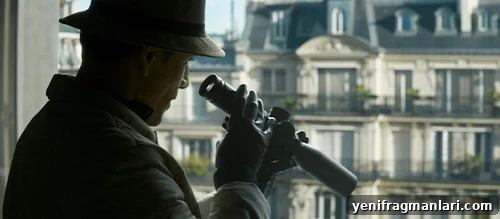
The Killer is one of Fincher’s most sardonic films. Michael Fassbender plays an assassin whose calm, methodical life is disrupted by an attempt on his life and a quest for revenge. The movie deconstructs the mythology of action heroes like John Wick and the lone-avenger archetype by exposing the monotonous, consumer-driven reality behind the façade of lethal competence.
Fincher uses the assassin’s world to comment on 21st-century life: the same routines, deliveries, and conveniences that order everyday existence also shape the assassin’s grind. The Killer continues Fincher’s commitment to precise aesthetics, coolly analytical framing, and dark thematic concerns, while offering unexpectedly sharp humor.
5. The Social Network (2010)
The Social Network is both a departure and a high point in Fincher’s career. It examines how technology shapes human relationships and the obsessive drive for perfection shared by its characters and its director. Aaron Sorkin’s script provides the film’s relentless verbal energy, while Fincher’s direction crafts its atmospheric, coolly observed world.
The result is a film that feels like a modern parable about creation, ambition, and isolation — one of Fincher’s most celebrated works even as it remains a collaboration that prominently displays its writer’s voice.
4. Gone Girl (2014)
Gone Girl is a darkly comic, stylish thriller about how reputation and media image can be constructed and weaponized. Unlike dialogue-driven films, it relies on mood, visual storytelling, and sharply staged set pieces. Fincher assembles a team of longtime collaborators — from cinematography to score to editing — producing one of his most polished, psychologically shrewd films.
The film refines themes Fincher has long explored: the public and private self, manipulation, and the spectacle of violence and scandal.
3. Mank (2021)
Mank is an affectionate, deeply cinematic exploration of Hollywood’s golden age and the making of Citizen Kane. Fincher shot the film in black-and-white digital, designing the image and sound to evoke 1940s aesthetics while maintaining contemporary clarity. The film examines the tensions between artist and studio, authorship and collaboration, and the compromises of filmmaking in a commercial system.
While Mank leans on a contested historical narrative about the authorship of Citizen Kane, it remains a compelling meditation on creativity, ego, and the machinery of fame.
2. The Girl with the Dragon Tattoo (2011)
Arriving after a remarkable run of films, The Girl with the Dragon Tattoo represents Fincher’s return to dark, methodical crime drama. The film patiently builds its characters — a journalist and a hacker — as they uncover a decades-old disappearance and the poisonous secrets that linger in a wealthy family. It combines meticulous procedural detail with Fincher’s signature visual control.
The film does not shy away from depicting violence against women, and it treats that material as part of an unflinching portrait of abuse and power. Rooney Mara’s Lisbeth Salander is a fiercely drawn, agency-filled character who anchors the film alongside Daniel Craig’s Blomkvist.
1. Zodiac (2007)
Zodiac is the film for which Fincher is most often celebrated. It traces the chronology of the Zodiac murders and the taunting letters sent to police and the press, following a newspaper employee’s obsessive search for the truth.
Rather than sensationalizing violence, Zodiac keeps its focus on victims and the broader social fear the killer inspired. The film’s restrained depiction of crime scenes and its measured, investigative spirit create a powerful meditation on obsession, journalism, and the limits of resolution. Shot digitally as a period piece, Zodiac exemplifies Fincher’s fusion of old and new techniques and stands as a defining statement of a director who aims to scar and provoke his audience through precise, controlled filmmaking.
For nearly three decades David Fincher has continued to challenge and captivate audiences. Which of his films is your favorite? Share your thoughts and join the ongoing conversation about one of contemporary cinema’s most exacting directors.