
Ferrari (2023)
Director: Michael Mann
Screenwriters: Troy Kennedy Martin
Starring: Adam Driver, Penélope Cruz, Shailene Woodley, Sarah Gadon, Gabriel Leone, Jack O’Connell, Patrick Dempsey
Michael Mann’s Ferrari (2023) arrives amid a year dominated by high-profile biopics. With a celebrated director, an A-list cast, and location shooting in Italy, the film has many elements that suggest a definitive portrait of its subject. Yet despite impressive production values and dedicated performances, the film struggles to function as a fully satisfying biopic. It captures moments and moods but never quite builds a coherent, compelling understanding of Enzo Ferrari the man.
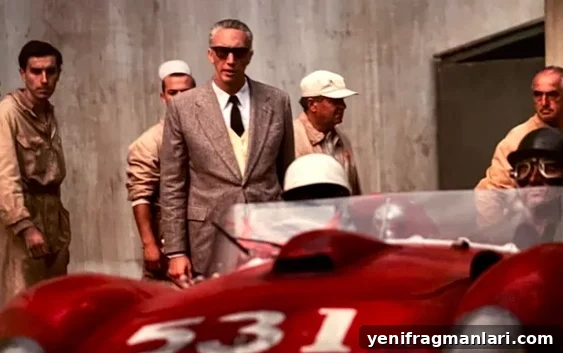
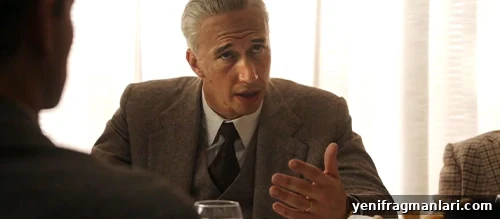
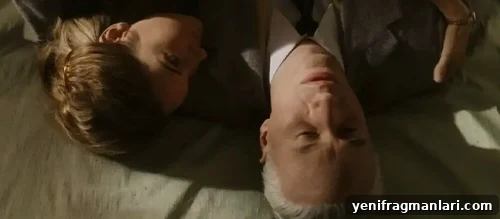
Set in 1957, the film centers on motorsport magnate Enzo Ferrari (Adam Driver) as he prepares his team—featuring drivers like Piero Taruffi (Patrick Dempsey), Wolfgang von Trips (Wyatt Carnell), Peter Collins (Jack O’Connell), and newcomer Alfonso de Portago (Gabriel Leone)—for the fabled Mille Miglia, a thousand-mile endurance race. At the same time, the Ferrari company teeters on the brink of bankruptcy. This external crisis mirrors Enzo’s private turmoil, complicated by an estranged marriage: his wife Laura (Penélope Cruz) owns half of the company’s shares and struggles with the revelation of Enzo’s affair with Lina Lardi (Shailene Woodley).
The film’s most significant shortcoming is its failure to develop its characters fully. Many of the supporting drivers are sketched rather than inhabited; the audience sees them on the track but rarely understands their deeper motivations or stakes. That omission weakens the drama of the racing sequences and reduces emotional investment in the outcomes that should matter most. Enzo himself remains curiously underexplored. The story opens after his reputation and company are already established, and the film rarely traces the formative experiences that shaped his character and ambition. As a result, we are left with a portrait of a driven, sometimes aloof figure without a clear sense of the inner life that made him who he was.
Stylistically, Mann’s film leans into a version of Italian life that often borders on caricature. Italians in the movie are portrayed as passionate, impulsive, attached to family, and prone to reckless driving—traits presented with broad strokes rather than nuance. The decision to cast primarily American actors in Italian roles has already sparked discussion elsewhere; here it sometimes contributes to a sense of cultural disconnection. A number of performances adopt exaggerated accents that emphasize the artifice of the film’s portrayal, drawing attention away from character depth and toward surface impressions.
That said, Mann does capture important cultural details. The film convincingly depicts Enzo’s immersion in Italian life: the reverence for opera, the influence of the Catholic Church, and a national obsession with motorsport. These elements help situate the character within a recognizable social world. Where the film shines most is in its sensory filmmaking—striking visuals and meticulous sound design. A particular car crash sequence stands out for its visceral intensity, demonstrating Mann’s talent for crafting cinematic moments that put the audience in the cockpit and make the risks of racing palpable.
Despite these technical achievements, Ferrari ultimately fails to meet the central obligation of a biopic: to reveal the subject in a way that deepens our understanding. The movie offers fragments—scenes of family friction, business peril, and adrenaline-fueled racing—without forging them into a rounded, persuasive character study. Audiences familiar with Enzo Ferrari or with motorsport history may find elements to admire, but those seeking an illuminating portrait of the man and his legacy will likely leave wanting more context and emotional clarity.
In short, Ferrari is an accomplished piece of filmmaking in terms of craft, yet it falls short as a biographical drama. It gives us atmosphere and spectacle but stops short of giving us a fully human, memorable Enzo Ferrari. The movie is worth seeing for its visuals and sound, and for moments of strong performance, but as a complete assessment of its subject it disappoints.
Score: 10/24
Rating: 2 out of 5.
Written by Clotilde Chinnici
You can support Clotilde Chinnici in the following places:
Portfolio: Clotilde Chinnici
Twitter: @filmswithcloe