
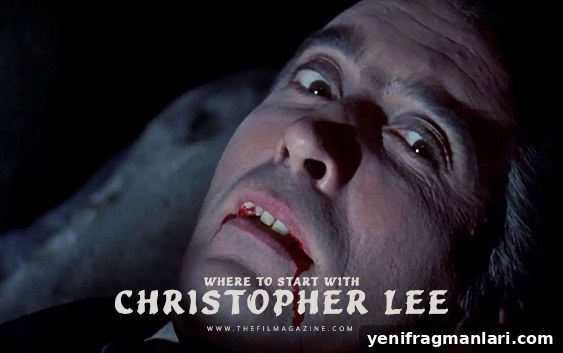
Indeed, “where to start with Christopher Lee?” is a question worth asking. Even setting aside his immense film career, his personal life reads like an extraordinary biography. Born into an aristocratic family with Italian roots and a lineage traced back to Charlemagne, Lee’s childhood alone contained astonishing encounters, including meeting some of the men involved in Rasputin’s assassination. His early adulthood was defined by World War II: he volunteered and served with both Finnish and British forces and later worked as an intelligence officer with the RAF. Many wartime secrets went with him to the grave, and some of his real-life adventures inspired characters created by his step-cousin Ian Fleming.
Lee was knighted in 2009, and his life—full of dramatic episodes and remarkable episodes—would make a compelling film even without his acting accomplishments. Yet it is precisely his acting career that elevated him to legend.
Spanning eight decades and encompassing 286 screen credits, Christopher Lee enjoyed a longevity and sustained popularity few actors can claim. His career bridged eras and connected him with the authors whose characters he later portrayed, including Mervyn Peake and J. R. R. Tolkien. He appeared in major franchises from James Bond to Star Wars and achieved one of the most memorable comebacks in film history as Saruman in Peter Jackson’s The Lord of the Rings trilogy. Often regarded as the definitive face of British horror and the archetype of the cinematic villain, Lee’s body of work is vast. The following guide highlights his most iconic roles, standout performances and essential films: Where to Start with Christopher Lee.
1. Dracula / The Horror of Dracula (1958)
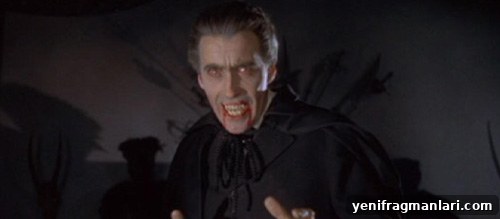
Christopher Lee’s rise to fame began in the Hammer Studios horror slate. His first major break came as The Creature in Hammer’s The Curse of Frankenstein (1957), a part he landed partly because of his imposing 6’4.5″ frame. Though Lee initially complained about the lack of dialogue, the film’s success revived the horror genre in Britain and established Hammer—and Lee—as fixtures in popular cinema.
But it was Hammer’s adaptation of Bram Stoker’s Dracula that established Lee as the defining figure of British horror. Lee’s Dracula introduced a more predatory, animalistic interpretation of the count, bringing bloodlust and a visceral physicality that aligned more closely with Stoker’s original description. Iconic images from the film—Dracula with red blood staining his teeth and a feral, snarling presence—remain central to the modern cinematic idea of the vampire.
Lee’s performance in The Horror of Dracula focuses on a chilling duality: an unnervingly gracious aristocrat who transforms into a relentless predator. Much of the film relies on his facial work and physicality rather than extensive dialogue. In scenes with victims such as Lucy and Mina, Lee’s Dracula moves with the silence and precision of a stalking animal, turning moments of intimacy into acts of menace. His portrayal is responsible for many of the enduring visual tropes of cinematic vampires.
Equally important is Lee’s on-screen chemistry with Peter Cushing, who plays Van Helsing. Their collaboration is the highlight of the film: a tense, physical confrontation that—though choreographed by the standards of the day—carries genuine danger and urgency. The pair’s friendship and rivalry became one of the great actorly partnerships in horror cinema.
2. The Devil Rides Out (1968)
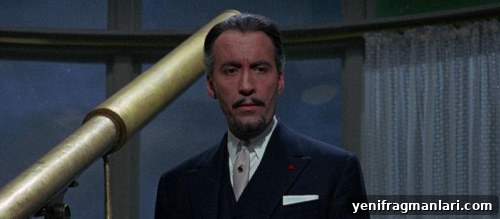
While Hammer’s horror films built Lee’s reputation, they also contributed to typecasting. Tall, deep-voiced and imposing, Lee often found himself cast as villains or monsters. The Devil Rides Out is notable because it allowed him to break that mold and play a heroic figure: the Duc de Richleau. By the late 1960s Lee had greater influence over the projects he chose, and he personally suggested adapting Dennis Wheatley’s occult novels for Hammer.
The Devil Rides Out is frequently regarded as one of Hammer’s finest films and as Lee’s favorite among his Hammer roles. The story centers on the Duc and his circle confronting a young man drawn into black magic and a satanic cult. Lee brings knowledge, determination and moral authority to the role—he plays the leader and mentor who researches the occult, marshals his resources and confronts dark supernatural forces. His performance is larger-than-life yet grounded by a genuine fear of the occult, which transforms even the more fantastical sequences into gripping, unsettling moments.
Behind the scenes, Lee’s involvement went beyond acting: investigators and production staff were wary of researching occult practices, so Lee himself did much of the research into rituals and incantations. That dedication shows on screen, and The Devil Rides Out stands out as a film that treats its subject matter with earnest conviction rather than ironic distance.
3. The Wicker Man (1973)
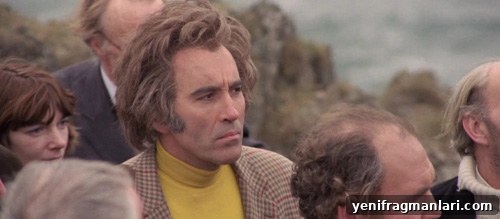
Christopher Lee’s many roles for Hammer defined a large part of his career, but they also led to stretches when offers dried up as British horror declined. In 1973 he starred in The Wicker Man, a film that stands apart from Hammer’s more conventional fare and has become a landmark of British folk horror.
Nearly fifty years on, The Wicker Man remains chilling. Directed with an eye for atmosphere and dread, the film follows Sergeant Howie, a devout police officer who travels to the remote Scottish isle of Summerisle to investigate a missing child. He meets an insular community whose behavior grows increasingly unnerving—denial, ritual, and a pervasive moral inversion unsettle Howie’s worldview.
Lee plays Lord Summerisle, the island’s enigmatic leader and one of Lee’s most complex antagonists. Summerisle is urbane and persuasive, a figure who combines scientific practicality with ritualistic devotion. Lee’s portrayal is measured and unsettling: he is not a raving fanatic but a man who believes—sincerely or strategically—in the island’s pagan practices. The film leaves questions open about the sincerity of his faith and his motives: is he a paternal leader acting in desperate faith to save his community, or a manipulative ruler willing to exploit his people for power and prosperity?
The Wicker Man’s horror comes from this ambiguity and the cultural collision at its center—the confrontation between devout Christianity and a community that practices a vigorous form of paganism. Lee’s ability to play complexity—charm, menace and ambiguity—makes Lord Summerisle one of his most enduring and unsettling roles. The film’s final, devastating moments remain among the most powerful and discussed climaxes in British cinema.
Christopher Lee’s career defies easy summary. From Hammer Studios’ gothic excesses to psychologically complex thrillers, and from blockbuster franchises to quiet, disturbing dramas, he crafted a catalogue of performances that influenced generations of filmmakers and fans. Whether playing monstrous villains or authoritative heroes, Lee’s presence, voice and commitment to character created unforgettable moments in cinema history. Starting with these three films—Dracula, The Devil Rides Out and The Wicker Man—offers an essential glimpse into the breadth and depth of his incomparable legacy.