
Jason X (2001/02)
Director: James Isaac
Screenwriters: Todd Farmer
Starring: Kane Hodder, Lexa Doig, Jeff Geddis, Lisa Ryder, Jonathan Potts, Markus Parilo, Peter Mensah, Todd Farmer, David Cronenberg
Not every film aims to be an arthouse masterpiece, and that is perfectly fine. Some movies exist to entertain, to deliver spectacle, and to make audiences laugh, groan, or cheer at the outrageous. Jason X, the tenth mainstream entry in the long-running Friday the 13th cycle, is one of those pictures: loud, excessive, and unapologetically silly. Billed by many as “Friday the 13th in space,” it abandons the classic camp-and-lakeside setup for a futuristic, action-oriented take that either delights or frustrates, depending on what you want from a slasher sequel.
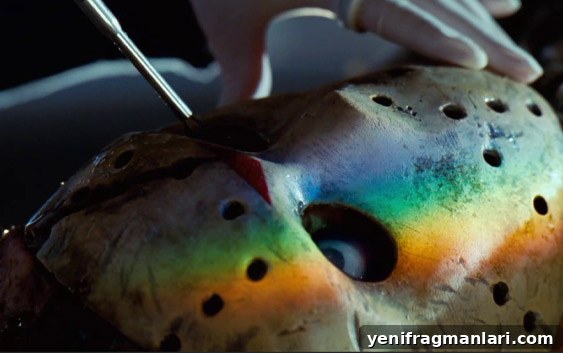
The story picks up after the events of Jason Goes to Hell: The Final Friday. In an early-2010 setting, Jason Voorhees is captured and held at a military research base near Crystal Lake. After a short killing spree, he is tricked into cryogenic stasis and left forgotten. Centuries later, a team of explorers from the year 2455 discovers the frozen killer, brings him aboard their ship bound for Earth II, and the familiar bloody business resumes.
On paper the premise is intentionally ridiculous, and the film leans fully into that absurdity. Visuals are big and shiny: chrome-plated interiors, stainless-steel corridors, and exaggerated space-age production design that reflect the era’s fascination with glossy sci-fi aesthetics. The film also borrows contemporary pop-culture motifs—most notably a leather-clad android who homages the action stylings of late-1990s cinema—melding slasher conventions with blockbuster action beats.
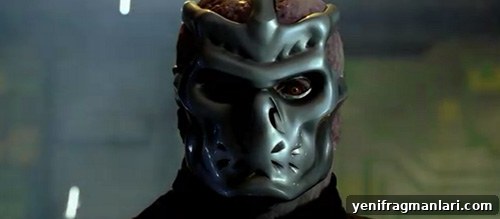
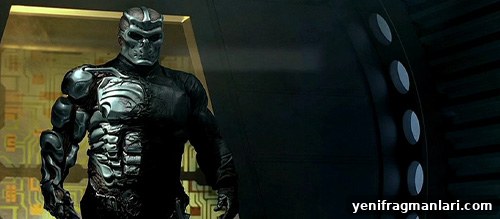
That blend produces a movie that doesn’t always make logical sense. Several plot decisions feel thinly explained: expansive flooded hallways in the Crystal Lake facility, an apparent lack of thorough exploration by the future rescue team, and inexplicable placement of props used for later kills. The film also devotes time to characters who exist only long enough to be dispatched, which undermines emotional investment. The central villain’s much-anticipated transformation into a mechanized “Uber-Jason” receives relatively little screen time, despite being heavily advertised on posters and promotional materials.
Yet those missteps are part of the film’s appeal. Jason in space is a concept that removes any pretense of seriousness and turns up the dial on spectacle. Fans looking for inventive gore, over-the-top set pieces, and a self-aware willingness to riff on genre tropes will find much to enjoy. The film knows its audience: it provides creative kills—including one memorably gruesome death involving liquid nitrogen—and revels in the carnage, sparks, and mechanical mayhem of its late-90s and early-2000s production design.
One of the film’s more intriguing elements is the interplay between humanity and machinery. An android, Kay-Em 14, is introduced as both antagonist and foil to Jason, delivering a blend of snark and action choreography reminiscent of contemporary hits. The dynamic is silly but entertaining: seeing a leather-clad, gun-toting android duel with Jason over the metal-clad decks of a starship is precisely the sort of manic spectacle the film intends to offer.
Character development is sacrificed for momentum, which is a common complaint for slasher pictures and particularly one of this franchise’s later installments. With only about 90 minutes on screen, the film opts to keep a brisk pace, prioritizing kills and visual set pieces over deeper characterization. As a result, many secondary figures are little more than archetypes—partygoers, opportunists, or doomed victims—created to fill roles in the body count rather than to carry arcs.
Still, Jason X occupies a niche within the Friday the 13th canon as a comfortingly outrageous entry. It’s a movie built for fans who enjoy the franchise’s escalating tonal shifts and are willing to accept logic gaps in exchange for creative gore and audacious staging. It also functions as a love letter to the possibility of melding slasher horror with broad cinematic spectacle: explosions, sparks, and action set pieces that, while incongruous with the franchise’s humble, woods-based origins, are embraced with gleeful abandon.
For viewers seeking a thoughtful or tightly plotted horror experience, this installment will likely disappoint. For those looking to savor a playful, maximalist, and sometimes ridiculous take on Jason Voorhees—complete with futuristic trappings and an upgraded, partially cyborg menace—the film delivers a memorable, if flawed, ride. It intentionally prioritizes entertainment value over coherence, and in doing so becomes one of the more divisive but strangely endearing entries in the series.
11/24