
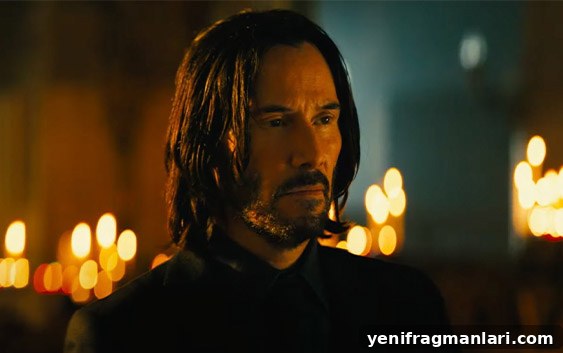

John Wick: Chapter 4 (2023)
Director: Chad Stahelski
Screenwriters: Shay Hatten, Michael Finch
Starring: Keanu Reeves, Laurence Fishburne, Donnie Yen, Bill Skarsgård, Ian McShane, Lance Reddick, Hiroyuki Sanada, Rina Sawayama, Shamier Anderson, Marko Zaror, Scott Adkins
John Wick: Chapter 4 is a sprawling, relentless continuation of the franchise’s core premise: one man’s pursuit of freedom, peace, and redemption through violence. The film stretches nearly three hours and spends much of that runtime on extended, exquisitely staged fight sequences. If you came for kinetic action, precise choreography, and a hyper-stylized criminal underworld, this installment delivers in full.
At its heart, the plot remains straightforward: John Wick believes that eliminating the leaders of the High Table will free him from his obligations and allow him to retire into a quiet life. The narrative logic is simple and rarely deviates into elaborate subplots, which is in many ways a strength—by keeping the story skeletal, the film channels energy into its set pieces, worldbuilding touches, and the ritualized rules of the assassin society. The movie’s visual palette continues the franchise’s signature neon-tinged noir aesthetic, alternating shadow and color in ways that heighten the drama of each encounter.
The action is the star attraction. Several confrontations play out as prolonged, often brutal sequences that combine gunplay, close-quarters combat, and martial arts. These scenes are choreographed with visible attention to rhythm and physical logic: you can see the work behind each move, the impact, and the spatial awareness of the performers. There are moments that verge on the fantastical in terms of Wick’s survival and resilience—sequences where he sustains falls, impacts, and wounds that would realistically end most characters—yet the film mostly asks the audience to accept that heightened reality as part of its language.
Performances are energetic across the board. The supporting cast brings distinct presence and color to the film’s roster of adversaries and allies. Hiroyuki Sanada stands out as a memorable scene-stealer; his quiet intensity and disciplined physicality bring genuine weight to his role. Donnie Yen proves he’s more than a display of fast striking—his presence adds a disciplined martial arts elegance and a grounded counterpoint to the film’s gunplay. Scott Adkins appears briefly, and his contribution is welcome for fans familiar with his work in physical cinema.
Keanu Reeves embodies the title role with his trademark stoicism and focused physicality. By design, Wick is often presented as a minimally verbal, mission-driven figure, which limits opportunities for deep character introspection. The film tries to reintroduce emotional stakes via memories of his late wife, but those moments are brief and do not always integrate smoothly with the relentless forward momentum of the action. As a result, the emotional core sometimes feels overshadowed by spectacle; Wick functions more as an avatar of perseverance and inevitability than a fully evolved emotional protagonist.

One recurring tension in Chapter 4 is the balance between scale and authenticity. Earlier films in the series felt leaner and occasionally more punishing; fights often conveyed a tangible sense of cost. Here, the scale is magnified—more locations, more adversaries, and set pieces that escalate in ambition—but with that scale comes a degree of invulnerability for the protagonist that can stretch believability. Scenes where Wick seemingly survives catastrophic damage and instantly resumes full combat capability can undermine the emotional stakes, turning struggle into spectacle rather than sacrifice.
Nevertheless, John Wick: Chapter 4 remains an entertaining exercise in modern action filmmaking. It showcases why the franchise has remained influential: disciplined production design, clear choreography, and consistent tonal identity. The world-building continues to intrigue, with the High Table’s rigid codes and the franchise’s ceremonial elements providing an ongoing sense of mythology. For fans of tightly executed, visceral action, this film hits the mark repeatedly.
Where Chapter 4 falters is in pacing and runtime. Trimming roughly thirty minutes would have tightened the narrative, sharpened stakes, and made each action set piece feel more consequential. Some sequences, while technically impressive, meander or repeat established beats, creating moments of indulgence that slow the overall forward motion. Still, compared to most contemporary action fare, this film stands out for its craft and ambition.
In summary, John Wick: Chapter 4 is a bold, visually striking continuation of the franchise that emphasizes masterful fight choreography and cinematic spectacle. It occasionally tips into excess and long duration, but it remains more compelling and better executed than the majority of action films released today. If you appreciate committed physical performances and precise staging, this entry is a satisfying—if sometimes overlong—addition to the series.
Score: 18/24