
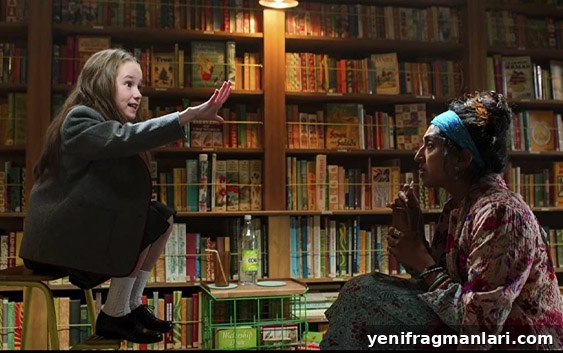

Roald Dahl’s Matilda the Musical (2022)
Director: Matthew Warchus
Screenwriter: Dennis Kelly
Starring: Alisha Weir, Lashana Lynch, Emma Thompson, Stephen Graham, Andrea Riseborough
Roald Dahl’s Matilda the Musical is the film adaptation of the award-winning stage musical, itself based on Roald Dahl’s cherished children’s novel. The story follows Matilda (Alisha Weir), a brilliant and curious young girl who quietly develops extraordinary abilities and uses them to confront the cruel adults around her. This cinematic version channels the musical’s big production values and Tim Minchin’s clever songwriting, aiming to bring the theatrical spectacle to a broader audience.
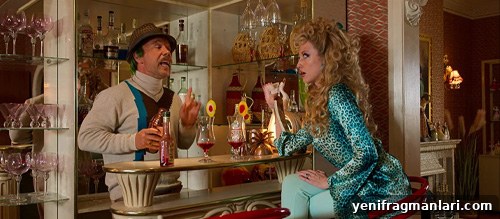
The Wormwoods, Matilda’s parents, are portrayed as clueless and uncaring in ways both comic and unsettling. Andrea Riseborough plays Mrs. Wormwood with a brash, oblivious energy, while Stephen Graham’s Mr. Wormwood delivers blustery, self-absorbed bravado. Emma Thompson gives a show-stopping performance as Miss Trunchbull, the menacing headmistress who terrorizes students with gleeful brutality. Matilda’s daily life is therefore a study in contrasts: her intelligence and compassion set against a household and school overseen by grotesquely exaggerated adults.
The young performers are one of the film’s shining strengths. Their choreography is polished and lively, and Minchin’s songs are catchy, witty, and occasionally delightfully odd—just as audiences expect from the composer. Numbers like “We Are Revolting Children” are rousing and anarchic, while “When I Grow Up” offers genuine warmth and sentiment. The “School Song” showcases clever lyricism, though the theatrical style of performance—clear enunciation and stage-trained delivery—sometimes feels slightly out of place in a purely cinematic context. The contrast between the well-spoken children and the rougher, more colloquial Wormwoods is deliberate, underlining who the story positions as antagonists.
Reviewing this film in isolation proves challenging because it inevitably invites comparison with Dahl’s original book, the beloved 1996 film, and the stage musical that inspired this adaptation. That familiarity works both for and against the movie. Many viewers arrive already invested in Matilda’s world, which can smooth over changes or omissions. At the same time, expectations run high, and deviations from prior versions will be noticed and critiqued.
The film leans heavily into theatricality—brightly stylized visuals, exaggerated set design, and heightened performances—which captures the musical’s spirit but occasionally sacrifices the small, intimate moments that made Dahl’s book so affecting. The original story derives much of its charm from the mundanity of Matilda’s surroundings, a contrast that makes her intelligence and moral courage feel all the more remarkable. In this adaptation, the heightened color and exuberant tone tend to flatten that contrast, making Matilda’s extraordinariness less solitary and more part of an overall spectacle.
Some plot elements from the book receive less attention or are reshaped to accommodate the musical numbers. While adaptations need not replicate source material verbatim, a few of Dahl’s quieter emotional beats are diluted here. Notably, the film expands Matilda’s powers and her command of them, which reduces some of the underdog tension that makes her eventual victories so satisfying. Part of what made the original Matilda compelling was watching a small, underestimated child work through hardship and grow into her own agency; this film at times streamlines that journey.
Several supporting characters are reinterpreted. Lashana Lynch’s Miss Honey is gentle and sympathetic, though the film occasionally lets Matilda and the librarian absorb some of the sass and emotional weight that other characters hold in the book. The addition of Sindu Vee as Mrs. Phelps—the librarian who nurtures Matilda’s love of reading—adds warmth and a sense of safety that counterbalances some of the story’s darker elements. Vee’s deadpan comedic timing provides welcome moments of levity amid the tumult of Crunchem Hall.
The movie also introduces an elaborate sequence depicting Miss Honey’s past, using Matilda’s psychic glimpses to dramatize trauma and escape in a visually imaginative way. While this set-piece offers striking production design and staged peril, its necessity is debatable; the relationship between Miss Honey and Miss Trunchbull could have been clarified with simpler exposition. The choice to elaborate visually aligns with the musical’s taste for spectacle but may feel superfluous to viewers seeking narrative economy.
Audiences should be ready to accept theatrical conventions transposed onto film: older actors playing younger children, heightened performances, and a tone that oscillates between dark comedy and family-friendly sentimentality. When that suspension of disbelief is embraced, the result is an enjoyable, exuberant adaptation—an effervescent romp with strong musical numbers, energetic choreography, and affectionate performances. For fans of the stage musical, this film delivers many of the moments that made the show popular; for purists of the book or the 1996 film, it may not fully recapture the quieter magic that made those earlier versions so enduring.
Score: 18/24