
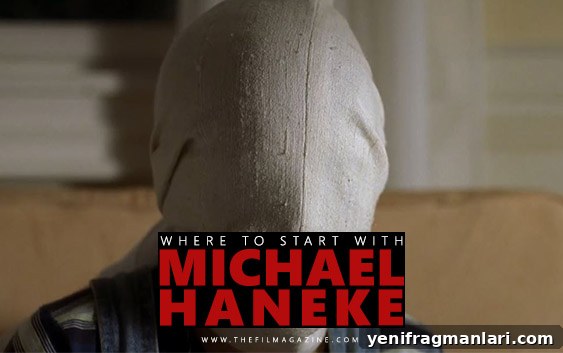
Austrian director and writer Michael Haneke has built a body of films that probe the darkest corners of the human psyche, often set against the backdrop of ordinary, everyday life. His work repeatedly juxtaposes mundanity with sudden, unsettling violence, creating films that feel both rigorous and provocatively challenging.
From his debut feature, The Seventh Continent (1989), which chronicles a seemingly typical family until it reaches a bleak and shocking conclusion, to Benny’s Video (1992), Haneke established a recurring motif: horror emerging from the banal routines of domestic life. Over the decades he expanded this approach to address broader social and political concerns—colonial legacies, the impact of war, and the corrosive effects of mediated violence—while maintaining a distinct formal rigor that defines his cinema.
Haneke’s films are not only thematically forceful but formally inventive. Titles such as The Piano Teacher (2001) and Happy End (2017) showcase his ability to combine exacting cinematography and carefully calibrated sound design to immerse viewers in worlds that are both alluring and disturbing. Each film in his catalogue feels deliberate: meticulous in composition and intent on provoking thought as well as discomfort.
Much of Haneke’s work focuses on unraveling family dynamics and the erosion of identity, earning him repeated recognition at festivals and award ceremonies. To help guide viewers new to his films, this essay highlights three essential entries—films that illustrate his thematic breadth and stylistic distinctiveness.
1. Funny Games (1997)
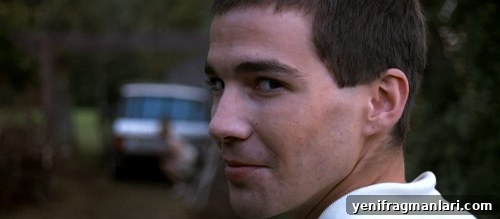
Funny Games and the Victimisation of the Audience
Funny Games places the Schober family’s quiet lakeside holiday at the center of a brutal experiment in spectatorship. When two polite young men, Paul and Peter, arrive uninvited, the situation quickly escalates into a calculated campaign of terror. The film is an explicit interrogation of cinematic consumption: it forces viewers to consider their role in watching violence unfold.
Haneke deploys formal devices designed to unsettle and implicate. The killers’ repeated breaking of the fourth wall pulls the audience into the scene, turning passive observation into an uncomfortable, complicit exchange. A notorious sequence in which one of the aggressors rewinds an act of violence with a television remote collapses the line between filmic representation and viewer control, underscoring the film’s thesis about mediated cruelty and the distortions of entertainment.
Through these techniques Haneke interrogates why audiences are drawn to depictions of suffering and how film can condition spectators to experience pain as spectacle rather than moral emergency. Funny Games remains a rigorous, provocative exploration of cinema’s power and the ethics of watching.
2. Caché (2005)
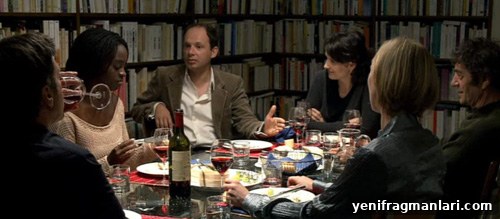
Caché expands Haneke’s interest in the gaze by making the camera itself an ominous presence. The film opens with a long, static take of a Parisian townhouse before a tape interrupting domestic life is played on a television. An affluent couple, Georges and Anne, begin receiving anonymous videotapes that document their home and routine, and the psychological pressure of being watched grows intolerable.
Beneath the immediate mystery of surveillance, Caché slowly unearths a buried moral wound: Georges’s childhood betrayal of Majid, an Algerian orphan taken into his family and later expelled after Georges’s spiteful lie. The tapes function as both a literal intrusion and a symbolic resurfacing of guilt, suggesting how unresolved acts of exclusion and historical violence continue to shape the present.
The film’s spare visual style and deliberate pacing amplify its moral ambiguity. Haneke resists tidy explanations, instead allowing discomfort and uncertainty to linger. Caché stands out for how it marries political and personal culpability, prompting viewers to consider the wider social histories that hide behind private lives.
3. Amour (2012)
Every Non-English Language Best Picture Nominee Ranked
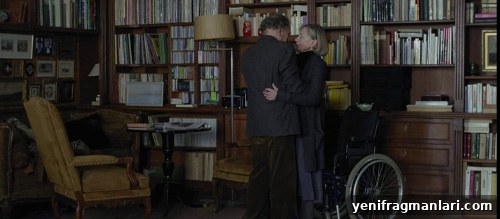
Amour is often regarded as Haneke’s most emotionally direct and humane film. It tells the story of Georges and Anne, an elderly couple coping after Anne suffers a paralysing stroke. The film observes the slow, intimate unraveling of their shared life as Georges attempts to care for the woman he loves, confronting the physical and moral complexities of decline, dependency, and mortality.
Unlike the more confrontational formal experiments in Funny Games and Caché, Amour embraces restraint: stationary camera setups, lingering takes, and a measured tempo create a sense of stillness that foregrounds performance and emotion. This stillness intensifies the viewer’s attention to daily caregiving tasks, the small humiliations of illness, and the ethical dilemmas that arise when compassion collides with exhaustion.
The film’s quiet, unflinching gaze makes it one of Haneke’s most affecting works. It avoids melodrama, instead presenting tenderness and despair with equal clarity. Amour demonstrates how Haneke can modulate his formal approach to serve profound human storytelling, revealing a director who, even at the height of his career, still seeks new tonal and moral depths.
Taken together, these three films illustrate Michael Haneke’s range: a filmmaker who combines formal discipline with moral inquiry, whose works challenge audiences to reflect on the ethics of looking, the persistence of guilt, and the fragile limits of compassion. Whether through provocation, psychological suspense, or tender examination, Haneke’s cinema continues to unsettle and reward viewers willing to engage with difficult, uncompromising art.