

Moonlight (2016)
Director: Barry Jenkins
Screenwriter: Barry Jenkins
Starring: Alex Hibbert, Ashton Sanders, Trevante Rhodes, Mahershala Ali, Janelle Monáe, Naomie Harris, André Holland
We spend our lives searching for reflections of ourselves—brief, intimate moments in passing windows, a familiar expression, or the echo of a song. For many, cinema provides that mirror. A handful of films arrive with the rare ability to alter how we feel and think, to breathe life into staleness, to quietly say, “I have felt this too.” Barry Jenkins’ Moonlight is one of those films: intimate, humane and painstakingly honest. Critics have described its characters as real and unforgettable, and the film has resonated deeply with viewers who see pieces of their own lives reflected in Chiron’s story.
Although its Best Picture moment at the 89th Academy Awards became a widely discussed spectacle, that controversy has sometimes overshadowed the film’s artistry and emotional power. Adapted from a stage play, Moonlight is a luminous meditation on masculinity, identity and desire. Its quiet intensity and emotional clarity have earned it a place on many lists of the best films of the 21st century, and for good reason: the movie feels like a carefully observed portrait of a life shaped by love, fear and circumstance.
Told in three distinct chapters, the film follows Chiron from childhood to adulthood. As a boy he is withdrawn and vulnerable, bullied at school and lacking stable care at home where his mother, Paula, struggles with addiction. A fragile father figure appears in Juan, a kind drug dealer who, with his partner Teresa, takes the boy under his wing and teaches him how to navigate his fearful world. In adolescence, Chiron grapples with peer pressure, confusion about his sexuality and the weight of community expectations, turning to his closest friend Kevin for guidance. By the time he reaches adulthood, Chiron must face who he wants to become and what identity he will claim.
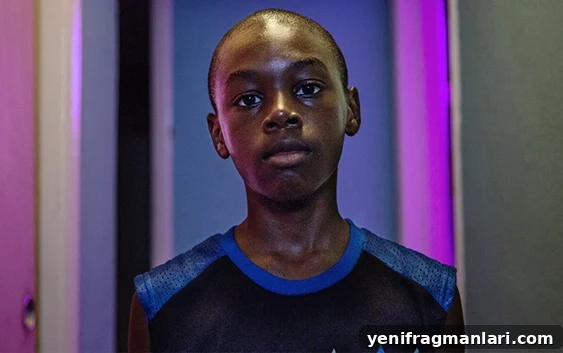
Jenkins’ decision to cast three separate actors to portray Chiron—Alex Hibbert as the child, Ashton Sanders as the teenager, and Trevante Rhodes as the adult—was deliberate: the actors were not allowed to interact on set so each could form an independent understanding of the character. The result is a coherent emotional through-line where Chiron’s core remains intact even as his posture, voice and defenses change. Hibbert’s child Chiron is inward and wary, his gaze turned away from a hostile world. Sanders captures the volatility and ache of adolescence, torn between impulse and longing. Rhodes portrays an adult who has built physical armor—muscle, jewelry, silence—but who still carries the traces of the boy he once was.
Mahershala Ali’s performance as Juan cuts through the film in less than twenty minutes but leaves a lasting imprint. Juan is both teacher and guardian, conveying tenderness and moral complexity as he mentors Chiron. Janelle Monáe’s Teresa offers warmth and steady encouragement, a gentle foil to Chiron’s turbulence. In contrast, Naomie Harris delivers a devastatingly raw portrayal of Paula, whose addiction erodes her ability to provide safety and love, creating one of the film’s most tragic emotional centers.

Jenkins orchestrates Moonlight with a gentle, deliberate touch, creating a film dense with symbolic detail. Color and water recur as visual motifs: blues and blacks play across frames to suggest the tension between vulnerability and toughness, while water—washing, swimming, the sea—becomes a metaphor for cleansing, transformation and the turbulent tides of sexual awakening. These images give the film a poetic logic, heightening small moments into profound turning points.
The cinematography bathes characters in warm light and long, contemplative frames, yet it can also jolt the viewer into the immediacy of violence or emotional rupture with restless camera movement. That contrast serves the film well: it allows quiet intimacy to sit beside sudden, disorienting pain. Nicholas Britell’s score—elegant piano and strings woven with contemporary R&B and hip-hop undertones—underscores the picture’s tenderness while the careful use of ambient sound and silence often speaks louder than music, letting simple gestures and the wind carry emotional weight.
Still, the film is not without flaws. Some narrative gaps appear where time skips over events that might have filled in Chiron’s inner transitions more clearly. These ellipses can distance the viewer just when greater detail would deepen understanding. At times the handheld camera’s motion feels excessive, and its restless presence can pull attention away from quieter interior moments.
Despite those imperfections, Moonlight remains a fiercely affecting work. Its central story—a boy seeking to know himself and to be known—resonates because of its specificity and honesty. Every performance, visual choice and sound design element is aligned around empathy for Chiron’s experience. Watching the film is an invitation to witness a life with care and to recognize how identity is shaped by the dangerous, tender, ordinary things that surround us. For anyone seeking a movie that lingers in the bones, Moonlight offers an essential, unforgettable viewing.
Score: 22/24
Rating: 4 out of 5.
Written by Bella Madge
You can support Bella in the following places:
Substack: BellaWatchesFilms
Instagram: @bellawatchesfilms
TikTok: @bellawatchesfilms
Picturehouse Fresh Takes: Name Me Lawand Review