

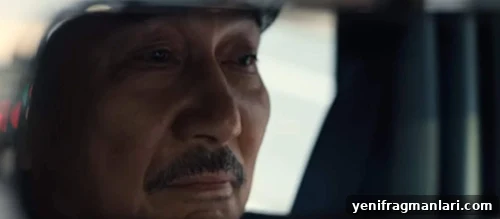
Perfect Days (2023)
Director: Wim Wenders
Screenwriters: Wim Wenders, Takuma Takasaki
Starring: Koji Yakuso, Aoi Yamada, Arisa Nakano, Min Tanaka
Nominated for the Academy Award for Best International Feature, Perfect Days is a quiet, contemplative film by Wim Wenders that studies the dignity of ordinary life. It follows Hirayama, a middle-aged man in Tokyo whose work is to clean public restrooms. Through intentional pacing, careful composition, and a thoughtful soundtrack, the film becomes a reflective character study that celebrates the everyday and the art of paying attention.
Koji Yakusho delivers a restrained, humane performance as Hirayama. His portrayal earned recognition at major festivals, and his subtle expressions convey an inner life that often speaks louder than dialogue. Hirayama lives a life of routine: he rises early, waters his plants, photographs trees on his lunch break, listens to cassette tapes in his car, and returns home to read before sleep. What might seem monotonous becomes, in the film’s hands, a sequence of small rituals that give shape and meaning to his days.
Hirayama’s care extends even to his job. The public toilets he tends are filmed with an almost reverent eye; their architecture and design become part of the movie’s visual poetry. Wenders treats these spaces not as banal settings but as crafted environments worthy of attention, mirroring Hirayama’s respectful approach to work and life.
The film’s tranquil rhythm is disturbed when Hirayama’s teenage niece arrives, interrupting his solitary routine and opening a path for mutual influence. Their interactions are understated but intimate, and through them the film explores connection, responsibility, and the quiet ways people help each other live. A brief encounter with Hirayama’s sister hints at a difficult family history, but Wenders chooses to keep those details minimal, allowing the film to remain focused on the present and the small gestures that sustain people.
What makes Perfect Days particularly moving is how it uses cinematic language to evoke interior life. Wenders composes many lingering, painterly shots that insist the audience slow down and look closely: the way sunlight falls on leaves, the color of the sky at dawn, the texture of ordinary objects. Even Hirayama’s dreams are handled with visual care, rendered in black and white and echoing daytime images in a way that blurs memory, desire, and simple observation.
The soundtrack plays a major role in shaping the film’s emotional arc. Much of the music comes from 1970s rock cassette tapes that Hirayama plays in his car — artists like The Rolling Stones and Lou Reed — and these tracks serve as both character detail and mood enhancer. One of the most affecting scenes features Hirayama driving while Nina Simone’s “Feeling Good” fills the soundtrack; the camera holds on his face as joy and sorrow cross it, revealing the complex humanity beneath his calm exterior.
The film’s minimalist narrative and gentle pacing will appeal to viewers who appreciate meditative cinema. Wenders’ direction and Yakusho’s performance invite reflection on gratitude, presence, and the value of routine. There is a memorable moment of plainspoken wisdom when Hirayama tells his niece, “next time is next time. Now is now.” That line crystallizes the film’s central ethic: to honor the present moment rather than be consumed by anticipation or regret.

Cinematically, Perfect Days shares affinities with recent films that favor visual poetry over plot mechanics. The film depends on mood and the accumulation of small details to build emotional resonance rather than on dramatic twists. This approach demands patience from the audience but rewards that patience with a sustained, quietly moving experience.
At its core, the film is a meditation on dignity, routine, and the possibility of finding meaning in everyday tasks. It reminds viewers that repetitive actions can be a source of solace and that beauty often resides in the ordinary. For anyone interested in films that privilege observation, atmosphere, and humane performances, Perfect Days is a richly rewarding work.
Score: 23/24
Rating: 5 out of 5.
Written by Gala Woolley
Support the author and follow her work on social media and her blog (names listed for reference):
Twitter – @GalaWoolley
Blog – screenqueens.co.uk