
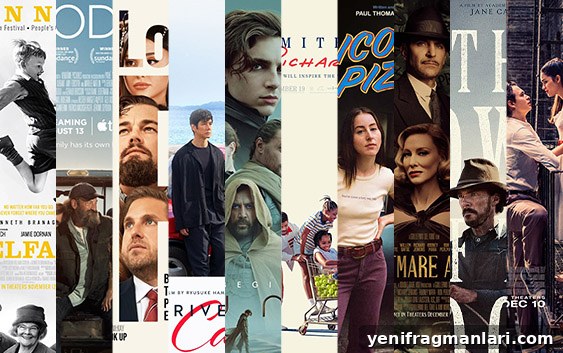
Each year, nearly ten thousand voting members of the Academy of Motion Picture Arts & Sciences cast ballots to nominate what they consider the finest films of the year. These Best Picture nominations represent the Academy’s collective judgment about which productions are the most artistically significant, culturally important, and unmissable.
For 2022, a rule change restored the ten-nominee limit for Best Picture for the first time since 2011, producing a slate that mixes blockbuster spectacle, intimate dramas, musicals, and international art cinema. Studios and streamers from Warner Bros. to Apple and Netflix to Universal all competed for the Academy’s most prestigious recognition.
In this edition of Ranked from The Film Magazine, we examine the Academy’s Best Picture selections for 2022, assessing each film by artistic merit, social importance, and its influence on the medium: the 2022 Oscars Best Picture Nominees Ranked.
10. Belfast

Belfast is a personal film from Kenneth Branagh that aims to balance nostalgia and social history. Set against the Troubles, the movie centers on a child’s perspective and features strong performances—notably Judi Dench, Ciarán Hinds, and young Jude Hill. Branagh’s direction often finds authentic, tender moments, and the choice of black-and-white cinematography gives the film a wistful, storybook quality.
However, the film can feel tonally inconsistent. Interludes that resemble musical beats or melodramatic set pieces sometimes clash with the earnest domestic drama, producing a sense of crowd-pleasing calculation rather than probing insight. Belfast succeeds in making its characters relatable, yet it rarely takes the creative risks necessary to deepen its historical or thematic impact. As a result, while the film is watchable and emotionally engaging at times, its Best Picture nomination reads as recognition of craft and sentiment more than of bold artistic advancement.
9. CODA

CODA brought visibility to deaf actors and communities in a mainstream way, and its Oscar nominations helped spotlight that representation. The film is a heartfelt coming-of-age story about a hearing teenager growing up in a deaf family, and Troy Kotsur’s supporting performance is a standout.
Yet CODA follows familiar teen-drama conventions: heavy exposition, tidy plot conveniences, and predictable emotional beats. Its screenplay often simplifies complex family dynamics into sentimentally resolved conflicts. The film’s importance for representation is undeniable, but judged purely on filmmaking innovation, it remains a competent, accessible drama rather than a singular artistic achievement.
8. Don’t Look Up

Adam McKay’s Don’t Look Up is a blunt, satirical allegory about collective denial in the face of catastrophe. With an ensemble that includes Leonardo DiCaprio, Jennifer Lawrence, Meryl Streep, and Cate Blanchett, the film skewers politics, media spectacle, and public indifference.
McKay’s style—rapid-fire dialogue, documentary-like cuts, and escalating absurdity—keeps the narrative urgent and immediate. The film’s approach is very on the nose, and its characters sometimes verge on caricature, but that directness forces conversation about misinformation, climate inaction, and celebrity culture. While not subtle or formally groundbreaking, Don’t Look Up made a cultural impact and contributed meaningfully to contemporary debate.
7. Dune

Denis Villeneuve’s Dune brought a level of seriousness and visual ambition to studio science fiction that few mainstream films achieve. Adapting a famously challenging novel, the film delivers immersive world-building, a measured pace, and striking production design that makes it a truly cinematic experience.
As a first installment in a larger adaptation, Dune sometimes feels intentionally incomplete. Studio pressures and franchise expectations also nudge certain set-pieces toward spectacle. Still, Villeneuve’s precise direction, the film’s textured atmosphere, and technical accomplishments justify its place among the year’s most notable films—especially for viewers seeking grand cinematic spectacle and thoughtful world-building.
6. King Richard

King Richard is a well-crafted sports drama that foregrounds family, determination, and the foundations behind Venus and Serena Williams’s rise. Will Smith leads with a commanding performance as Richard Williams, and the film succeeds in staging convincing tennis sequences and portraying a believable family dynamic.
At the same time, the film is sometimes limited by its focus on Richard over the sisters themselves, and it rarely interrogates tougher questions about pressure, privilege, or systemic inequality in depth. As a polished, emotionally effective sports movie, it ranks among the better entries of recent years, but it does not quite reach the thematic complexity of some other Best Picture contenders.
5. Drive My Car

Ryusuke Hamaguchi’s Drive My Car unfolds slowly and deliberately, offering a profound meditation on grief, memory, and human connection. Built around a playwright and his driver, the film favors quiet observation and interiority, rewarding patient viewers with nuanced character work and a richly detailed screenplay.
The film’s long prologue and measured pacing depart from conventional narrative rhythms, but this restraint is central to its power. Hamaguchi’s visuals and the careful orchestration of performance and dialogue make Drive My Car an outstanding example of contemporary international cinema that earned recognition beyond the International Feature category for good reason.
4. Licorice Pizza

Paul Thomas Anderson’s Licorice Pizza is a richly textured, nostalgia-tinged film that showcases the director’s command of detail and tone. Framed as a series of vignettes set in 1970s California, it follows an unlikely relationship with humor, charm, and a strong sense of place.
The film’s controversial premise is handled with confident direction and committed performances, and Anderson’s craftsmanship—especially his ability to evoke an era and craft lingering, character-driven scenes—makes Licorice Pizza a deserving nominee. It’s an inventive coming-of-age piece that balances affection for its characters with a clear cinematic voice.
3. The Power of the Dog

Jane Campion’s The Power of the Dog is a masterful reworking of the western, using the genre’s traditional masculinity to interrogate toxic behavior and shifting gender norms. The film places tense psychological drama at the heart of its rugged setting, with standout performances from Benedict Cumberbatch, Kirsten Dunst, Jesse Plemons, and Kodi Smit-McPhee.
Campion’s direction crafts a slow-burning, atmospheric study of power, repression, and transformation. While it may not overwhelm with flashy moments, the movie rewards analysis and close attention—offering layered themes that resonate strongly with contemporary conversations about identity and masculinity.
2. Nightmare Alley

Guillermo del Toro’s Nightmare Alley is a dark, visually sumptuous melodrama centered on con artists and circus life. Bradley Cooper delivers a compelling lead turn, supported by a remarkable ensemble including Cate Blanchett, Rooney Mara, Toni Collette, and Richard Jenkins.
Del Toro’s gift for rich production design and atmospheric storytelling is on full display: the film blends noirish suspense with fairy-tale grotesquerie. Some viewers note a lull in the second act, but the movie’s strong character arcs, sustained mood, and striking visuals make it a memorable and ambitious Best Picture contender.
1. West Side Story
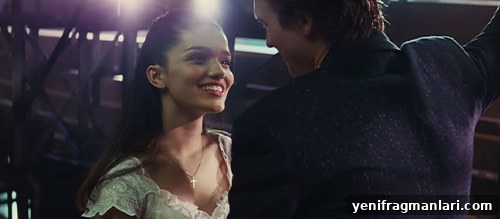
Steven Spielberg’s revival of West Side Story updates a classic musical with sensitivity and craft. The film’s choreography, Janusz Kamiński’s cinematography, and the timeless songs by Leonard Bernstein and Stephen Sondheim combine to create a powerful cinematic musical rooted in contemporary concerns about prejudice and inequality.
Spielberg adjusts the original material to shift focus away from blaming marginalized communities and instead highlights broader social forces and institutional failures. Newcomer Rachel Zegler gives a breakout performance, and Ariana DeBose, Mike Faist, and David Alvarez offer exceptional support. Technically polished and emotionally resonant, this West Side Story stands as a modern, thoughtfully reimagined musical that honors the source while speaking to today’s audiences.
Which of the 2022 Best Picture nominees resonated with you the most? Share your thoughts and reactions—these films offer a wide range of styles, themes, and achievements, reflecting the diverse state of contemporary cinema.