
Sleepless in Seattle (1993)
Director: Nora Ephron
Screenwriters: Nora Ephron, David S. Ward, Jeff Arch
Starring: Meg Ryan, Tom Hanks, Bill Pullman, Ross Malinger, Rosie O’Donnell, Rob Reiner, Victor Garber, Rita Wilson
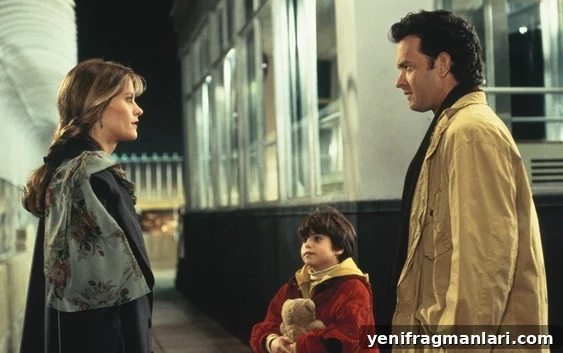
The meet-cute is a cornerstone of romantic comedy: a first encounter that sparks a relationship, often under quirky or humorous circumstances. It usually happens early in the story, but Sleepless in Seattle flips that expectation by postponing the protagonists’ true meeting until the film’s final moments. That choice makes the movie feel both daring and timeless, turning an enduring genre convention into its greatest emotional payoff.
Directed by Nora Ephron and written by Ephron, David S. Ward, and Jeff Arch, Sleepless in Seattle became an immediate classic on release and has remained beloved by audiences and critics. Its climactic scene at the top of the Empire State Building is among the most iconic images in romantic cinema, and the film helped solidify Meg Ryan and Tom Hanks as romantic leads of the 1990s. Ephron earned an Academy Award nomination for Best Screenplay, following earlier nods for Silkwood and When Harry Met Sally…
The story centers on Sam Baldwin (Tom Hanks), an architect who relocates to Seattle with his young son Jonah (Ross Malinger) after the death of his wife Maggie. Struggling with grief and hesitant to start dating, Sam becomes the subject of a national radio conversation when Jonah calls into a late-night show and urges listeners to help his dad find love again. Sam reluctantly speaks about his loss on air, and thousands of women hear his voice—among them Baltimore reporter Annie Reed (Meg Ryan), who is engaged but skeptical of fate.
Annie hears Sam’s on-air vulnerability and feels unexpectedly moved. Her curiosity grows into an emotional investment that challenges her belief in coincidence versus destiny. The film follows Annie’s gradual pursuit of an unknown man across state lines, and Sam’s parallel journey back toward the possibility of love. Both characters change through small, humane moments rather than grand gestures, which grounds the film emotionally even as it leans into romantic fantasy.
Three credited writers shaped the screenplay’s emotional range. Jeff Arch contributes the script’s melancholy and sincere moments of grief; Nora Ephron supplies the wit and conversational sharpness that define much of the film; and David S. Ward is credited with shaping much of the dialogue. The blend of sentiment and humor gives the movie its tonal balance, making sorrow and hope coexist in a way that feels authentic rather than manipulative.
The film also reflects on how movies influence romantic expectations. An Affair to Remember—the 1957 melodrama that inspired much of Ephron’s film—is explicitly referenced and revered by several characters, highlighting how cinematic romance shapes ideals about destiny and soulmates. Ephron asks whether the movie-driven fantasy of “written-in-the-stars” love is realistic, while ultimately offering her own answer: cinema can create a powerful, meaningful longing that feels like truth even when it’s heightened by artifice.
There’s a warm, nostalgic quality to Sleepless in Seattle. Its soundtrack leans on jazz standards from artists such as Nat King Cole and Louis Armstrong, reinforcing a cozy atmosphere—intimate yet sweeping at once. The film’s setting across the winter holidays gives it seasonal versatility; it works as both a Valentine’s Day favorite and a quietly romantic Christmas film. That seasonal stretch heightens the sense of yearning and makes the eventual meeting feel like an earned, almost fated release.

Seen today, the movie feels nostalgic for a pre-digital era—when long-distance calls felt weighty, when people relied on radio and print to connect, and when a stranger’s voice could be a true mystery. That distance raises the stakes: the possibility that Sam and Annie might never meet gives the story a rare suspense for a romantic comedy, and when they finally come together, the payoff feels both inevitable and miraculous.
The supporting cast deepens the film’s texture. Rob Reiner appears as Sam’s friend Jay, Victor Garber and Rita Wilson offer memorable turns, and Rosie O’Donnell brings sharp comic relief as Annie’s confidante. These performances create a believable social world around the leads and add emotional richness to the narrative.
Ultimately, the film rests on Meg Ryan and Tom Hanks, who deliver the chemistry and emotional clarity the premise requires—even when separated by thousands of miles for most of the film. Their brief face-to-face encounter near the end relies on the actors’ ability to convey recognition and longing without exposition. The result is a rare romantic moment that feels earned: a reminder that sometimes, with love, you simply know.
Score: 24/24