Space Jam: A New Legacy (2021)
Director: Malcolm D. Lee
Screenwriters: Juel Taylor, Tony Rettenmaier, Keenan Coogler, Terence Nance, Jesse Gordon, Celeste Ballard
Starring: LeBron James, Don Cheadle, Khris Davis, Sonequa Martin-Green, Cedric Joe, Jeff Bergman, Eric Bauza, Zendaya
Space Jam: A New Legacy aims to merge family drama, live-action spectacle, and classic cartoon chaos, but the result often feels more like a company showcase than a focused, playful sequel. The film’s bulk is dedicated to an extravagant display of studio-owned properties and digital effects, which dilutes the simple, goofy spirit that made the original memorable. Rather than lean into the Looney Tunes’ anarchic energy and a straightforward, joyful premise, this installment gets weighed down by heavy-handed emotion and corporate fanfare.
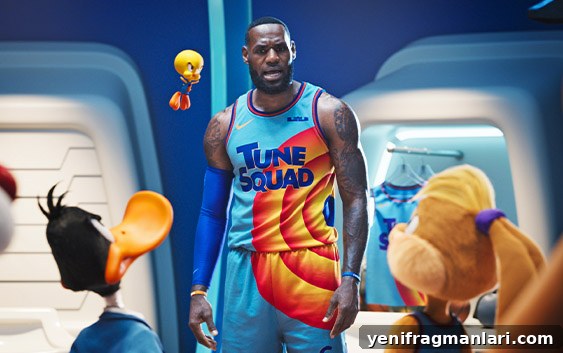
The story centers on LeBron James and his son, Dom. Dom is a talented video game designer who longs to attend a prestigious game design camp. LeBron, concerned about his son’s future, repeatedly urges him to prioritize basketball. The friction between them — father pushing for traditional athletic success while son chases creative ambitions — provides the film’s emotional core. That conflict is then amplified by an antagonist, an algorithmic villain named Al-G. Rhythm (Don Cheadle), who drags LeBron and others into the Warner Bros. “Serververse,” a virtual landscape built from the studio’s extensive media catalogue. Inside that digital playground, LeBron must assemble a team to face Dom’s virtual champions, Al-G.’s Goon Squad, and to repair the broken father-son relationship.
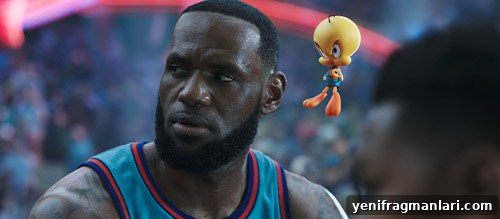
Where the film could have leaned into broad comedy and sight gags, it instead inserts earnest father-son scenes that often feel forced or underwritten. The script aims for heartfelt beats, but many emotional moments lack weight because the characters’ dilemmas are sketched too thinly. LeBron’s arc — learning to value Dom’s creative pursuits — is understandable, yet the performance rarely moves beyond the polished persona he brings from the court and the screen. He has natural charisma and is clearly comfortable with physical comedy, but in dramatic moments he can come across as stiff, which exposes the script’s limits more than it reveals depth in the character.
Don Cheadle, by contrast, embraces the film’s excesses and delivers a lively, over-the-top villain performance. He brings energy and comic timing that often elevates scenes he inhabits. Cedric Joe as Dom is sincere and likeable, but the screenplay underuses him at times, giving his character beats that don’t always land. Secondary human characters, including friends and family, often function more as plot devices than fully formed people; their presence serves the story’s mechanics rather than enriching it. Comic-relief roles occasionally feel wasted or too broad, which creates uneven pacing.
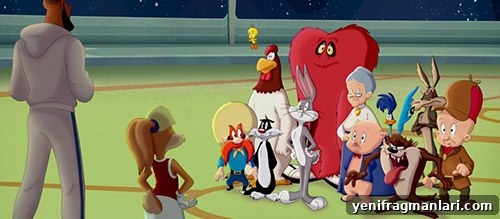
The Looney Tunes remain the highlight. Their classic gags, slapstick timing, and cartoon logic are preserved, and moments of pure Looney Tunes may elicit genuine laughs from both children and adults familiar with the originals. However, the choice to render them in a photorealistic style unsettles the balance: the animation is technically accomplished and contemporary, but the visual approach sometimes clashes with the characters’ inherently surreal nature. The film’s many visual set pieces deliver spectacle, yet the tonal mix of hyper-real characters interacting with exaggerated cartoon physics is not always harmonious.
The movie’s heavy reliance on the “Serververse” conceit creates another issue: it becomes a vehicle for endless references to the studio’s intellectual properties. This meta-approach delivers a steady stream of Easter eggs and recognizable imagery, but it frequently feels like product placement in narrative form. Rather than using these references to explore a meaningful idea, the film stacks brand cameos in a way that reads more like a promotional reel than story-driven world-building. That overabundance of cross-pollinated content distracts from the core emotional thread between father and son and from the Looney Tunes’ anarchic appeal.
There are moments of genuine fun and inventive staging, especially when the Looney Tunes are allowed to do what they do best: defy logic and play with reality. The film also has the good sense to let LeBron show flashes of charm and physical comedy when the script gives him room. Yet the overall experience feels compromised by the attempt to satisfy multiple agendas at once — a family movie, a digital-age commentary, and a corporate showcase — without fully committing to any single one.
In the end, Space Jam: A New Legacy is chiefly a family-oriented picture designed to appeal to nostalgic adults and to entertain young viewers with bright visuals and cartoon antics. It captures some moments of the Looney Tunes’ timeless irreverence, but it also serves as a conspicuous example of modern franchise filmmaking: clever in parts, commercially minded, and often more interested in showcasing a media empire than in telling a concise, emotionally satisfying story. As a cultural artifact of its moment, it reflects 2021’s appetite for spectacle and brand synergy, but it lacks the singular spark that would make it memorable beyond its release window.
9/24