
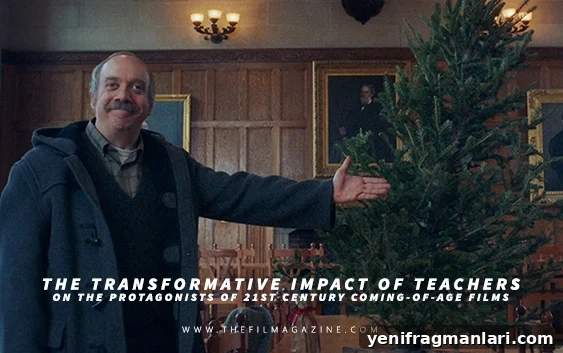
“You’re just a kid, you’re just beginning, and you’re smart.” – The Holdovers
Alexander Payne’s 2023 film The Holdovers chronicles the unexpected bond that forms between a gruff classics teacher at an all-boys boarding school and the solitary student he supervises during the Christmas break. The movie thoughtfully traces a relationship that begins in friction and gradually softens into mutual understanding and compassion. Watching the film invites reflection on the wider genre of coming-of-age stories and the quietly powerful role teachers often play in guiding a young protagonist’s transition to adulthood. Paul Giamatti, who portrays the teacher Mr. Hunham, has noted in interviews that teaching runs in his family and emphasized the respect he feels for the profession; the film echoes that respect by centring a compassionate, if cantankerous, educator.
Coming-of-age cinema examines the years when decisions carry heightened significance and mistakes shape identity. These films capture the urgency and uncertainty of youth—the weight attached to school, family, friendships and first loves. Given how formative school years are, teachers naturally appear as anchors in many of these stories. Onscreen, teachers often provide structure, patience and emotional support, and they can be the figures who notice a young person when others do not. Even when they play secondary roles, instructors can deliver a line, gesture or object that prompts essential introspection or change, as seen in films such as Lady Bird and The Perks of Being a Wallflower.
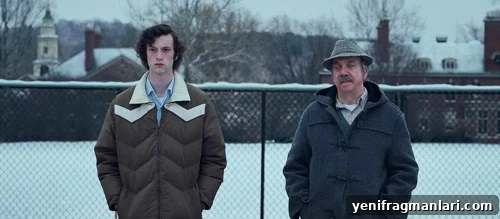
The Holdovers handles themes of loneliness and makeshift family with remarkable tenderness. The relationship between Mr. Hunham (Paul Giamatti) and his student Angus Tully (Dominic Sessa) evolves into something resembling a father–son dynamic as they discover common ground and care for one another. The film allows both characters to be changed by the experience: Hunham’s assumptions about students from affluent backgrounds are challenged when he learns that Angus, who he initially dismisses, is in fact a scholarship pupil. The revelation reframes their interactions and deepens the film’s emotional core.
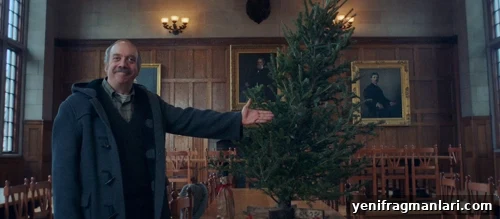
Both Angus and Hunham are solitary figures who fulfil needs in each other’s lives. Angus has been effectively abandoned by his mother and lacks a steady parental presence; Hunham gradually fills that void, listening, defending and guiding him. Conversely, Angus helps peel away Hunham’s bitter exterior, prompting the teacher to loosen up and find purpose beyond the school’s social hierarchies. Their most affecting scene arrives on Christmas Day, when Hunham finds a last-minute tree, they share a modest dinner with the cafeteria manager Mary (Da’Vine Joy Randolph), and Angus admits, “I don’t think I’ve ever had a real family Christmas like this.” It’s a simple, poignant moment that crystallizes the film’s theme of found family.
Other contemporary coming-of-age films portray similar teacher-student dynamics with different tones. In The Edge of Seventeen (2016), Woody Harrelson’s Mr. Bruner combines blunt honesty with a caustic wit that ultimately helps Nadine (Hailee Steinfeld) see her problems in perspective. His irreverent sense of humour grounds her, showing that teenage crises often feel larger than they are. Like Angus, Nadine is coping without a father figure, and Bruner becomes a steady, if unconventional, support. He resembles Mr. Hunham in his outward grumpiness but differs in the ways he nudges Nadine toward resilience and autonomy.
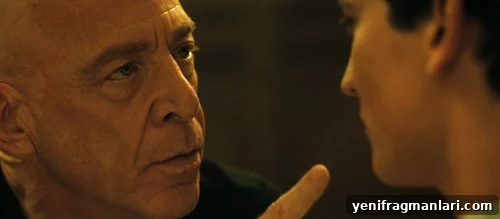
By contrast, Damien Chazelle’s Whiplash (2014) depicts a darker, more fraught version of mentorship. J.K. Simmons’s Fletcher pushes his student Andrew (Miles Teller) to extremes, blurring the line between rigorous teaching and emotional abuse. Fletcher defends his brutality as necessary to forge greatness, yet his methods exact a severe toll on Andrew’s mental and physical wellbeing. The film asks whether an obsessive, punitive teacher can ever truly serve a pupil’s best interests and leaves audiences debating the ethics of such intensity.
Teachers who occupy smaller roles can also leave lasting impressions. In Lady Bird (2017), the protagonist’s relationship with Sister Sarah Joan (Lois Smith) hinges on a brief but meaningful line: when Sister Sarah Joan reviews Lady Bird’s essay about Sacramento, she tells her, “Don’t you think maybe they are the same thing? Love and attention.” Though offered in passing, that observation resonates with Lady Bird’s complicated feelings for home and for her mother. It helps her understand that the criticism she sees as rejection can also be interpreted as a form of care, and it contributes to the film’s quiet, reconciliatory final moments.
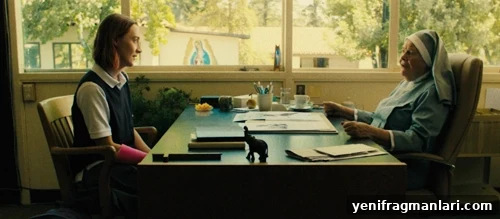
Small gestures in class or brief conversations can redirect a young person’s trajectory. In Boyhood (2014), Mason’s photography teacher chastises him for not working harder despite abundant talent, offering a simple image of a future phone call—“maybe in 20 years you can call old Mr. Turlington and say, ‘thank you for that terrific darkroom chat’”—that lodges in Mason’s imagination and validates the teacher’s influence over time.
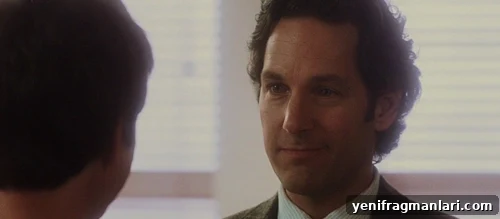
Similarly, The Perks of Being a Wallflower (2012) shows how a perceptive teacher can change the course of a student’s life. Mr. Anderson (Paul Rudd) recognizes Charlie’s literary sensitivity and quietly nurtures it, offering extra reading and eventually gifting Charlie a beloved book from his own childhood. The act of giving a book becomes an intimate, guiding gesture—an invitation to accept care and to see oneself as worthy of better love. In The Holdovers, Mr. Hunham gives Angus a copy of Marcus Aurelius’s Meditations. Whether or not the philosophy resonates immediately, the gift reveals Hunham’s conviction that understanding the past helps one make sense of the present.
Films have a special ability to highlight everyday heroes: the teachers whose steady presence and small, deliberate acts of attention alter a young person’s sense of self. Coming-of-age protagonists occupy a precarious in-between, and many would remain adrift without the timely interventions of teachers who notice, challenge and nurture them. The Holdovers stands out for its tender depiction of a good teacher—one who listens, sees what others overlook, and helps a student arrive at a kinder, more authentic version of himself.
Written by Cat Searcey
You can support Cat Searcey via TikTok (@cat.s__) and Medium (blog).