
The Creator (2023)
Director: Gareth Edwards
Screenwriters: Gareth Edwards, Chris Weitz
Starring: John David Washington, Madeleine Yuna Voyles, Gemma Chan, Allison Janney, Ken Watanabe, Ralph Ineson
The most rigorous critics insist that a film should be judged on its own terms: does it tell a coherent story, do the characters feel alive, is the filmmaking confident and purposeful? That approach remains valuable, yet real-world context sometimes colors how audiences receive a movie. For example, the current slump in some superhero films has less to do with individual quality than with market saturation. A classic case of a film that succeeds both as a historical artefact and as a self-contained story is All the President’s Men (1976). Based on the Watergate reporting of Woodward and Bernstein, it functions as an absorbing procedural and as a compelling drama in its own right.
Gareth Edwards’ 2023 science-fiction film The Creator arrives with its own external pressures. It premiered at a time of intense public debate about generative artificial intelligence and what AI might mean for society and warfare. It also represents a welcome example of the mid-budget studio film: a production that isn’t a mega-blockbuster franchise entry but still aims for theatrical spectacle and emotional weight.
For decades, Hollywood’s release strategy relied on spreading big-budget tentpoles throughout the year while reserving quieter months for mid-budget titles—films that offered filmmakers more freedom than studio blockbusters while still enjoying wide distribution. Examples from the past demonstrate how financially and culturally profitable that middle tier could be. In recent years, many such projects have been redirected to streaming or abandoned, replaced by a calendar dominated by sequels and franchise instalments. Lately, however, studios appear tentatively to rediscover the value of the mid-budget movie, and The Creator joins other recent releases that suggest this space can still produce engaging, profitable cinema.
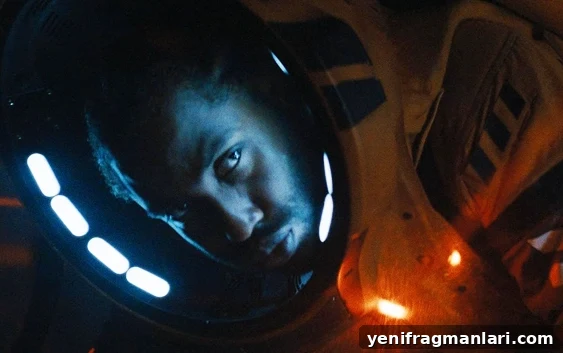
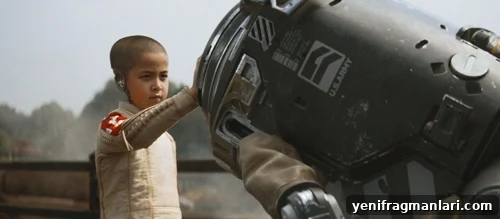
John David Washington plays Joshua Taylor, an ex-special forces operative recruited to find and terminate the so-called “Creator” of a new generation of AI—an enigmatic figure known as Nirmata who may possess a weapon capable of ending the war between East and West. That weapon turns out to be a childlike AI named Alphie, portrayed by Madeleine Yuna Voyles, whose presence forces Taylor to confront his own beliefs about machines, humanity and the cost of conflict.
Set largely in a reimagined “New Asia,” the film often films on location, exploiting sweeping natural landscapes that co-exist uneasily with advanced military technology. The visual contrast—rice paddies overshadowed by massive metropolitan towers, forests scarred by mechanized armor—becomes a recurring motif: the collision of tradition and technological progress, and the human stories caught between them.
At its heart, The Creator centers on the evolving relationship between Taylor and Alphie. The odd-couple dynamic—an emotionally guarded soldier and an innocent but exceptionally intelligent child—recalls influences Edwards has acknowledged, such as Paper Moon, E.T. and Rain Man. The screenplay by Edwards and Chris Weitz structures a clear, engaging narrative and builds toward a credible emotional core. Where it falters at times is in the screenplay’s tendency to lean on literal, on-the-nose dialogue that leaves little subtext. Those moments undercut some of the subtler emotional beats the film wants to land.
Nonetheless, both Washington and Voyles bring warmth and credibility to their roles. Their chemistry may not reach the iconic levels of the films that inspired Edwards, but their performances anchor the story and make the film’s emotional arc work when it matters most. Supporting players including Gemma Chan, Allison Janney, Ken Watanabe and Ralph Ineson add texture and authority to a cast that balances action-oriented set pieces with quieter, character-driven moments.
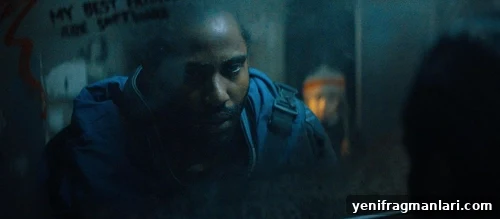
The film’s strengths lie in its worldbuilding and its willingness to deliver spectacle alongside intimacy. Set pieces are well staged and inventive: a sequence involving self-destructing robots stands out for its kinetic imagination, while the USS NOMAD—a space station capable of devastating orbital strikes—provides a chilling visual and thematic focal point. The NOMAD’s slow, ominous presence in the sky and the clinical efficiency of its targeting present a sober reminder of the film’s stakes: technological power deployed without adequate moral reflection.
Stylistically, Edwards refuses to treat the subject matter as either purely philosophical or purely sensationalist. The movie is broadly accessible—designed to entertain—yet it also asks questions about what it means to recognize intelligence and emotion in non-human beings. The narrative balances action and reflection; viewers can enjoy the film as popcorn entertainment while still taking away resonant ideas about empathy, parenthood and the moral costs of war.
Some viewers may resist seeing a movie that echoes current anxieties about AI, or they may be hesitant to seek out a film with a quieter marketing profile than a franchise entry. But The Creator is precisely the kind of mid-budget film the theatrical ecosystem needs: ambitious enough to justify a big-screen presentation, focused enough in scope to tell a complete story, and human enough to invite discussion after the credits roll. Its success at the box office could encourage studios to continue funding similar projects that blend spectacle with character.
After a seven-year absence from filmmaking, Gareth Edwards returns with a confident, visually rich piece of science fiction. The movie delivers striking landscapes and production design, imaginative action, and a pair of leads who provide emotional ballast. It won’t revolutionize the genre or unsettle the most demanding cinephiles, but it offers an enjoyable and thoughtful cinematic experience—exactly the sort of film that benefits from being seen in theatres.
Score: 20/24
Rating: 4 out of 5.