
The Forgiven (2021)
Director: John Michael McDonagh
Screenwriter: John Michael McDonagh
Starring: Ralph Fiennes, Jessica Chastain, Matt Smith, Saïd Taghmaoui, Mourad Zaoui, Ismael Kanater, Caleb Landry Jones, Christopher Abbott
After a five-year absence following the commercial underperformance of his previous film, John Michael McDonagh returns to the director’s chair with The Forgiven, an adaptation of Lawrence Osborne’s novel. Known for his varied blend of dark comedy and drama—seen in works like The Guard and Calvary—McDonagh applies his distinct voice to a story that interrogates class, responsibility, and cultural friction. This film marks a deliberate re-engagement with serious dramatic material while retaining his capacity for sharp, satirical observation.
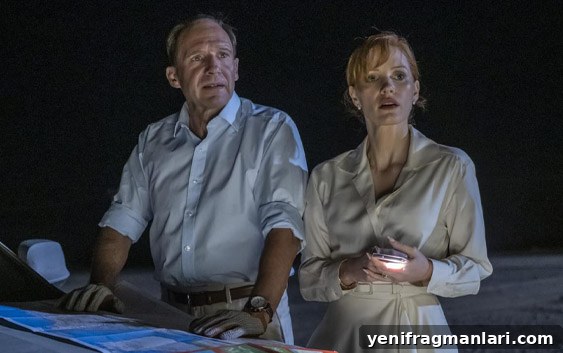
The Forgiven centers on David and Jo Henninger (Ralph Fiennes and Jessica Chastain), an affluent couple who travel to Morocco for a weekend at a friend’s lavish estate. Their stay takes a tragic turn when David hits a local boy with his car. What follows is a tense, morally fraught exploration of accountability, privilege, and the uneven consequences of one moment of negligence. The incident forces encounters between the visitors and local residents, and when the boy’s grieving father asks David to accompany him to bury his son, the film pivots into a study of character, conscience, and cultural collision.
Although marketed in some places as a stark drama, McDonagh’s adaptation is woven with satirical threads aimed at the upper class. He exposes how the characters’ cultivated indifference and social performance mask deeper moral failures. Despite the gravity of the death, many partygoers respond with annoyance or a desire to preserve appearances rather than with genuine empathy. McDonagh uses this dynamic to critique entitlement and to show how rituals of civility can conceal cruelty.
At its core, The Forgiven is a character-driven film. McDonagh stages a contrast between those who continue to indulge their privileged lifestyle and those who are forced to confront the consequences of the crash. Through carefully observed interactions and gradual revelations, the narrative allows one character’s moral awakening to highlight another’s complacency. That interaction becomes the film’s central engine: the moral transformation of a protagonist set against the steady moral inertia of others.
Visually, the film benefits from a strong sense of place. McDonagh frequently frames wide, sunlit landscapes and open spaces to suggest the hollowness of the characters’ emotional lives and to emphasize the physical and cultural distance between guests and hosts. These images not only enrich the film’s atmosphere but also root the narrative in the striking natural beauty of Morocco, which functions as a counterpoint to the moral barrenness of the privileged visitors.
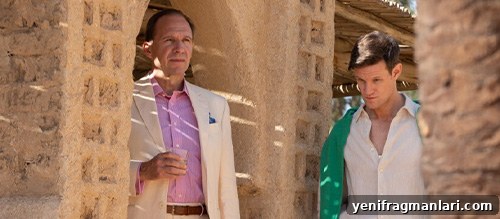
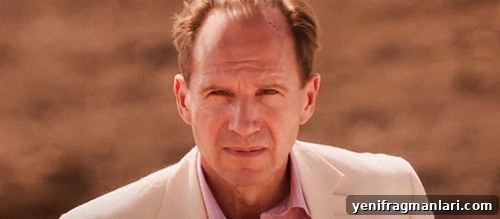
The performances are a major strength, even when some notable actors are underused. Ralph Fiennes delivers a nuanced portrayal of David, his restrained physicality often communicating more than explicit dialogue. His interactions with Anouar, the boy’s father played by Saïd Taghmaoui, generate compelling tension and emotional depth. Those scenes are among the film’s most affecting, revealing cultural and human complexities beneath the surface confrontation. Fiennes also forms a quietly tender friendship with Hamid (Mourad Zaoui), a relationship that adds warmth and humanity amid the film’s moral weight.
Jessica Chastain contributes a layered performance as Jo Henninger, embodying both the brittleness and entitlement the script scrutinizes. The film uses her character to reveal how social performance can mask inner disquiet, and Chastain’s portrayal provides one of the clearest windows into the film’s ethical concerns. By contrast, some prominent cast members, including Matt Smith and Caleb Landry Jones, have relatively limited screen time and are given fewer opportunities to develop fully realized arcs. While this may be an intentional choice to emphasize the characters’ superficiality, it can sometimes feel like underused potential given the strength of the ensemble.
Structurally, McDonagh keeps the story focused and uncluttered. He resists adding subplots that would distract from the central moral drama, trusting the source material and the actors to carry the film’s thematic weight. This restraint means the film will not satisfy every viewer—some may expect a more conventional thriller or a clearer moral resolution—but those open to a slow-burning, character-led meditation on privilege and accountability will find much to appreciate.
Ultimately, The Forgiven is a thoughtful, well-crafted adaptation that marks a confident return for John Michael McDonagh. It is a film that challenges viewers to consider the ethical costs of indifference, and it does so through sharp writing, precise direction, and strong central performances. While not without flaws—particularly in balancing its ensemble—the movie stands as a compelling character study and a pointed social critique, offering a provocative look at the consequences of one careless act.
Score: 17/24